Serving Madison, WI & nearby
(608) 534-3638
Madison, WI

What to Check on an Old Garage Door in Madison

Madison homes built between 1962 and 2001 often have older garage doors with little or no insulation, a real issue in our cold winters. Here's what to check.

What to Check on an Old Garage Door in Madison

What to Check

Most houses across this service area went up between 1962 and 2001, with the bulk of that stock landing around 1986. That matters here because garage doors from that era were rarely built with real insulation. Energy codes back then focused on walls, attics, and windows in the living space - not on a bolt-on garage that was often treated as unheated storage, not part of the house.

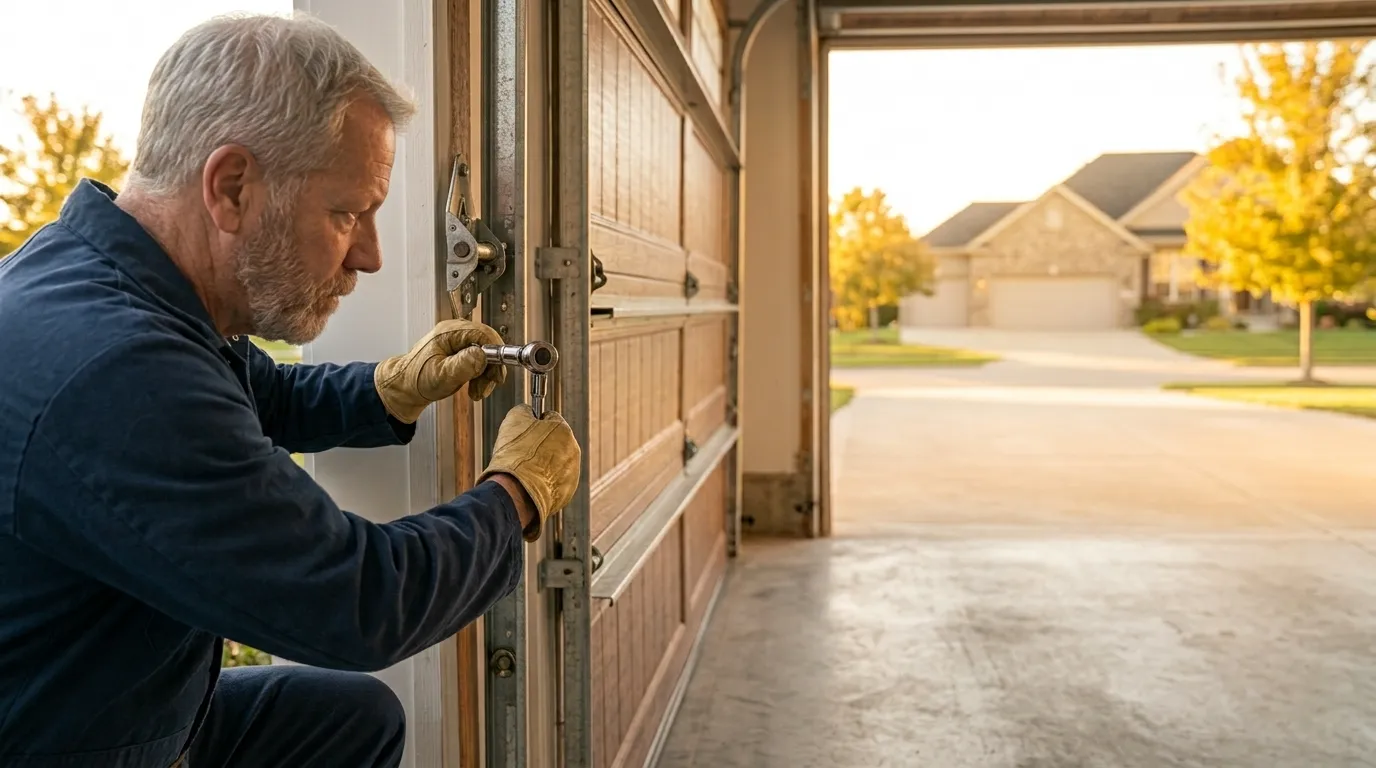
Walk out and put your hand flat on the inside of the door panel on a cold morning. If it's a single layer of steel with ribbing on the back and nothing between the ribs, that's the pattern we see across the 1980s and 90s builds that make up most of this housing stock. Check the bottom seal too - original vinyl astragal from that period has usually gone stiff and cracked, which lets more cold air in than the door skin itself does.

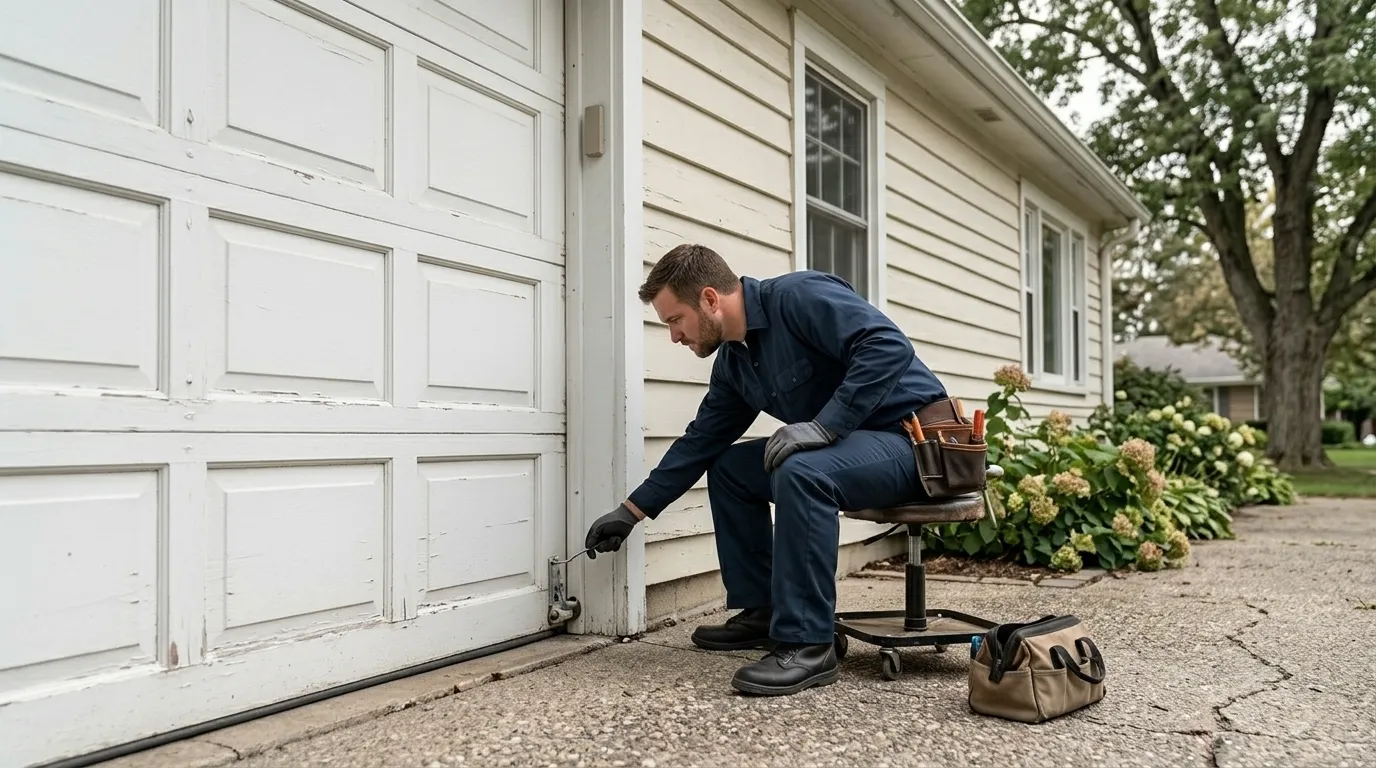
Look at the weatherstrip along the sides and top. If it's flat, brittle, or missing sections, you're not just losing heat, you're losing the seal that keeps meltwater and blown snow out from under the door in a freeze-thaw winter. None of this is expensive to check. It just takes five minutes and a flashlight before the cold sets in.

Season by Season

This area sits in a cold, moderate climate band, which means the garage door on an older house does two different jobs depending on the month, and an uninsulated door does neither one well.

In winter, a single-skin steel door built in the 1970s or 80s conducts cold straight through, so the garage stays close to outdoor temperature and anything stored against the shared wall - pipes, a laundry setup, a workshop - feels it. Condensation forms on the inside of the panel on the coldest nights, and that moisture drips onto the track and hardware, which speeds up rust on rollers and hinges that are already thirty-plus years old on original builds.

Spring brings the freeze-thaw cycle that's hard on anything with a seal. Water gets under a cracked bottom astragal, freezes overnight, and can lift or crack an already brittle seal further. By late spring you'll often find the bottom seal has pulled away from the track on one side.

Summer humidity does the opposite job - it swells wood trim and jambs on houses from the 80s and 90s that used real lumber framing around the opening, which can bind an otherwise fine door. Fall is really the only season to fix any of this before the cycle starts again.

What Is Going On

The short version: garage doors weren't part of residential insulation requirements when most of this area's houses were built. With a median build year around 1986 and the bulk of construction running from 1962 to 2001, you're looking at a housing stock that predates the point where insulated garage doors became a standard builder option rather than an upgrade.

That means the door itself is often the single largest uninsulated surface on an otherwise reasonably built house - bigger than any window, and directly facing the weather. On an attached garage, that translates into a cold wall between the garage and whatever room shares it, which is why an upstairs bonus room or a laundry off the garage in one of these houses often runs a few degrees colder than the rest of the house in January.

Across the service area's roughly 37,541 owner-occupied houses, this is a shared condition, not a one-off problem with a particular home. It's also worth saying plainly: an insulation retrofit kit on an old door skin doesn't fix a warped panel, bent track, or a spring sized for the original lighter door. If the door itself is failing, insulating it first is money spent twice.
How Local Conditions Play In

The cold, moderate climate band this area sits in doesn't hit with the extreme cold snaps some regions get, but it does deliver a long stretch of sub-freezing days paired with real freeze-thaw cycling - and that combination is harder on an old, uninsulated door than one hard freeze ever would be. Repeated expansion and contraction is what cracks vinyl seals and loosens the fasteners holding weatherstrip channel to the jamb.

With median household income in the area at $98,943 across roughly 87,219 households, a straight insulated-panel replacement is a reasonable option for a lot of owners here rather than a stopgap retrofit - it's worth pricing both before deciding. We won't tell you a retrofit kit is a waste; on a door that's otherwise sound, it's a fair fix. But on a door from the older end of this area's build range, with a track and spring system that's also thirty-plus years old, putting insulation panels into a door that's about to need a new spring anyway just delays the real job.

Check the door and the hardware together, not the insulation question alone. That's the honest way to spend money on this once instead of twice.

How it works

From “it’s stuck” to “it’s fixed”

Tell us what’s wrong - Madison garage door service

Tell us what’s wrong

Describe the symptom - won’t open, loud bang, opener runs but the door won’t move.

On-site diagnosis - Madison garage door service

On-site diagnosis

A technician tests the door under power and by hand and finds what actually failed.

Clear, up-front plan - Madison garage door service

Clear, up-front plan

You get the fix that’s needed and what drives the cost - before any work starts.

Repaired & tested - Madison garage door service

Repaired & tested

The repair is done, the door is set true and tested, and the work area left clean.

Serving Madison, WI - tell us what your door’s doing and we’ll take it from there.

How we work

What to expect

Diagnosis firstEvery visit starts by finding what actually failed - not a pre-written parts list.
The right part for the doorSprings and openers matched to the door’s weight and age, so the fix holds up.
Straight answersWhen a repair makes more sense than a replacement - or the reverse - you hear it plainly.
Clean, careful workTension released safely, hardware set true, the door tested under power before we leave.
What we do

Garage Door Services

Repair and installation work for Madison homes and businesses.

Garage Door Repair in Madison

Garage Door Repair

Madison homes built between 1962 and 1986 are hitting spring and opener failure age right as our winters put extra load on the hardware. Same-area repair, no guesswork.

Learn more
Garage Door Installation in Madison

Garage Door Installation

Most Madison houses date from 1962-2001, so old openers and single-layer doors weren't built for our winters. We install doors sized for the cold band we live in.

Learn more
Garage Door Service in Madison

Garage Door Service

Garage door repair and service for Madison homes built mostly between 1962 and 2001, sized for our cold winters and the springs and openers that fail because of them.

Learn more
Off-Track Repair in Madison

Off-Track Repair

Madison Garage Door Co fixes off-track doors on the 1962-2001 housing stock common across Madison, from Middleton to in cold-climate conditions.

Learn more
Panel Replacement in Madison

Panel Replacement

Dented or cracked garage door panels are common on Madison's 1962-2001 housing stock. We match panels and replace full sections on steel and aluminum doors.

Learn more
Roller Replacement in Madison

Roller Replacement

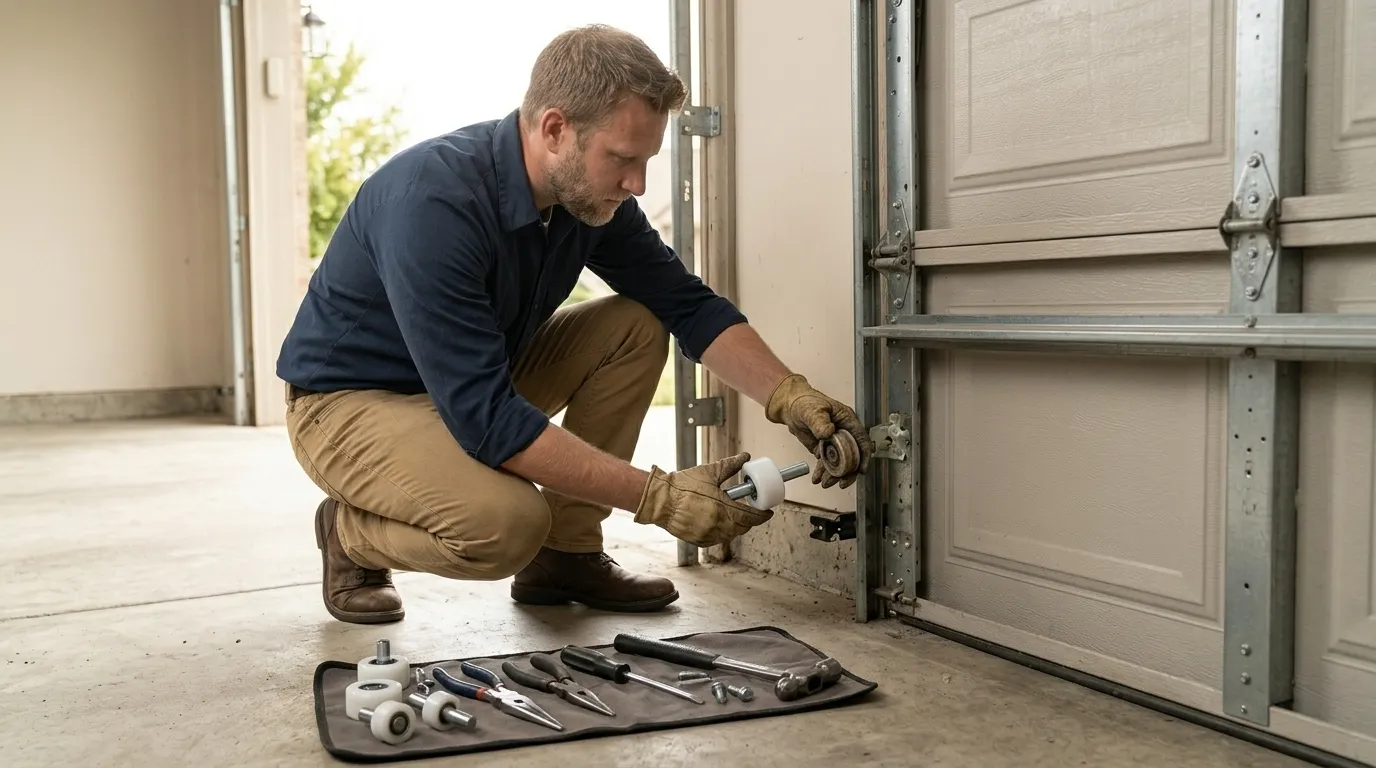
Rollers wear fast on Madison's 1960s-2000s housing stock through cold winters. We replace worn steel and nylon rollers on doors across the service area.

Learn more
Commercial Garage Door in Madison

Commercial Garage Door

Commercial garage door repair and service across the Madison, WI area - spring, track, and opener fixes for cold-climate rollup doors that keep bays running through winter.

Learn more
Emergency Garage Door Repair in Madison

Emergency Garage Door Repair

Broken springs, frozen tracks, and openers that quit in the cold: Madison Garage Door Co handles emergency repair across the Madison, WI service area.

Learn more
Questions

Frequently asked

Straight answers about garage door repair in Madison. Still unsure? Ask us directly.

How do I know if my garage door has any insulation at all

Open the door partway and look at the back of a panel, or knock on it. A hollow, tinny sound and visible bare steel ribs with nothing between them means no insulation. A dull thud and a foam or fiberboard backing means it's insulated. Houses built in the 1960s through the 1980s in this area very often have the uninsulated type as original equipment.

Is it worth insulating an old garage door instead of replacing it

It depends on the door's condition, not just its age. If the panels are straight, the track is true, and the spring is sized right, an insulation retrofit kit is a fair, lower-cost fix. If the door is already sagging, the seal is shot, and the hardware is original from a 1980s build, you're better off pricing a full replacement rather than layering a fix onto a door on its way out.

Why does my garage feel so much colder than the rest of the house

On an attached garage in an older home here, the door is usually the single biggest uninsulated surface facing the outside. Houses in this area built from the 1960s through the 1990s rarely came with insulated garage doors as standard, so the garage runs close to outdoor temperature all winter, and any room sharing that wall feels the difference.

Ready to get your garage door sorted?

Tell us what it’s doing and where you are in Madison - we’ll take it from there.

Request a QuoteCall