Season by Season
In a cold-moderate climate band like this one, seals do different jobs depending on the month. Winter is the hard test - vinyl and rubber both stiffen as temperatures drop, and a seal that looked fine in October can crack the first time it hits single digits. That's when owners notice the draught: cold air pooling along the garage floor, frost forming on the inside of the door skin, a wall shared with the house feeling colder than it should.
Spring brings freeze-thaw cycling, which is harder on seals than steady cold. Water gets into small cracks during a thaw, then expands when it refreezes overnight, widening the gap a little more each cycle. This is usually when a seal that survived winter finally gives out.
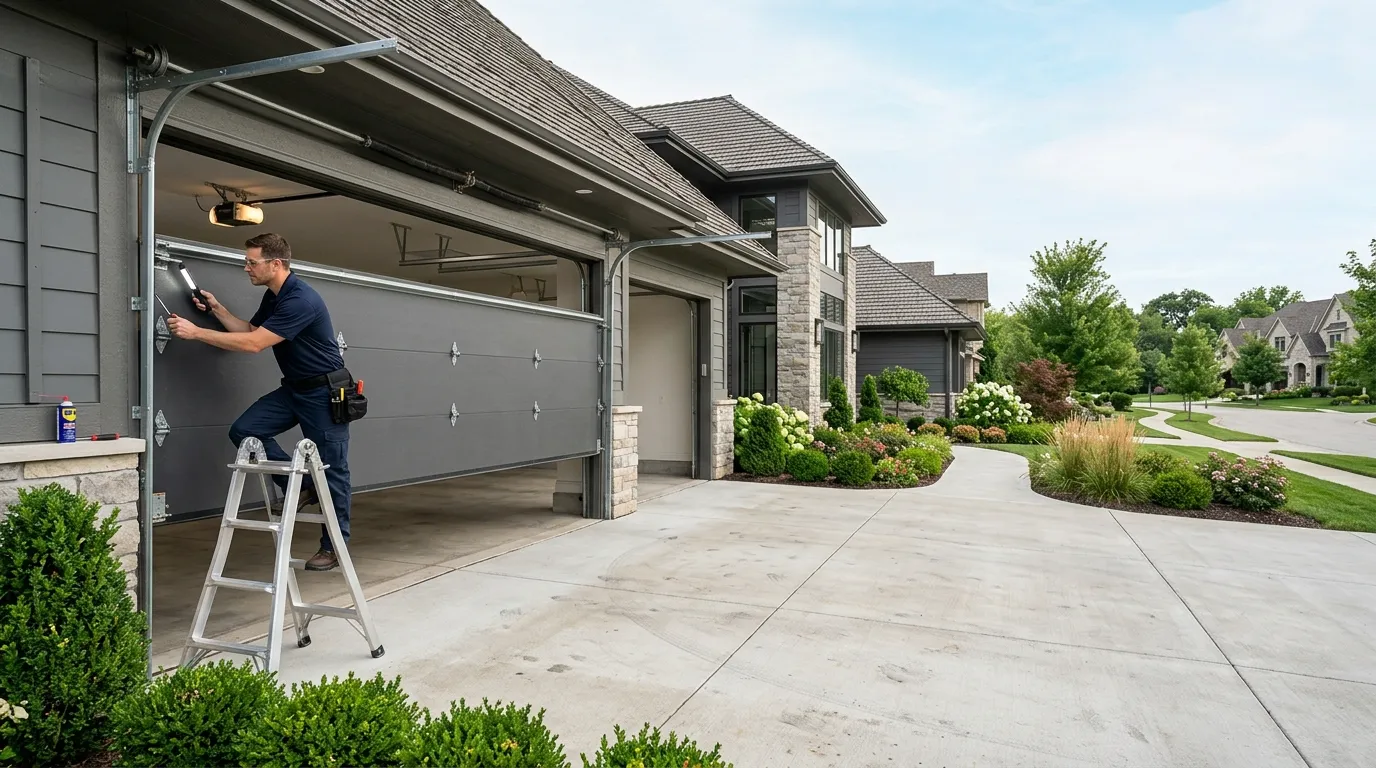
Summer heat does the opposite kind of damage - it softens vinyl and lets it sag out of its track, so the seal stops making full contact with the slab even though it isn't cracked. Fall is the window to catch all of it: check the seals before the first hard freeze, because once the cold sets in, a compressed or cracked seal stays that way until you replace it.
What Is Going On
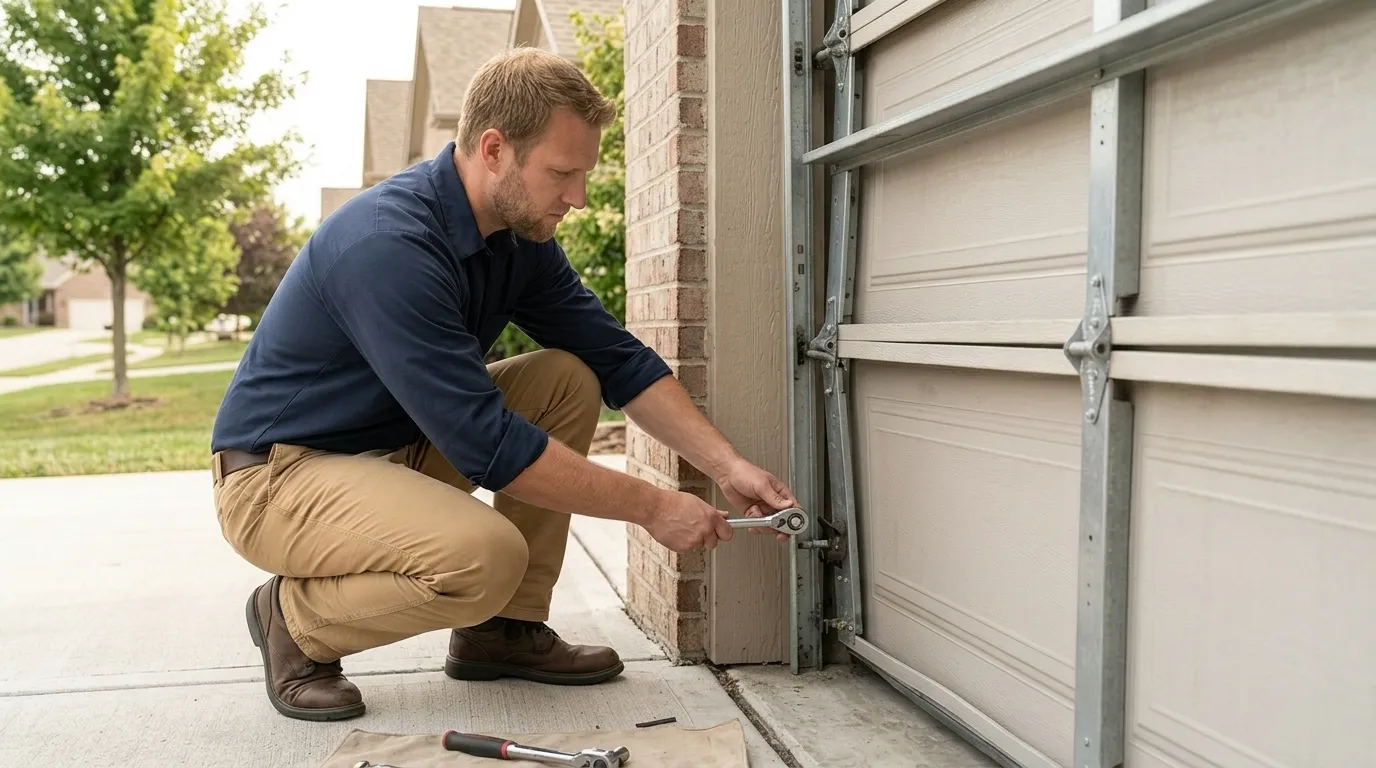
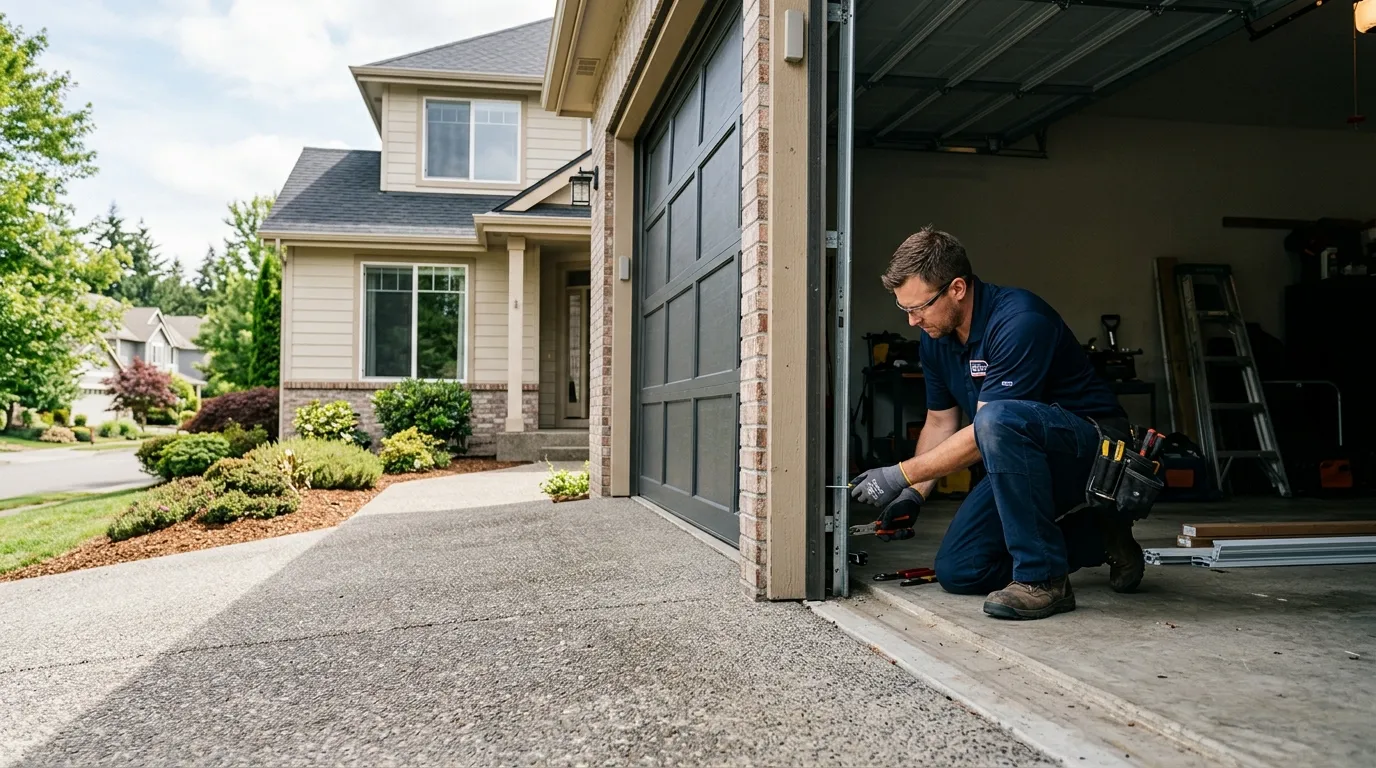
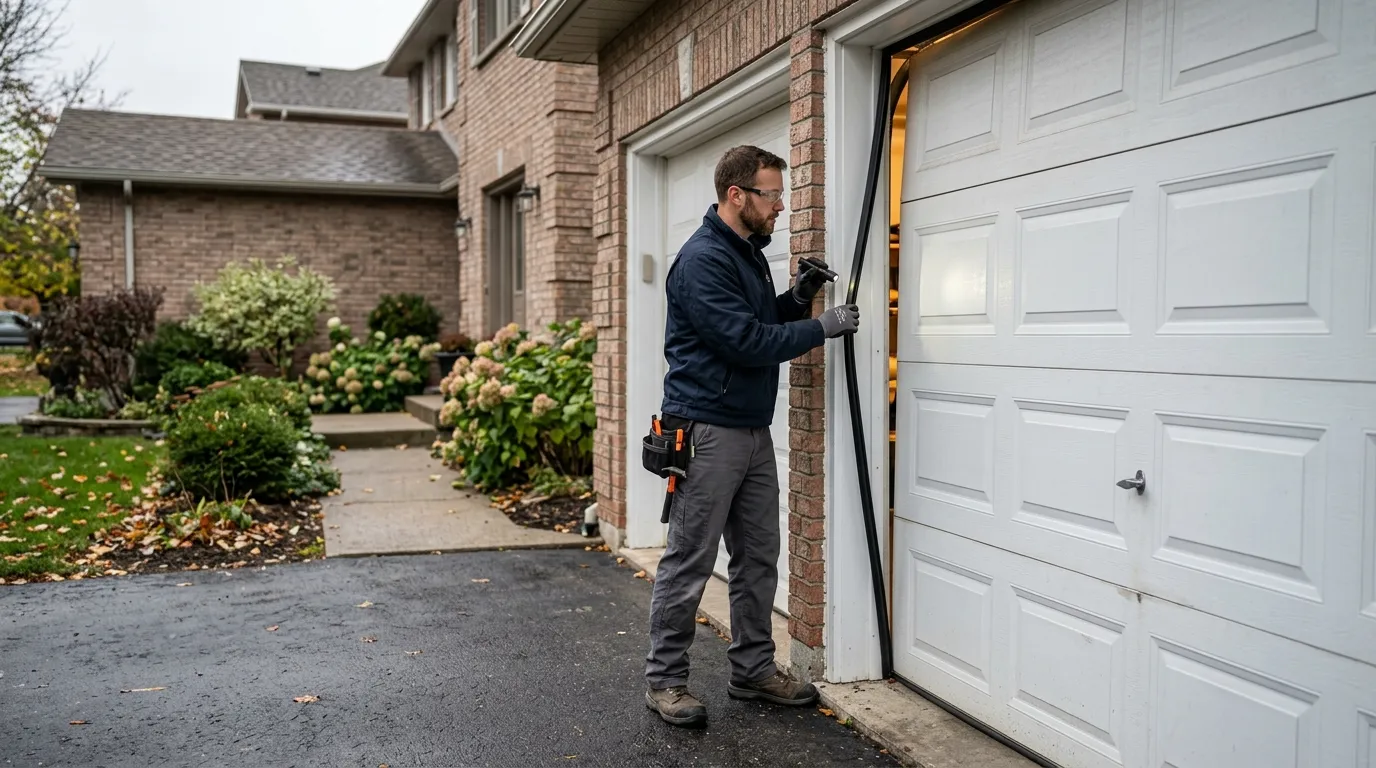
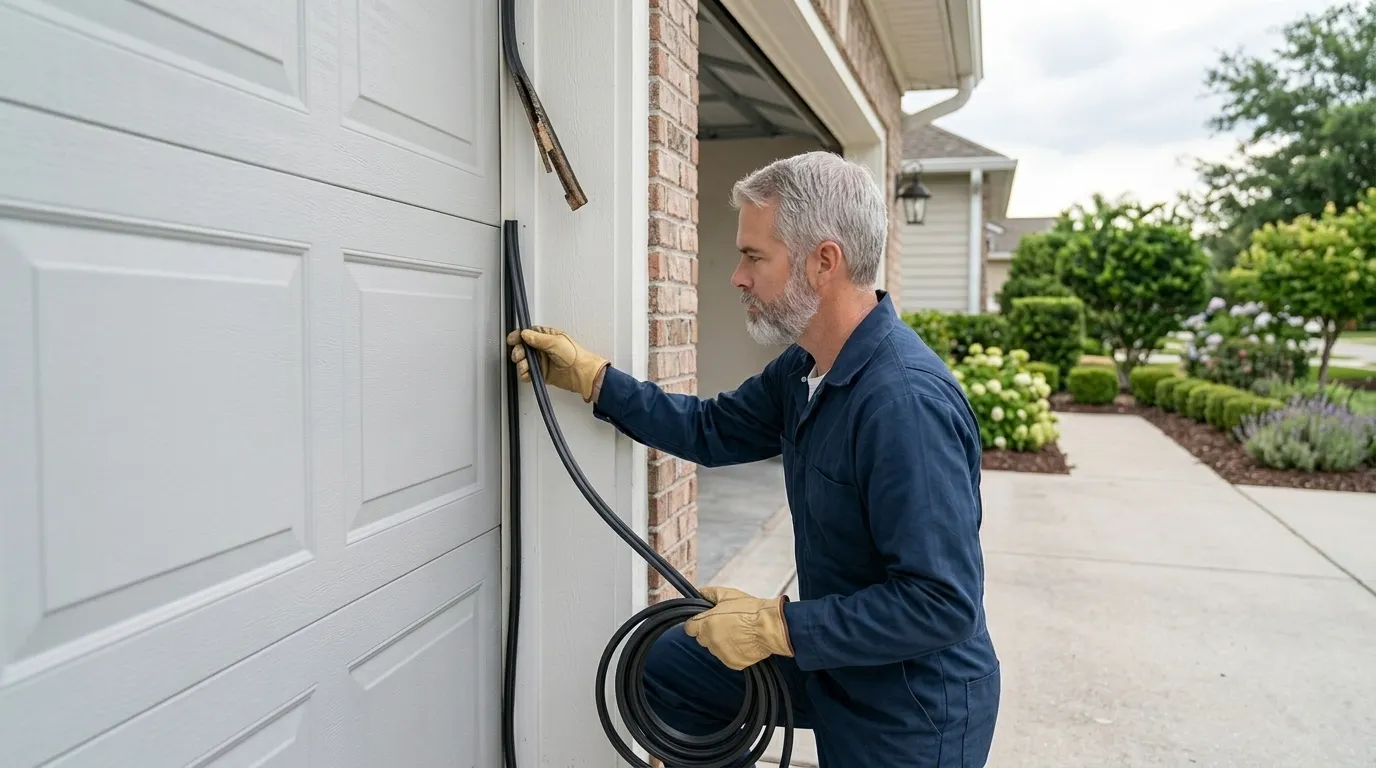
Most of the draught complaints we look at trace back to the same thing: a seal or weatherstrip that's outlived its material. Vinyl typically starts losing flexibility somewhere in its second decade, and a lot of the doors in this service area are original to houses built between 1962 and 2001 - median year 1986 - which puts plenty of them well past that point.
The other piece is what these doors were built with in the first place. The bulk of the stock here dates to the 1980s and 90s across the 28 named areas we work in, and doors from that period commonly used a single bottom seal and thin side stops, without the foam-core insulation or double-fin weatherstripping that's standard on doors sold today. That's not a defect - it's just what was normal to install decades ago. It means a door that's never been touched is leaking more air than a comparable newer install, even with zero visible damage.
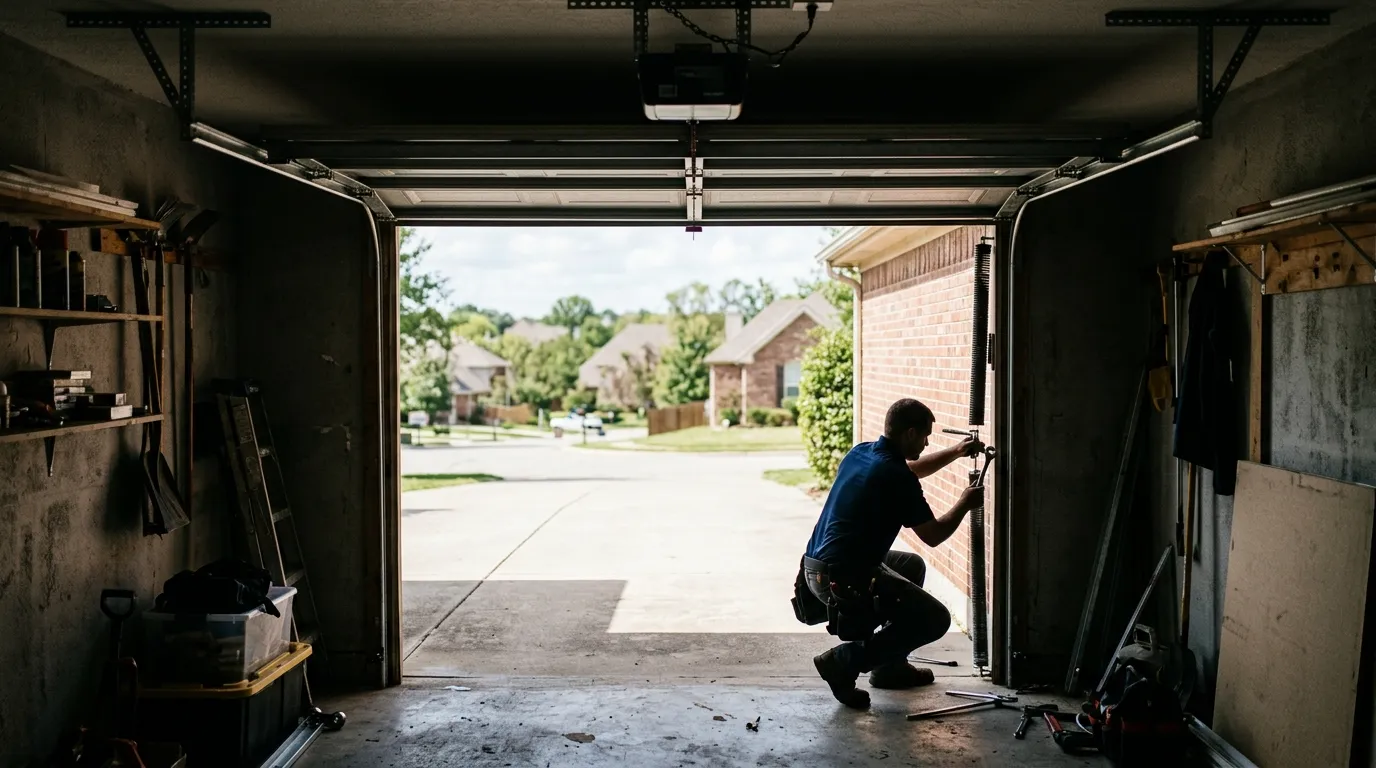
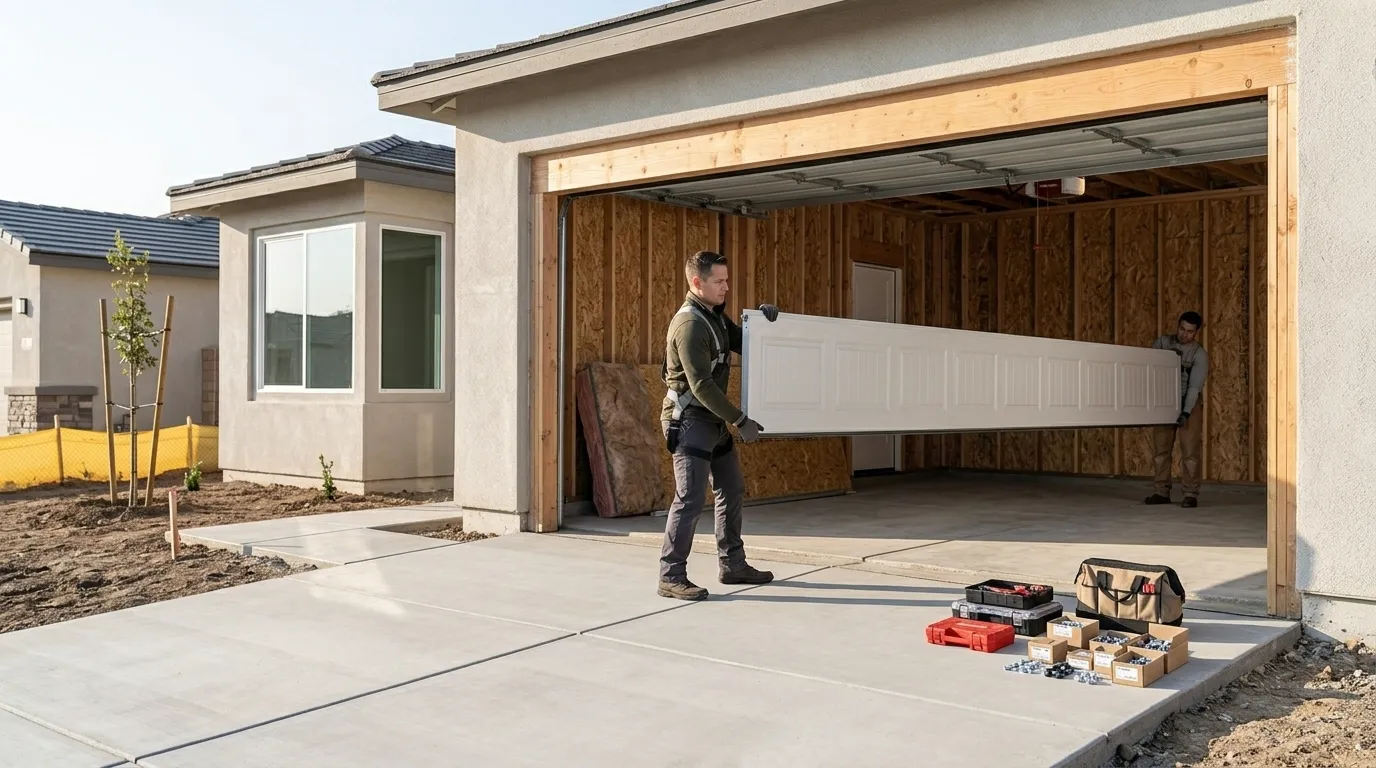
One honest note: if the door itself is warped or the track has shifted, a new seal won't fix the draught. At that point you're looking at a door or track repair, not a cheap weatherstrip swap.