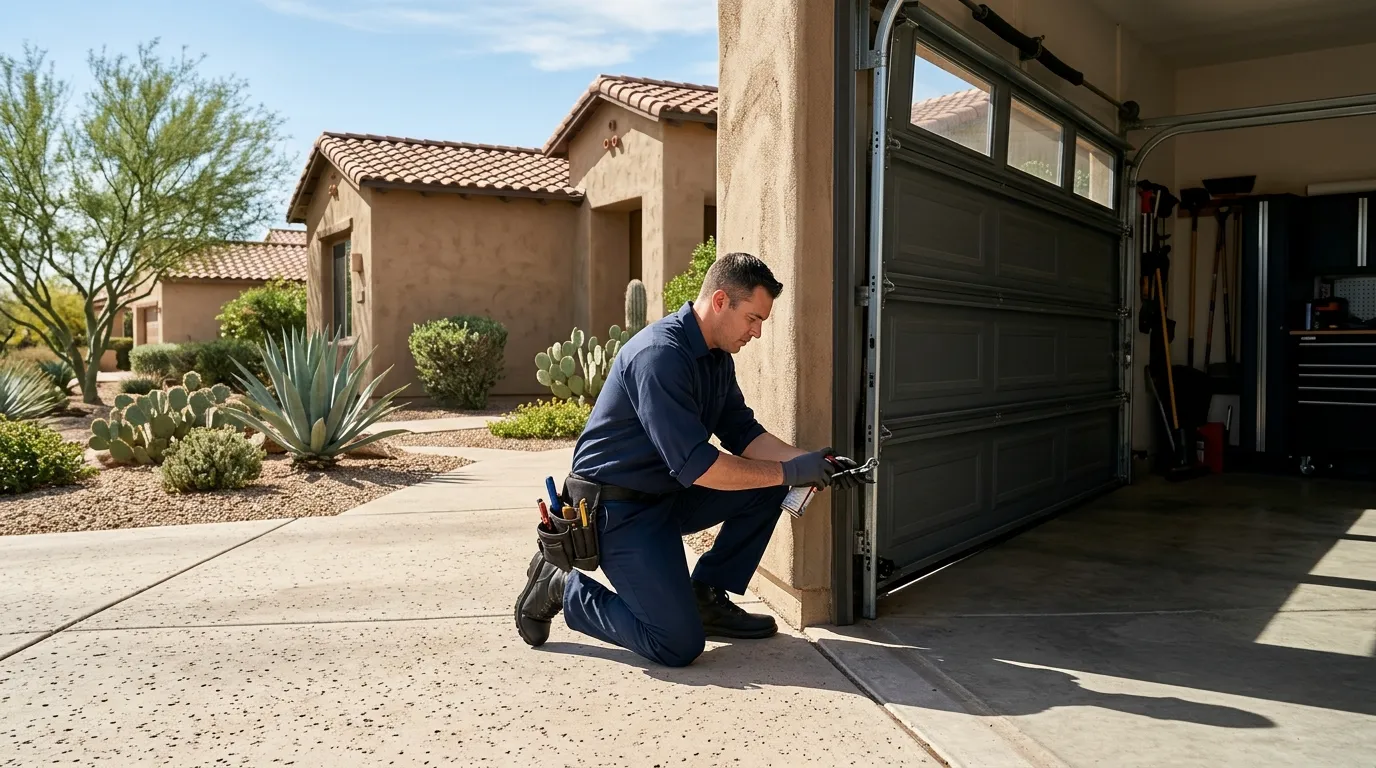
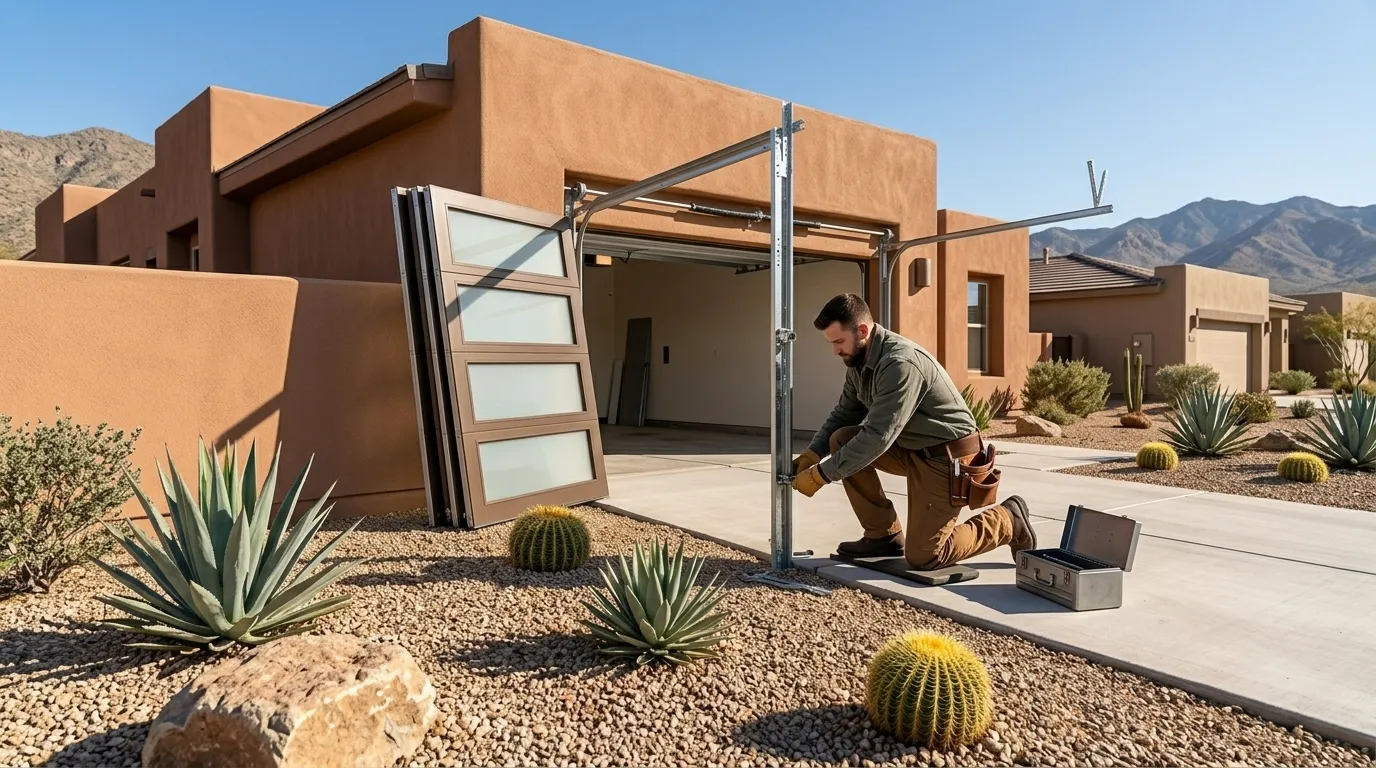
Most of the houses this business gets called to sit on lots built between 1962 and 2001, with the median year landing around 1986. That thirty-year run covers a specific kind of garage: single-car and two-car bays with steel torsion springs sized for the door weights common at the time, and openers that have gone through three or four decades of temperature swings. Cold-moderate winters here put steel through repeated contraction and expansion, and the lubricant inside older torsion springs stiffens every time the mercury drops. A spring rated for ten thousand cycles in a heated garage doesn't get that many when it spends January at twenty degrees. Across the roughly 87,219 households in this service area, 37,541 own single-family houses - most of them built in that same window - which is why this is the single most common emergency call we get, not a rare one. Add in the fact that this same housing era shows up across all 28 named areas in the coverage map, not just one neighborhood, and you get a predictable pattern: the door that worked fine in October seizes, screeches, or drops a cable in the first hard cold snap of the year. This isn't a defect. It's what happens when 1980s-era hardware meets a winter it wasn't built to shrug off indefinitely.
What Can Go Wrong
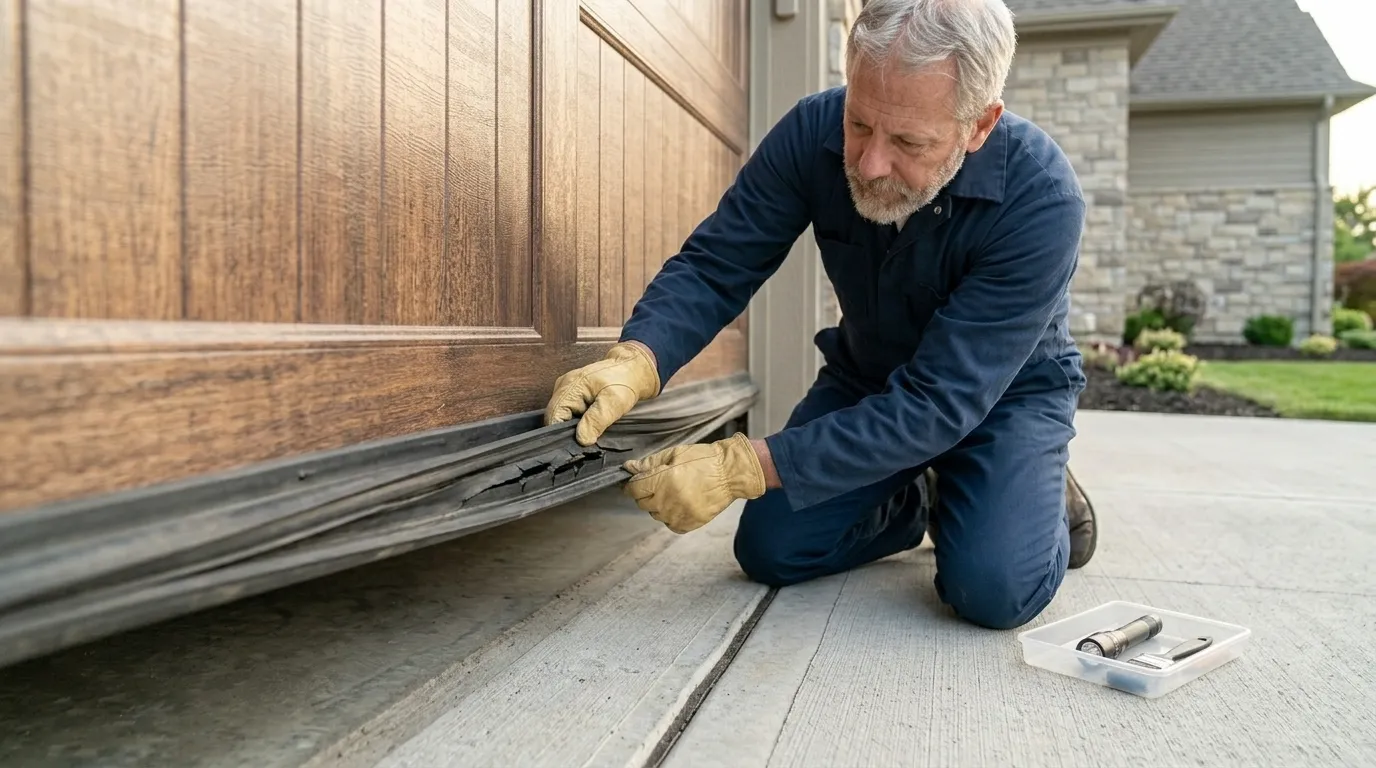
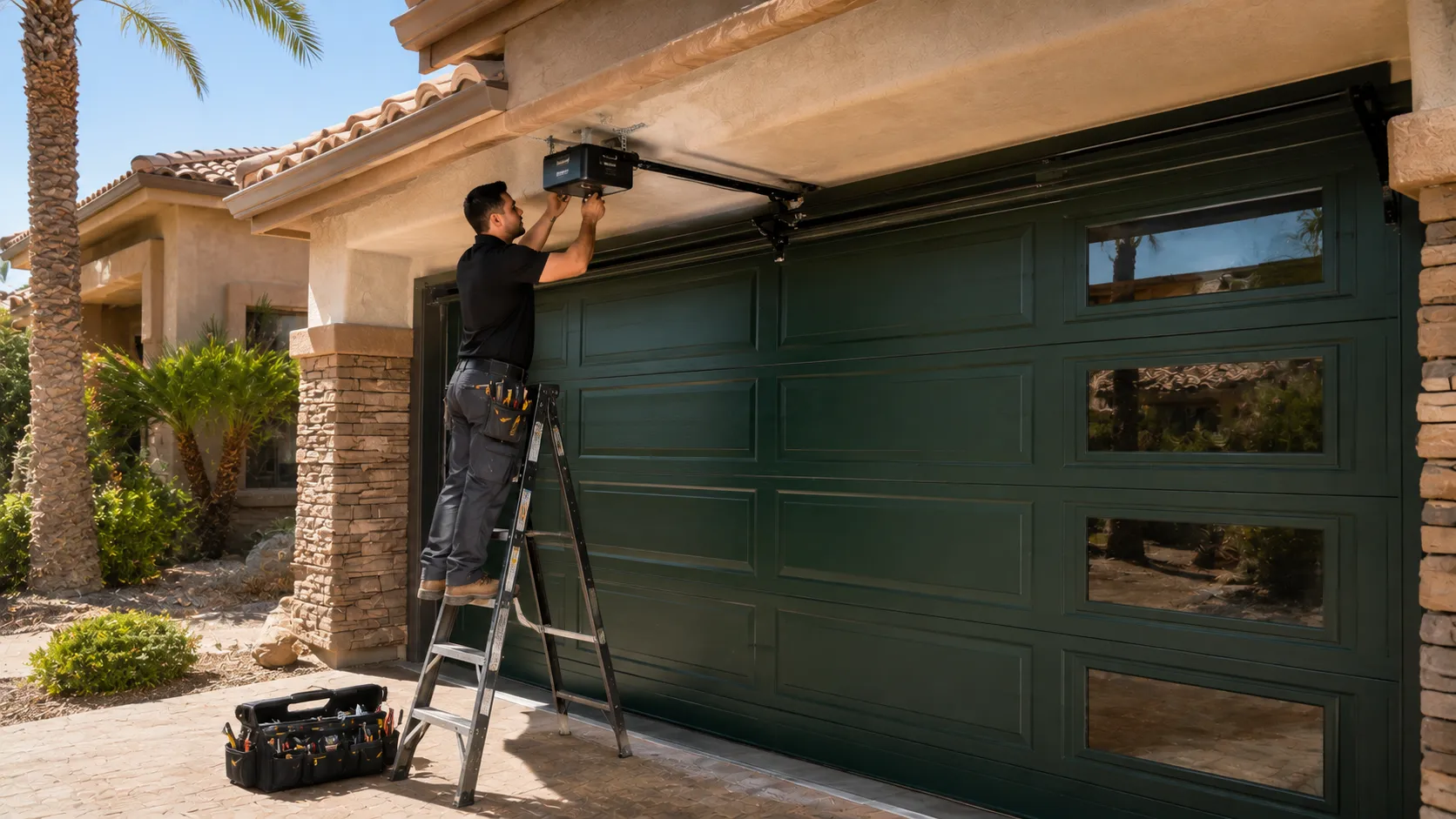
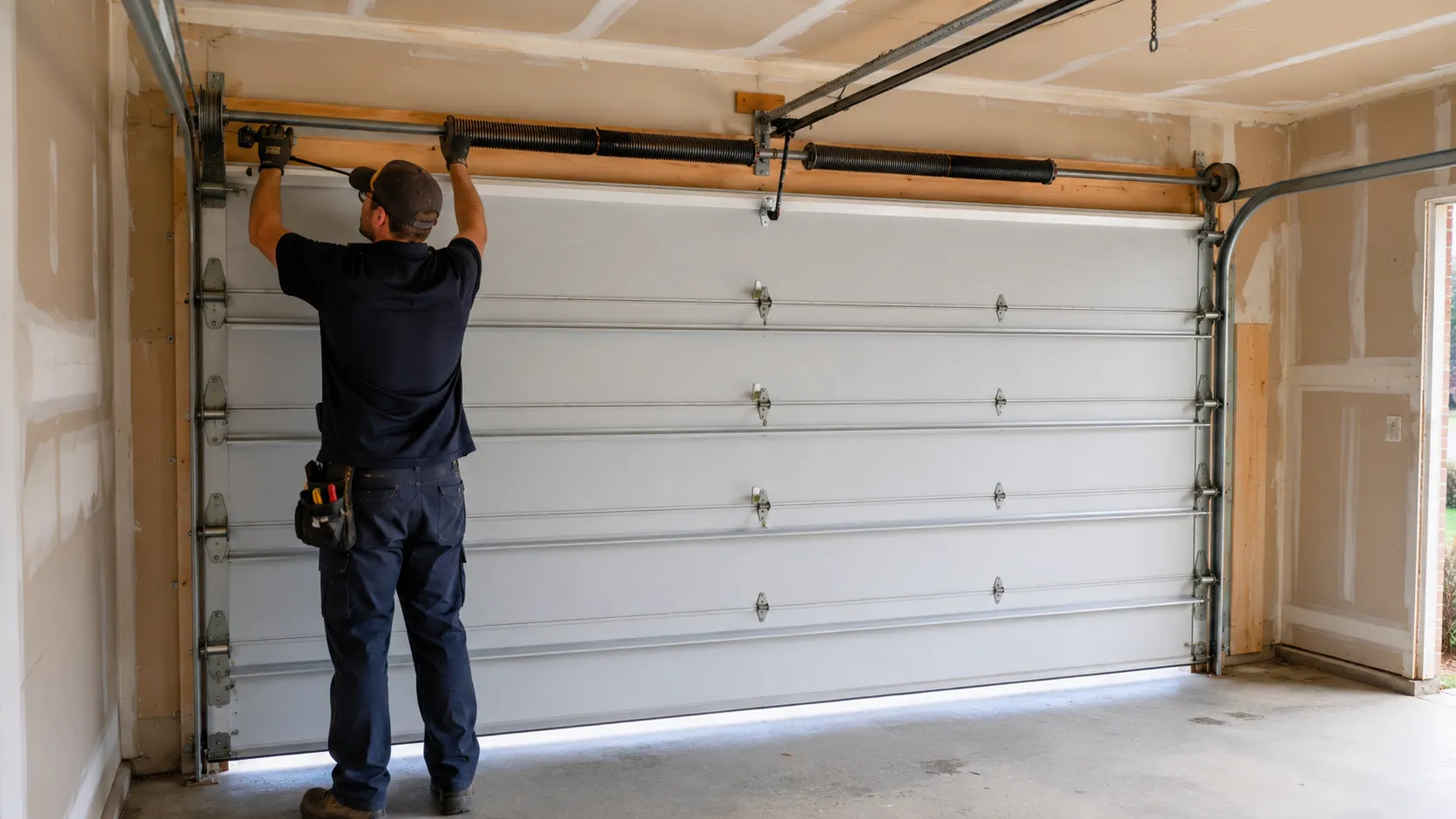
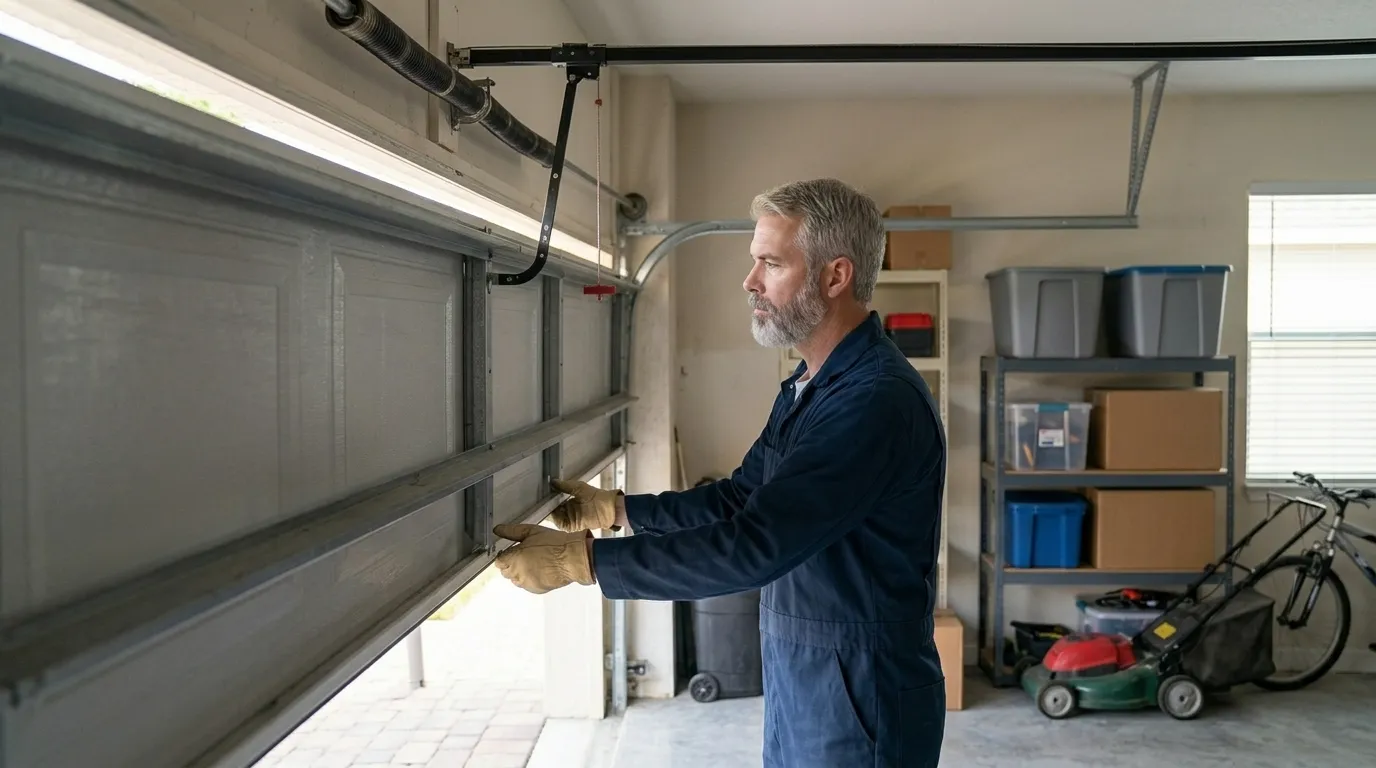
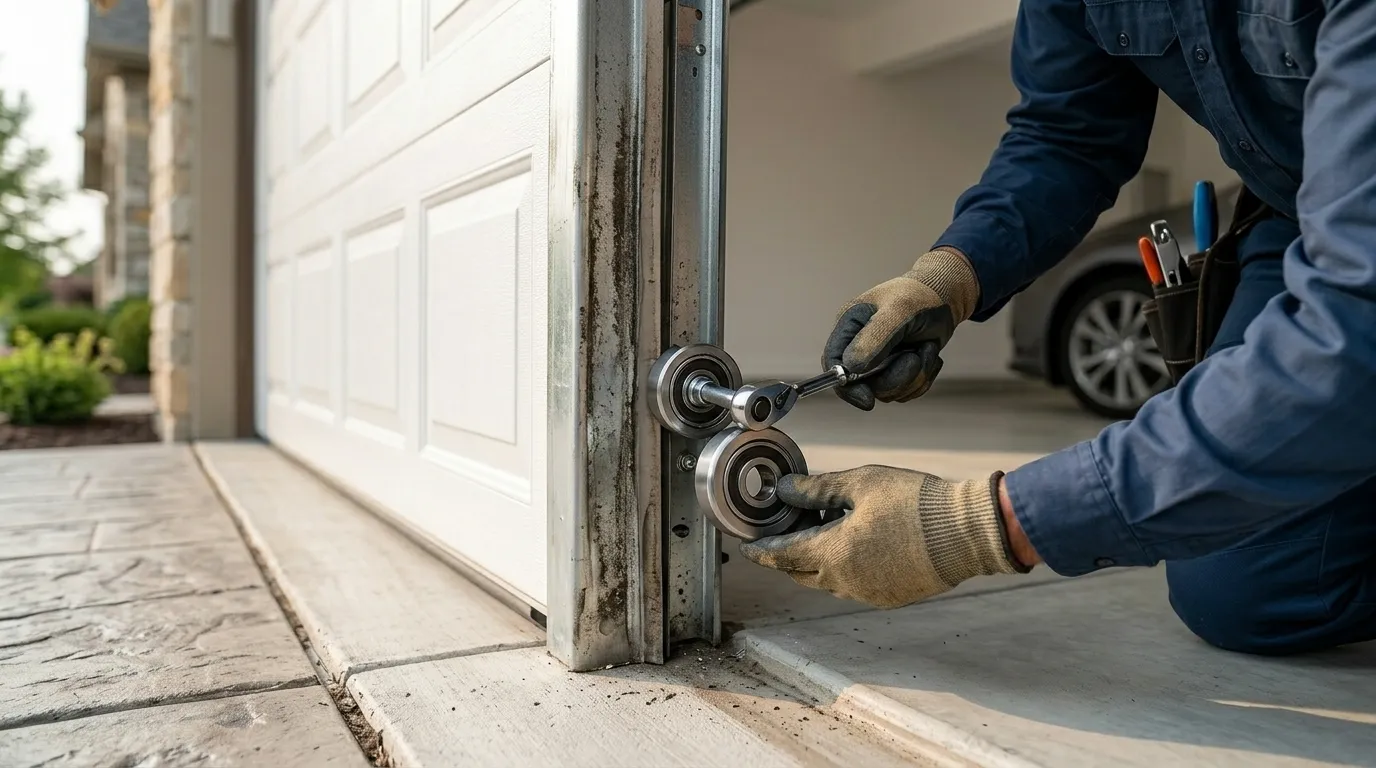
A torsion spring on a double door built in the 1970s or 80s is the most common emergency call. When one side breaks, the door can drop hard and fast, and the cable on that side often comes off the drum with it. Openers from that same era - chain-drive units without any cold-start compensation - can strip a gear or burn out a capacitor trying to force a door that's binding on a frozen track. Rollers on original hardware are usually steel, not nylon, and they seize in the track after enough cold cycles without lubrication. Panel seams on doors from the 1962-2001 stock can also flex and crack where the steel has thinned over decades of expansion and contraction. None of this is exotic. It's ordinary wear meeting ordinary winter, on the ordinary housing stock this whole area was built on.
How It Shows Up
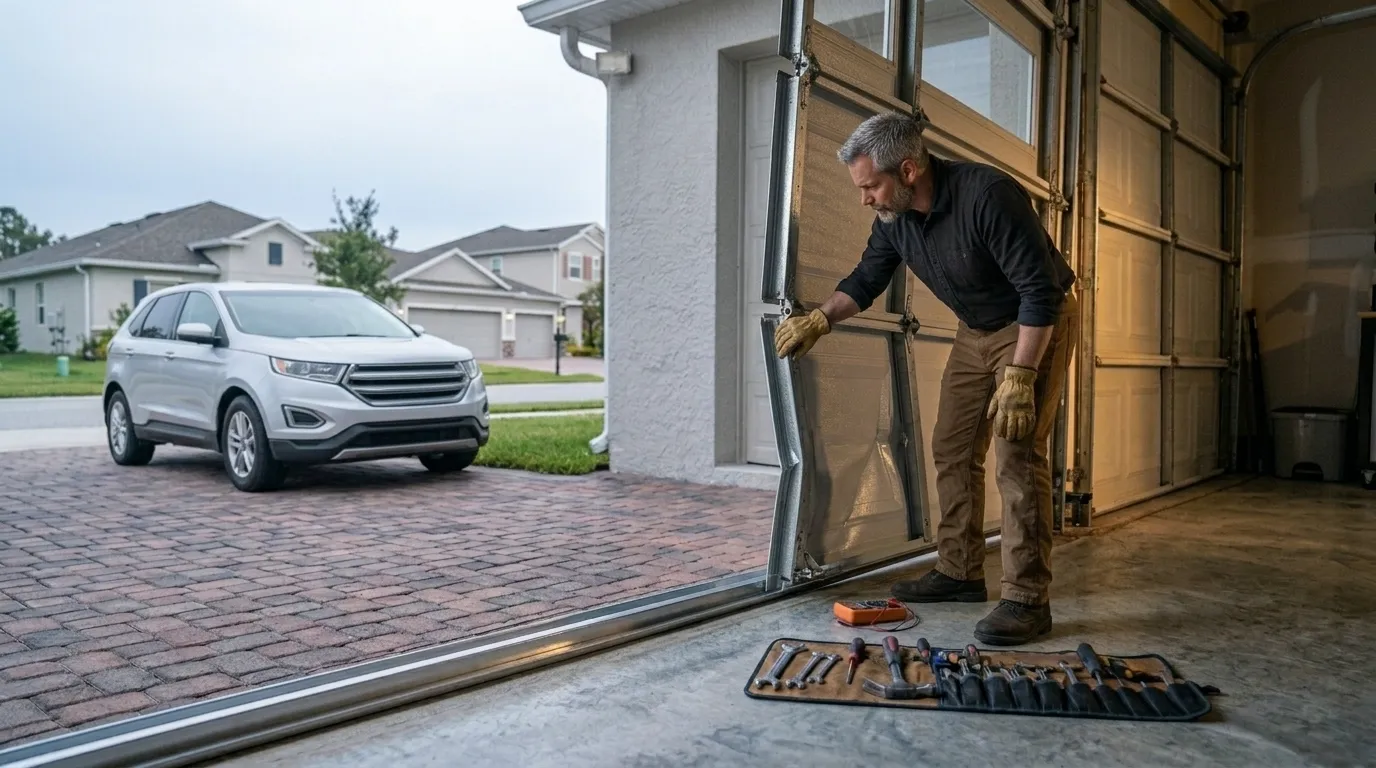
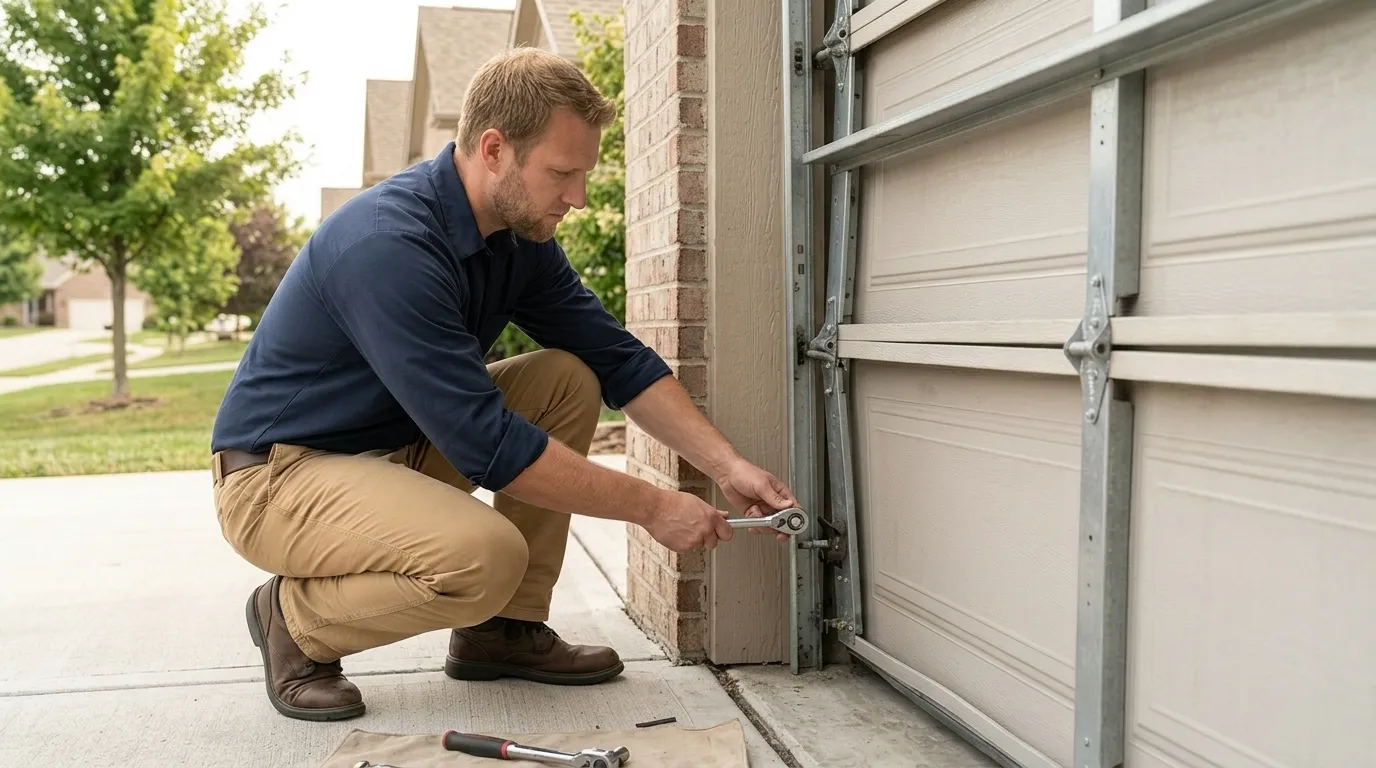
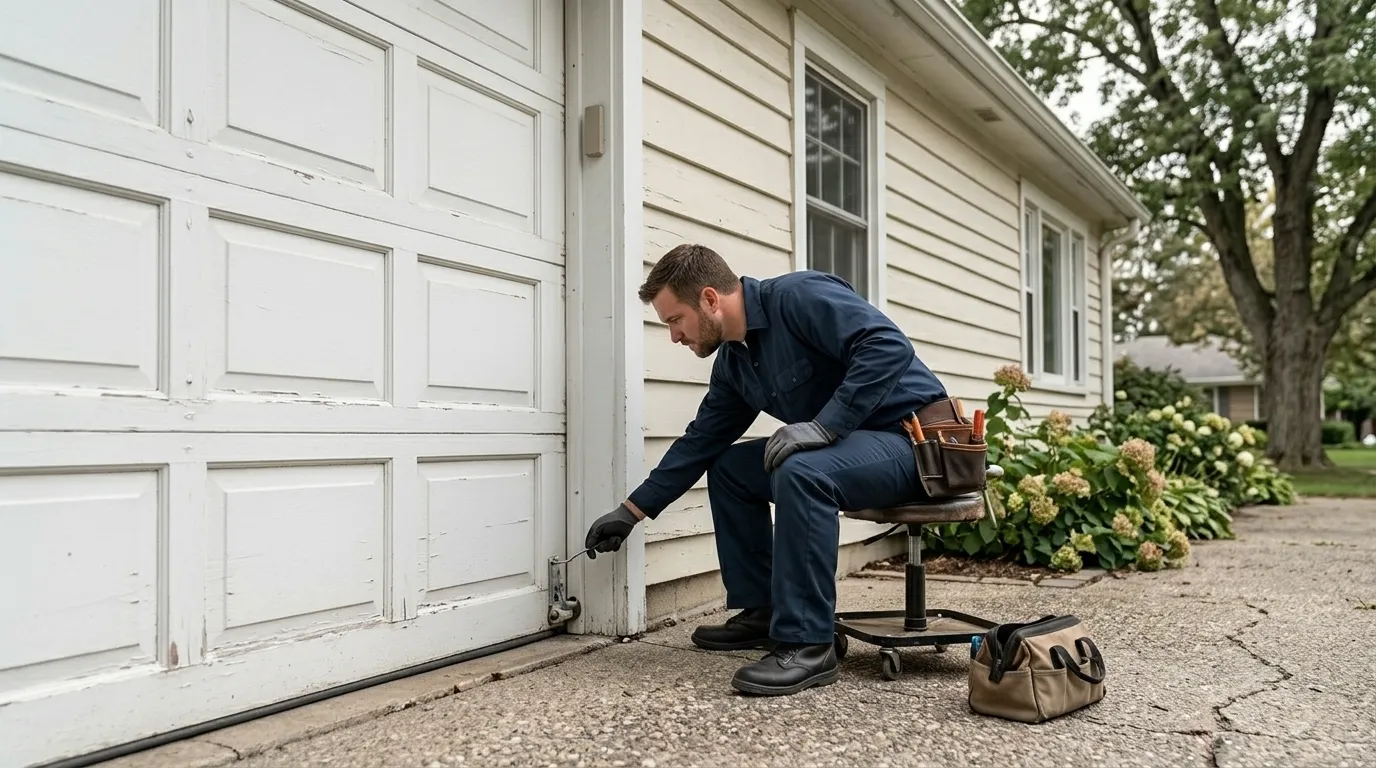
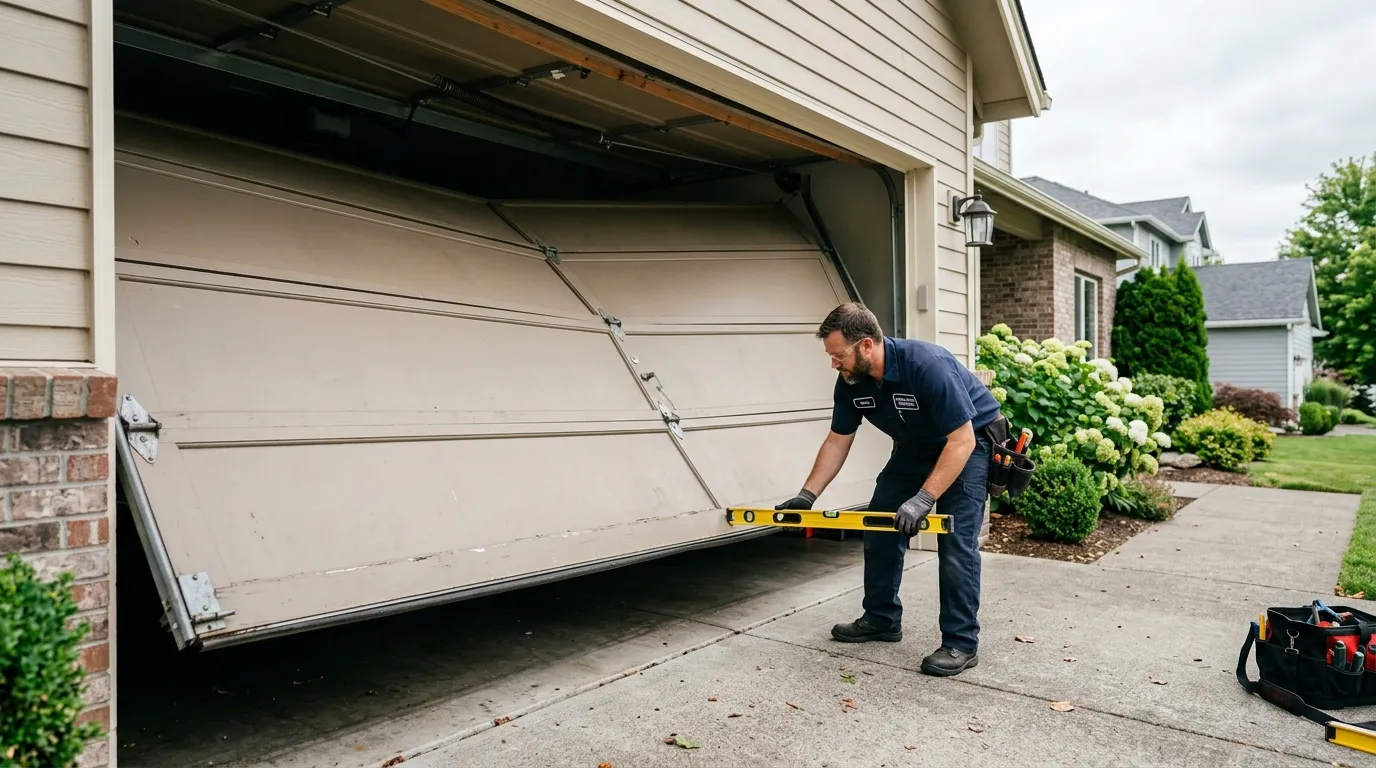
The call almost always starts the same way: the door was fine yesterday, and now it won't move, or it moved halfway and stopped, or it came down hard and won't go back up. A broken spring usually shows up as a loud bang from the garage - sometimes at 6 a.m., sometimes at midnight - followed by a door that feels twice as heavy when you try to lift it by hand. A seized roller or a track knocked out of alignment by cold-stiffened rollers shows up as grinding, a door that only opens six inches, or one side lagging behind the other. A dying opener shows up as a motor that hums but the door doesn't move, or a remote that used to work every time and now works one try in five. None of these wait for business hours.
How We Fix It
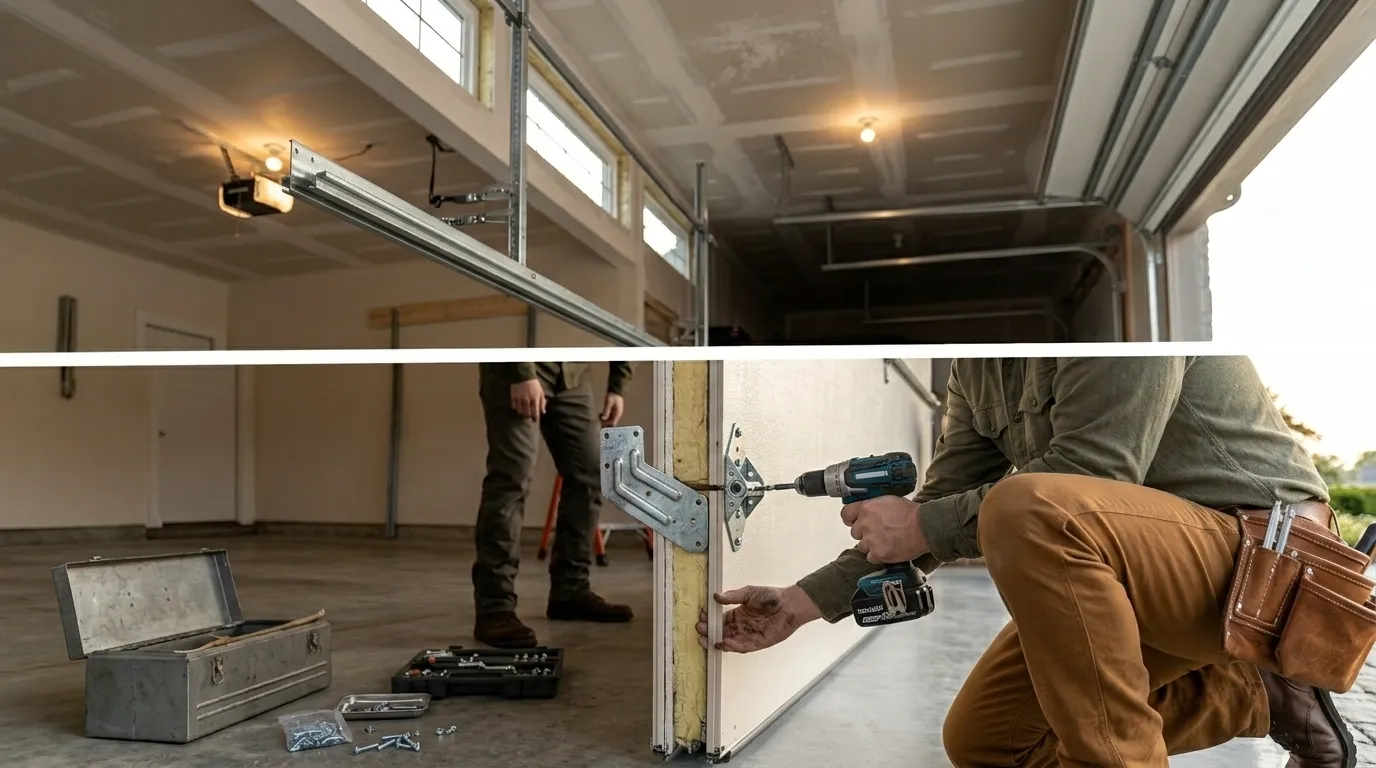
We carry torsion springs and cable sized for the door weights common to houses built between 1962 and 2001, since that's most of what's on the road when a call comes. Most emergency spring and cable jobs get fixed same-visit. Where we run into trouble is anything needing a discontinued panel or a part specific to an opener model that hasn't been made in twenty years - those can mean a short wait on a special order, and we'll tell you that up front rather than promise a fix we can't deliver that day. We work across the coverage area from Middleton, four miles out, through twenty miles north, and everywhere named in between. With a median household income of $98,943 across the coverage area, most owners we talk to want the repair done right rather than the cheapest patch, which is part of why we carry stock parts rather than substitutes. Not every broken door is worth fixing: if the spring failure has also cracked two or three panels on an original 1960s-70s door, replacement usually costs less over five years than repeated repair, and we'll say so instead of running up a bill on hardware that's on its way out anyway.
How it works
From “it’s stuck” to “it’s fixed”
01
Tell us what’s wrong
Describe the symptom - won’t open, loud bang, opener runs but the door won’t move.
02
On-site diagnosis
A technician tests the door under power and by hand and finds what actually failed.
03
Clear, up-front plan
You get the fix that’s needed and what drives the cost - before any work starts.
04
Repaired & tested
The repair is done, the door is set true and tested, and the work area left clean.
Serving Madison, WI - tell us what your door’s doing and we’ll take it from there.
Why did my garage door spring break in cold weather?
Cold makes the steel in a torsion spring contract and the lubricant inside it stiffen, so a spring that's already near the end of its cycle life is more likely to snap in a hard cold stretch than in mild weather. This area sits in a cold-moderate climate band, so that seasonal spike in spring failures is expected, not unusual.
Do you cover towns outside Madison proper?
Yes. Our coverage runs from Middleton, about four miles out, through towns like Fitchburg, Verona, Waunakee at the far edge around twenty miles, plus everywhere named in between. Each of those areas has its own page with local detail; this page covers the repair service itself.
How old does my house have to be for this kind of failure to be common?
Most of the emergency calls we get come from houses built between 1962 and 2001, with the median build year around 1986. If your garage door and opener are original to a house from that window, the hardware is old enough that spring failure and roller seizure are close to expected, not surprising.
Is every broken door worth repairing?
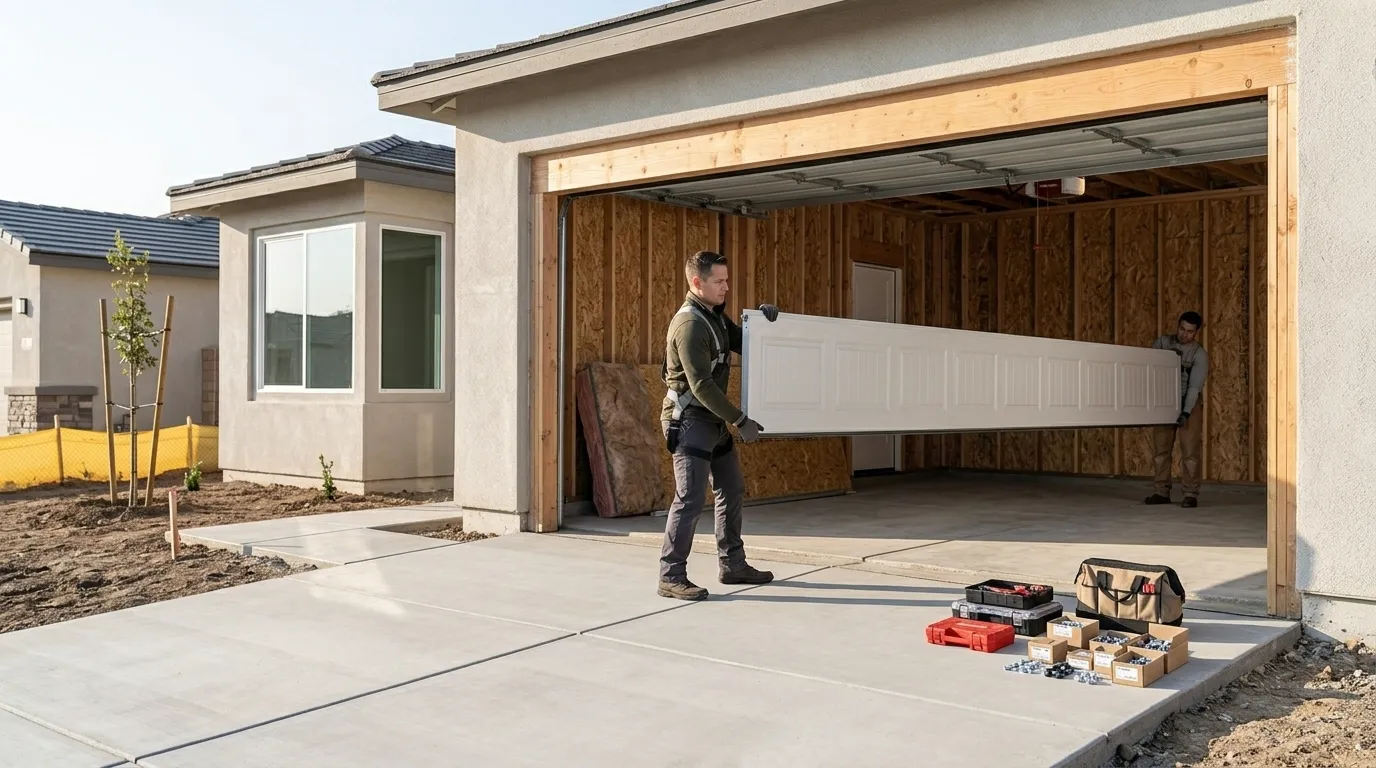
Not always. If a spring failure has also cracked or bowed multiple panels on an original door from the 1960s or 70s, repeated repair usually costs more over a few years than replacing the door outright. We'll tell you when that's the case instead of running up a repair bill on hardware that's already failing elsewhere.
Ready to get your garage door sorted?
Tell us what it’s doing and where you are in Madison - we’ll take it from there.