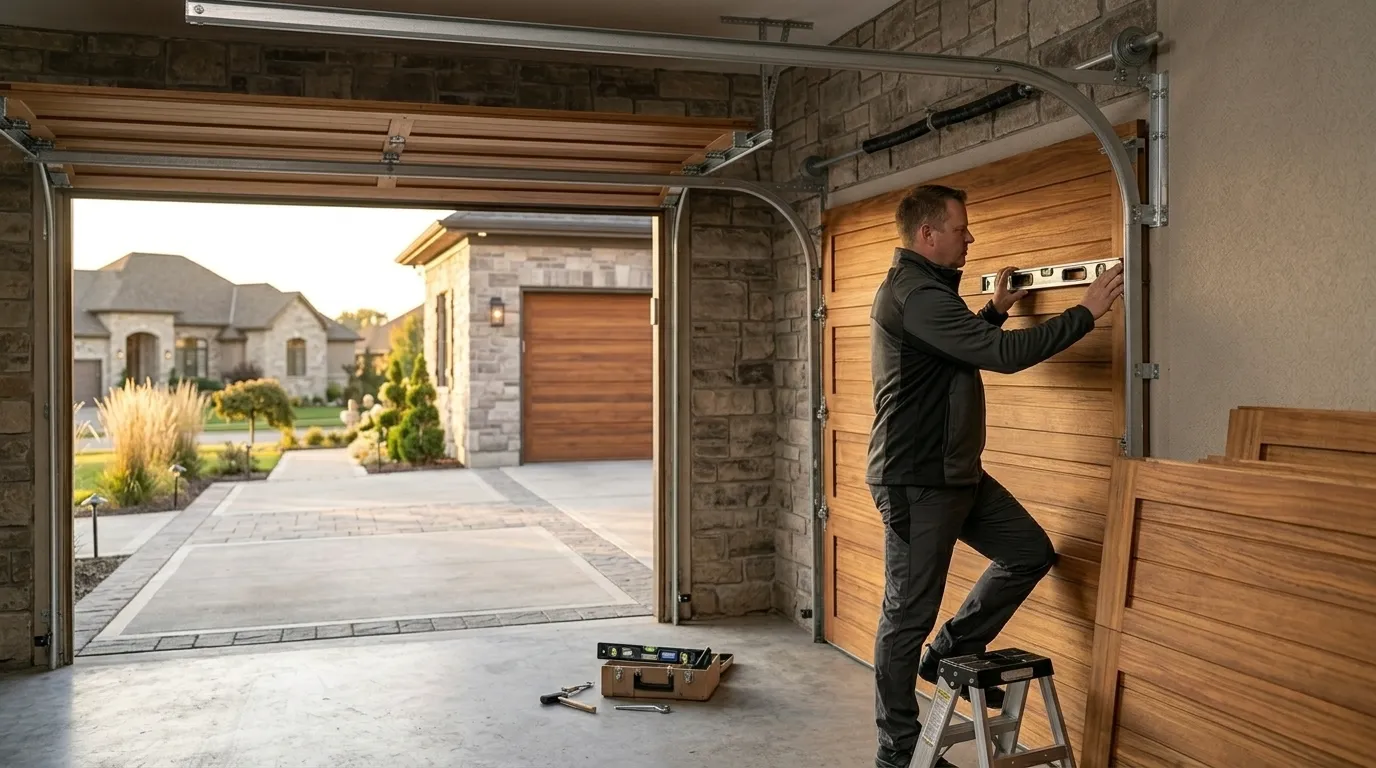
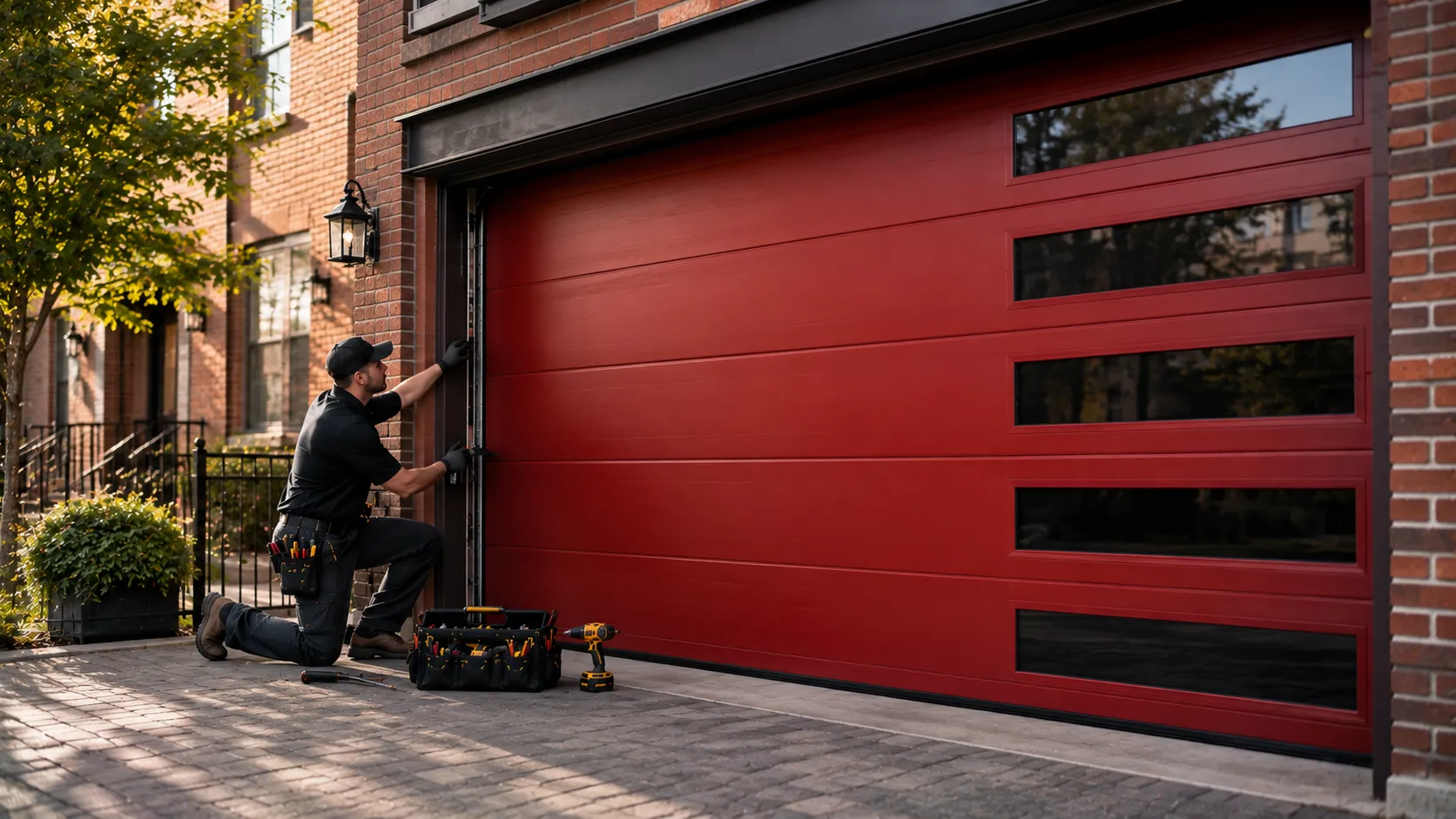
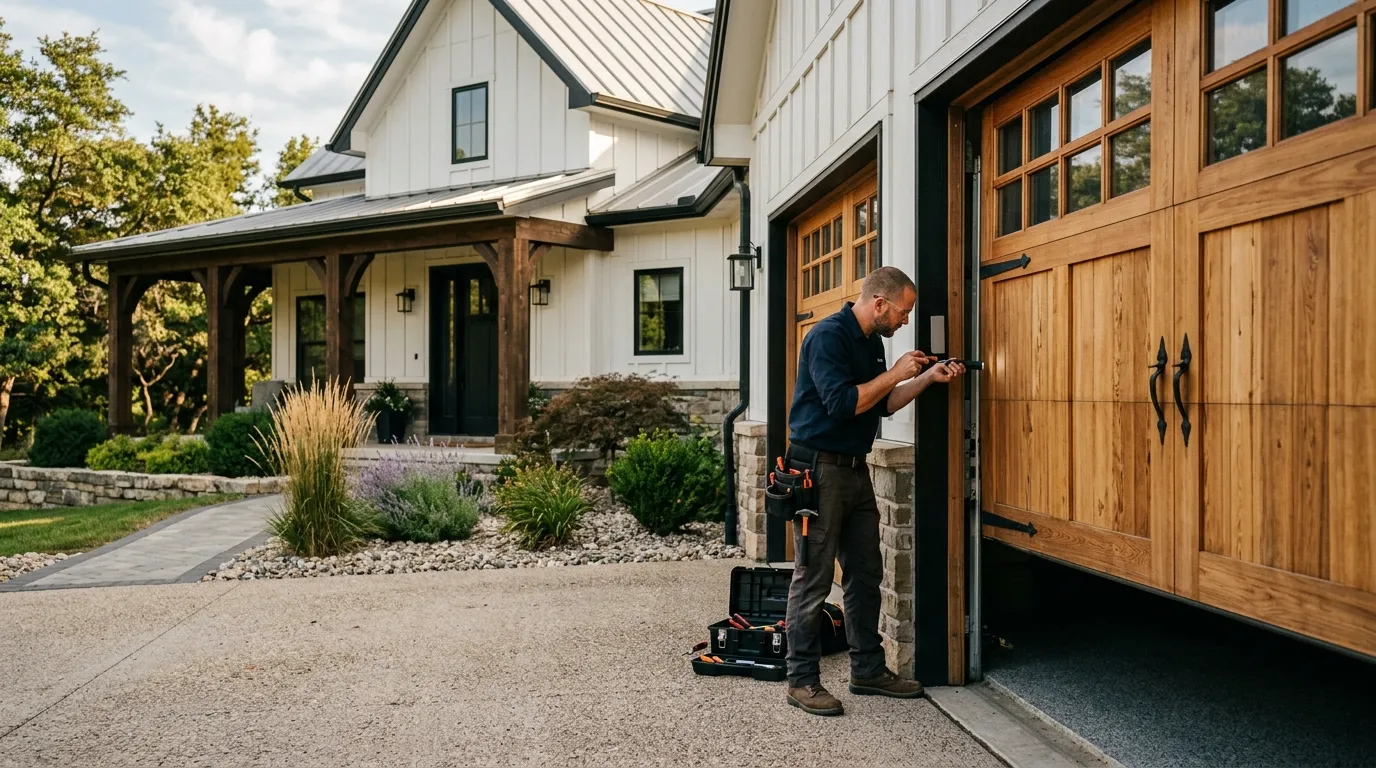
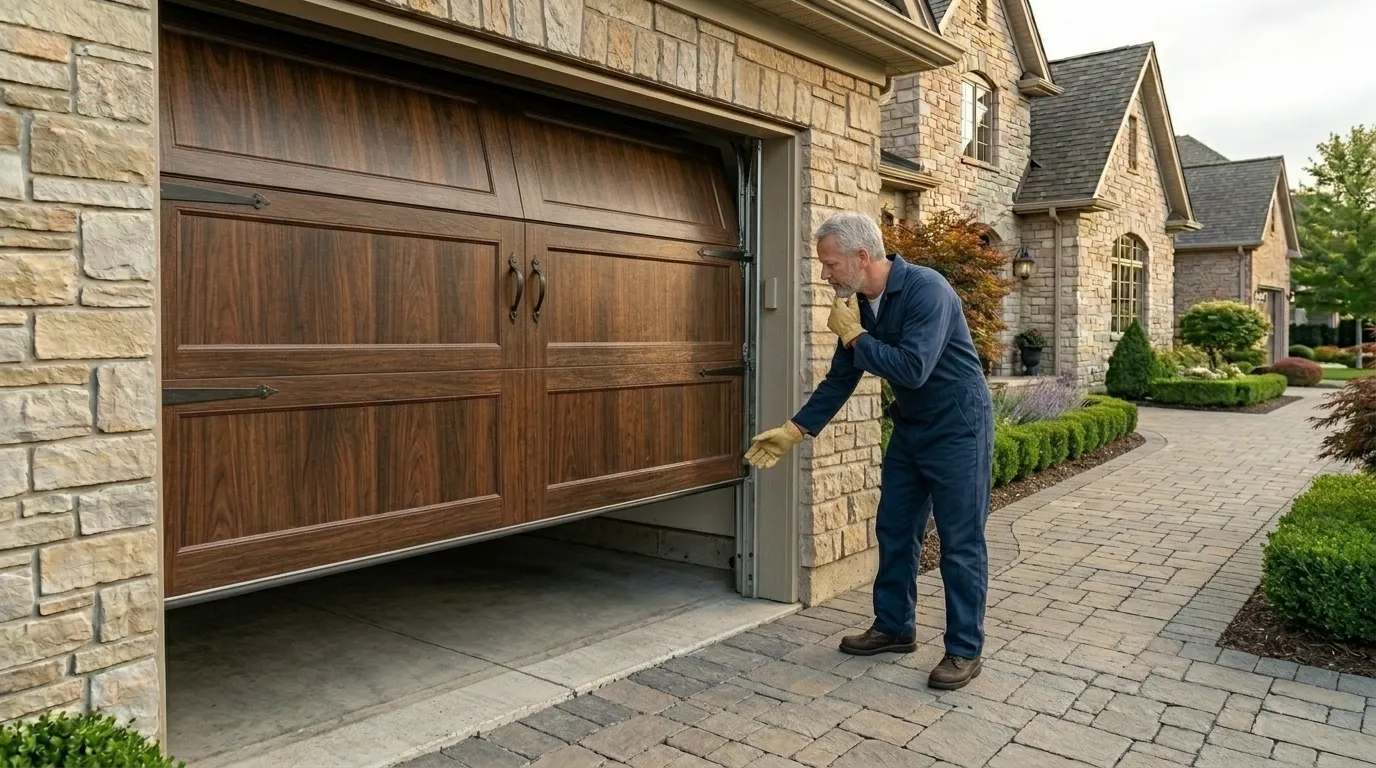
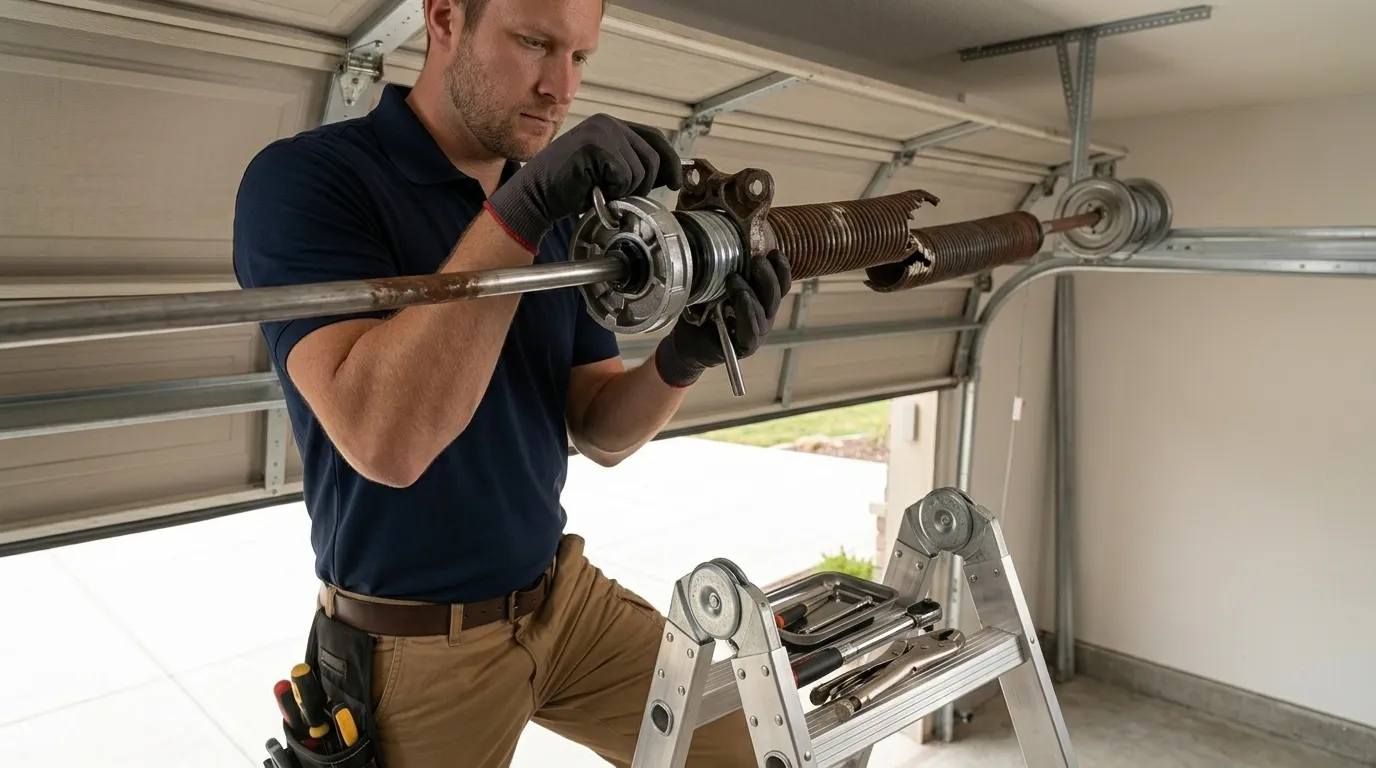
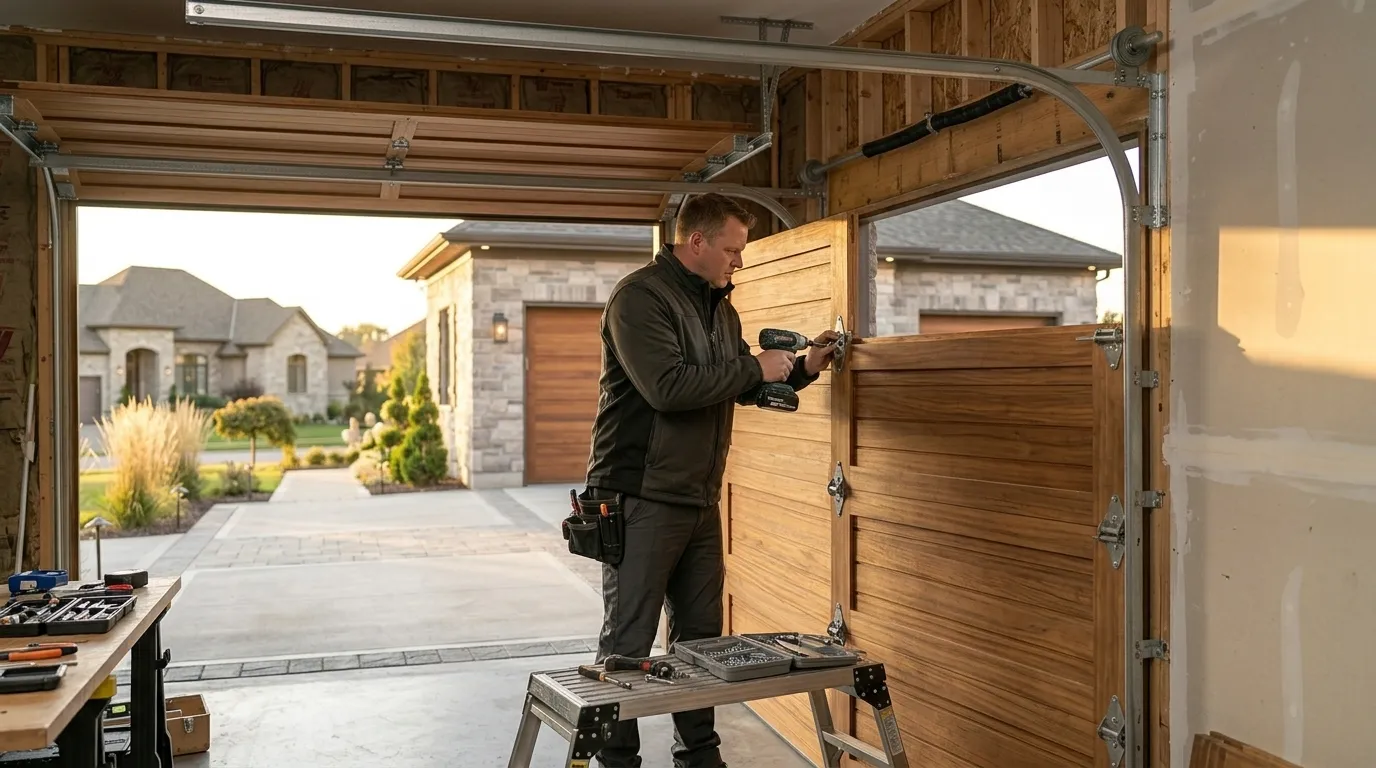
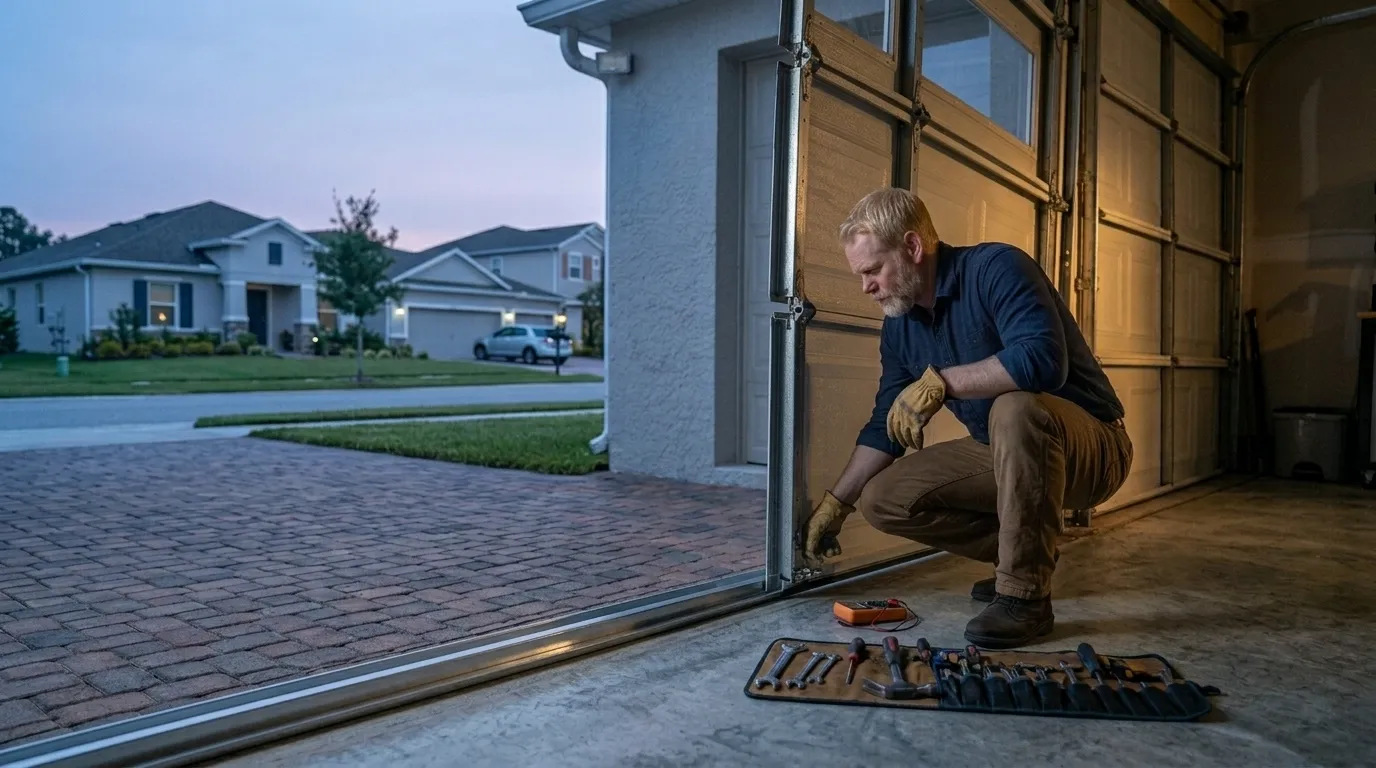
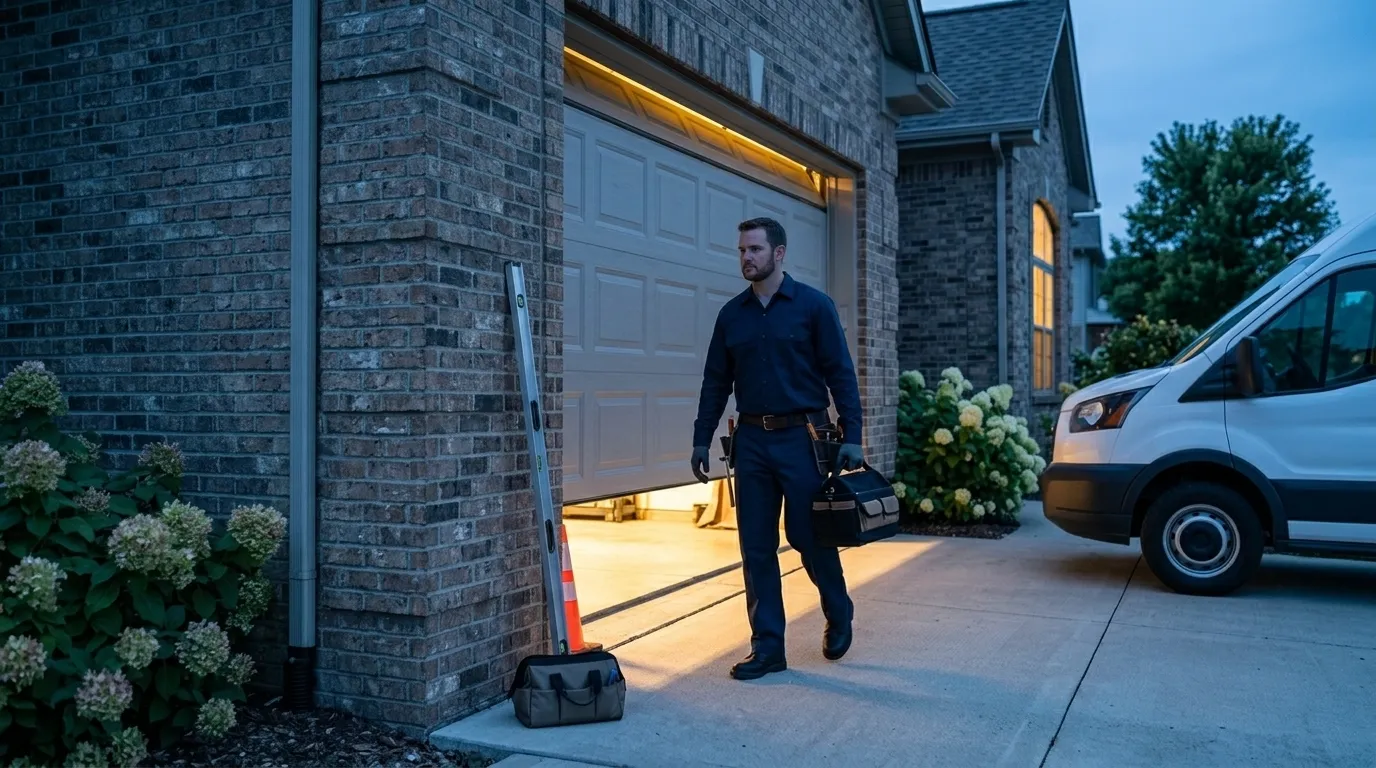
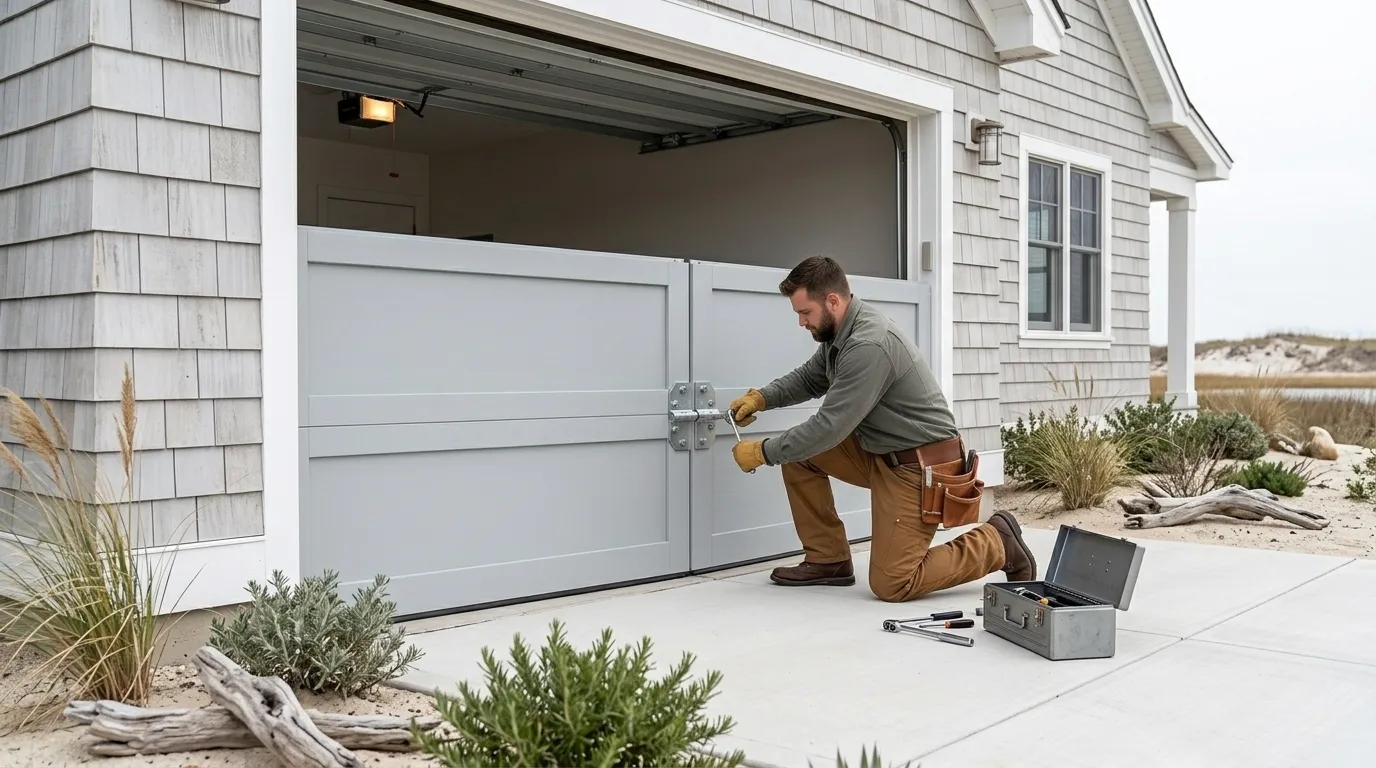
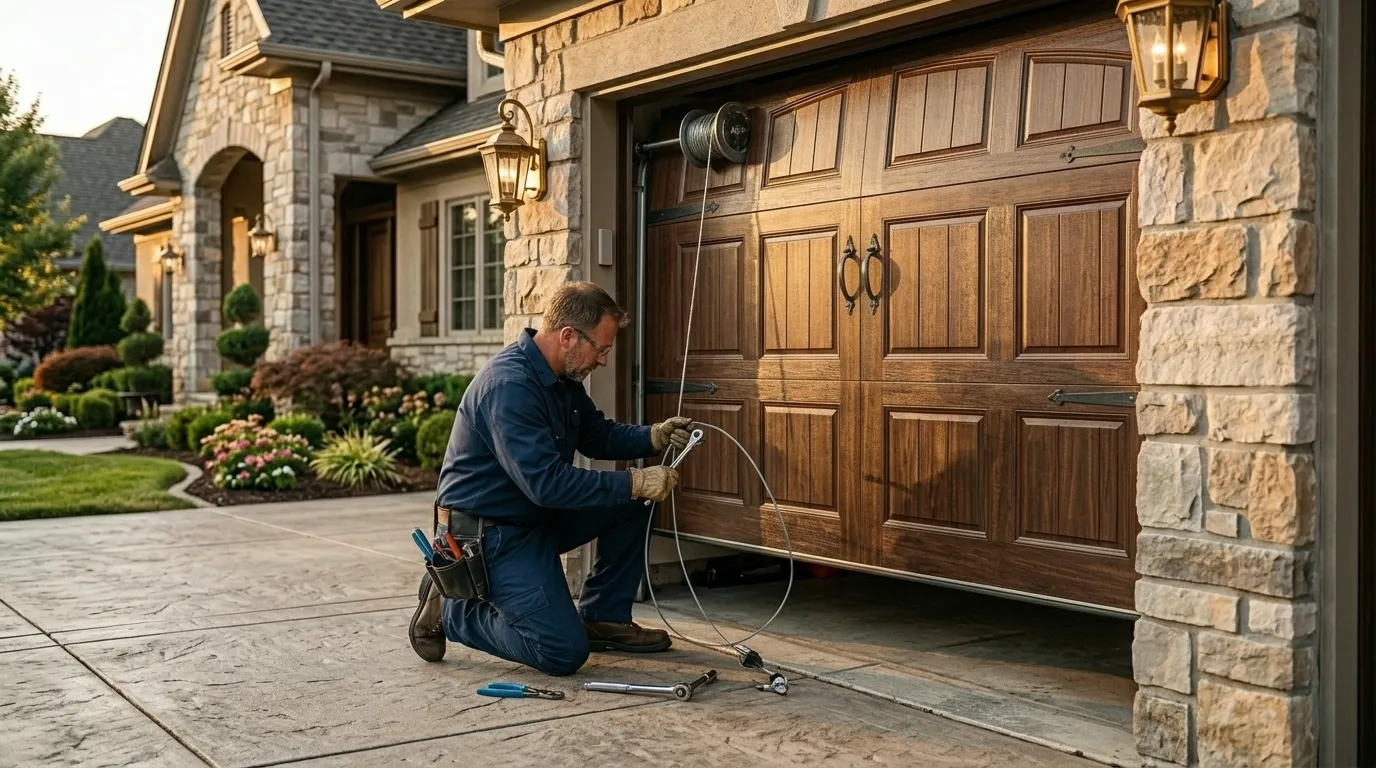
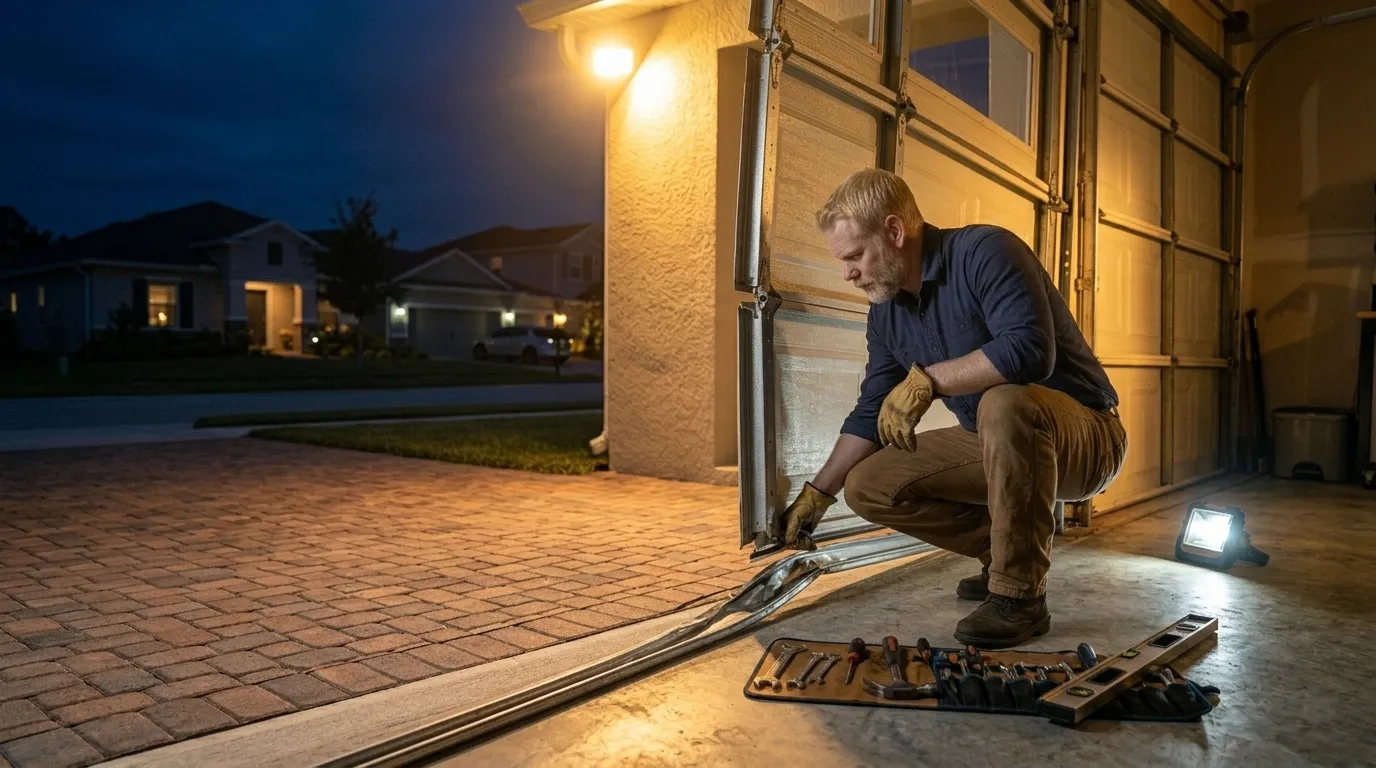
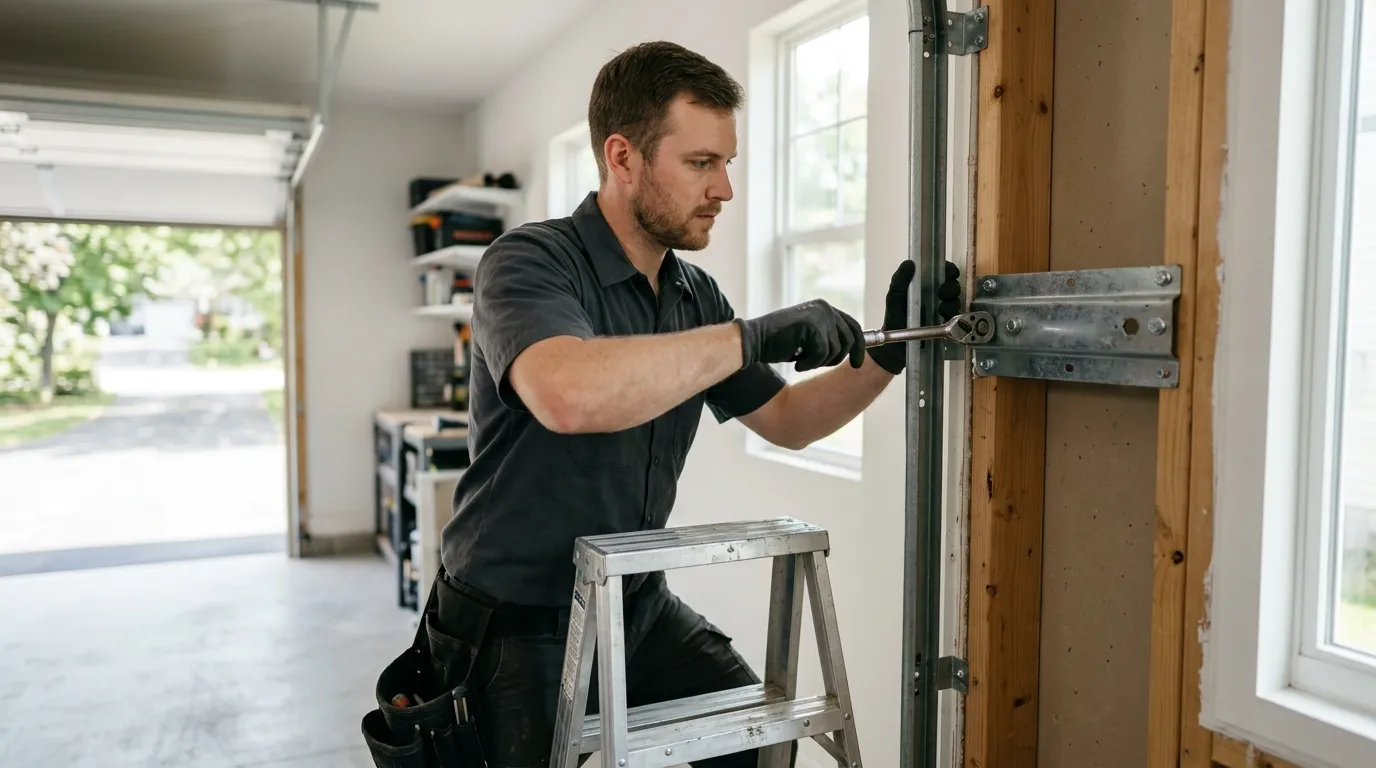
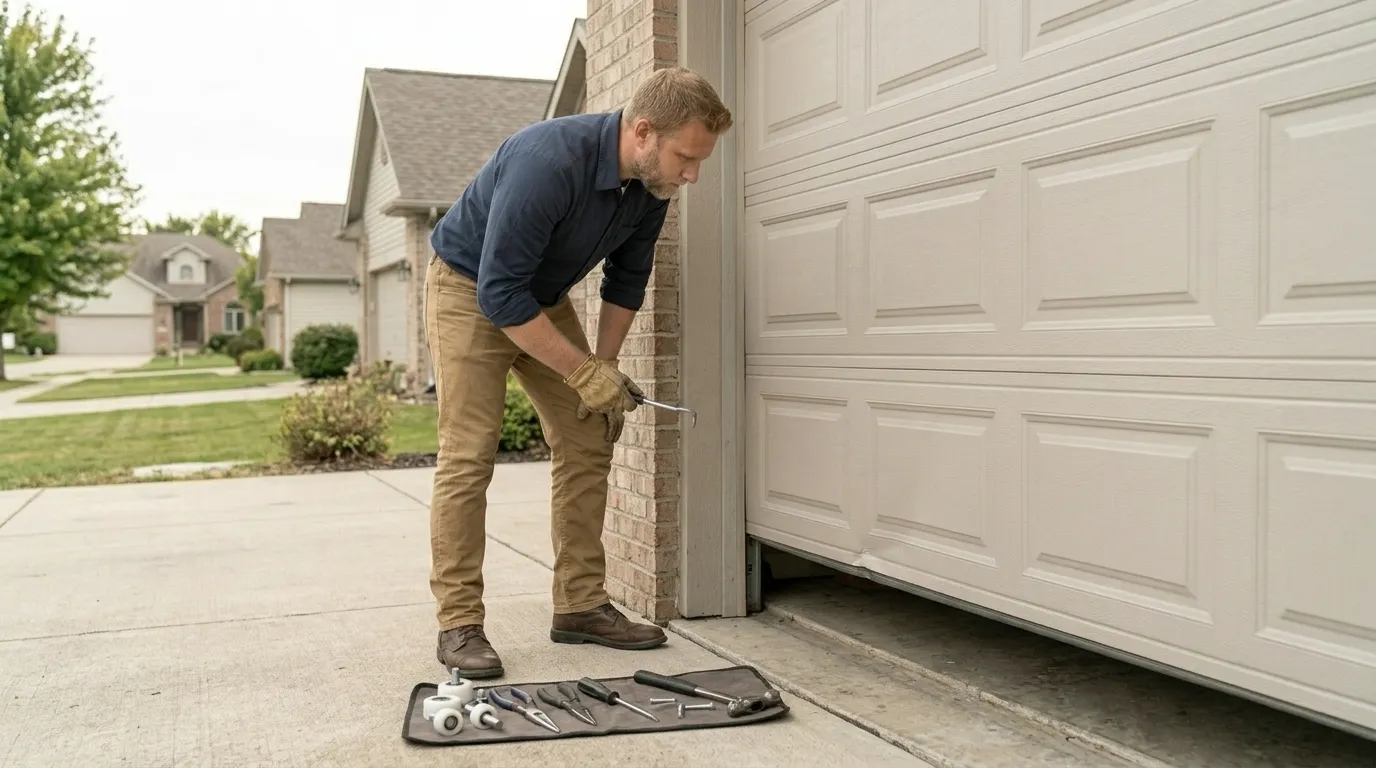
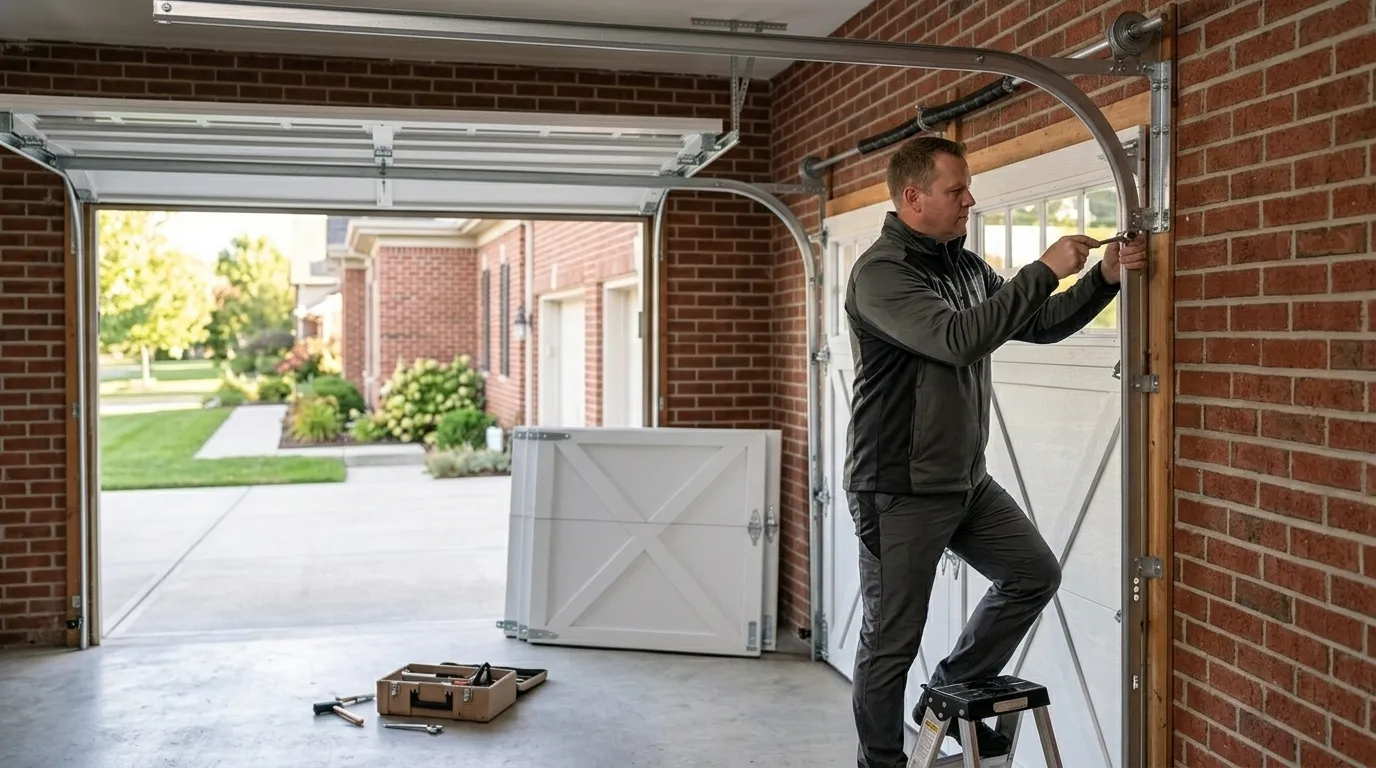
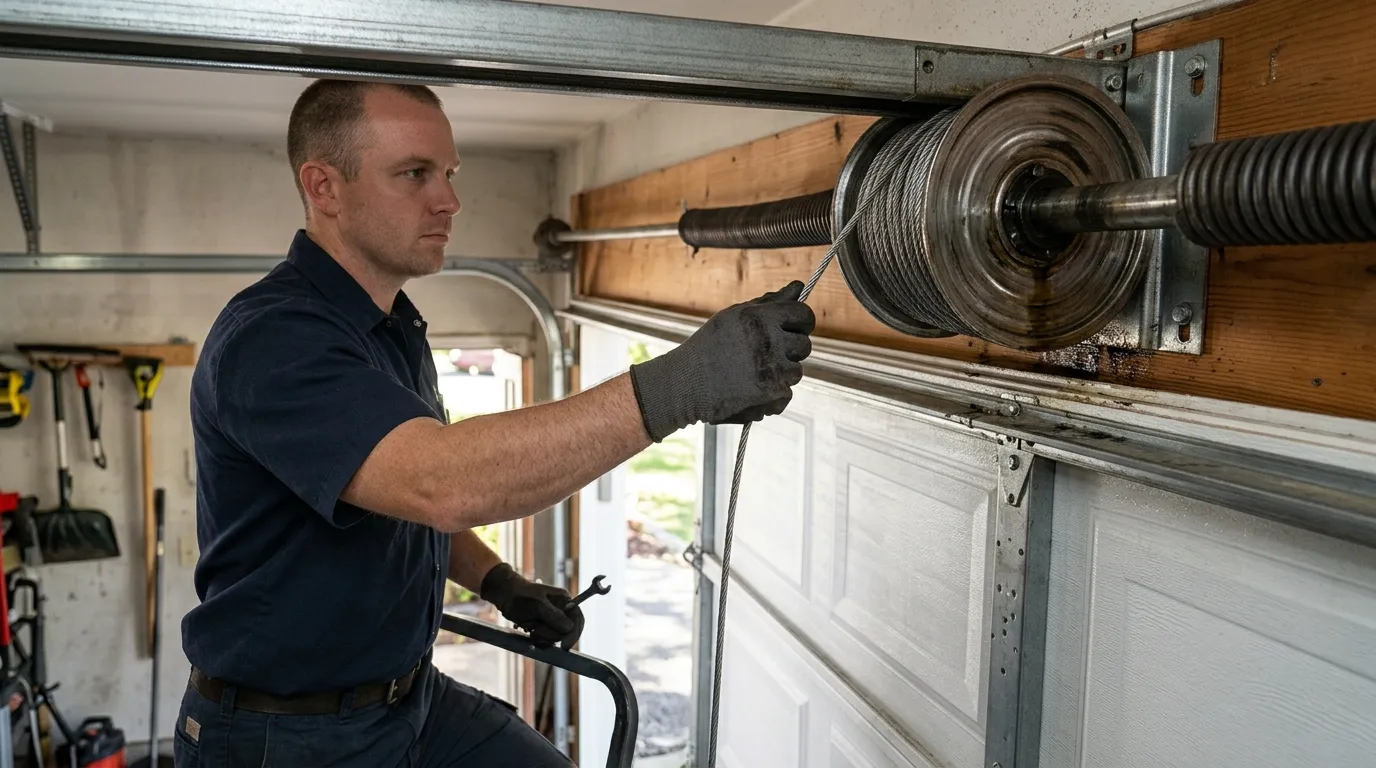
Dented or cracked garage door panels are common on Madison's 1962-2001 housing stock. We match panels and replace full sections on steel and aluminum doors.
Most of the housing stock in the Madison service area went up between 1962 and 2001, with the median build year landing around 1986. That means a huge share of the doors on the street are steel sectional units from an era when galvanized steel panels were thinner than what's sold today, and insulation, if it's there at all, is a thin foam core glued between two skins. Thirty-plus years of freeze-thaw cycles in a cold-moderate climate band work on that thin steel from both sides. Panels expand and contract with temperature swings, seams flex, and the factory paint cracks first at the hinge stiles - right where a stray basketball, a trailer hitch, or a shifted ladder is most likely to hit anyway. In the newer pockets built closer to 2001, panels are a bit heavier gauge and hold up longer, but the fasteners and roller brackets are the same design, so the failure points don't move much. A cracked panel on a house this age is rarely a one-off accident - it's usually the combination of an aging skin and one bad knock finally finding the weak spot.
What Can Go Wrong
A single dented panel is a cosmetic problem until it isn't. Once the steel skin creases, the panel loses the stiffness that keeps the door square in its tracks, and the section starts binding on the rollers every time it travels past that spot. Cracked panels let moisture into the foam core, and in a cold-moderate climate that moisture freezes, expands, and pries the seam wider each winter. On doors from the 1960s-80s range of our housing stock, the panel profile often doesn't match anything sold at a home center - the ribbing spacing and hinge hole pattern are specific to the original manufacturer, so a mismatched replacement panel will bolt on but never sit flush. We've also seen owners bolt a new panel onto old, rusted hinges, which just transfers the stress to the next weakest point and cracks a second panel within a season.
How It Shows Up
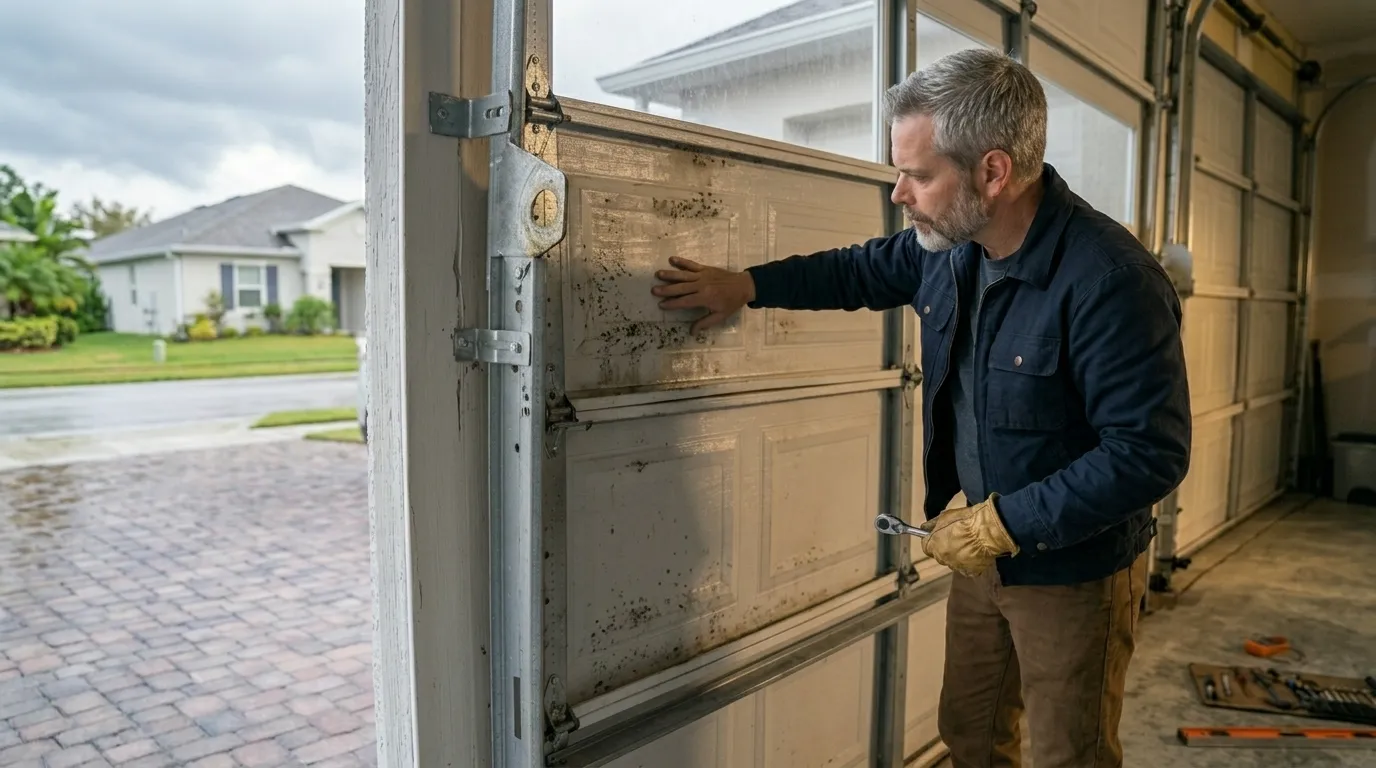
You'll usually notice it before you can name it: the door looks slightly bowed when it's down, or one section catches light differently than the rest. Up close there's a horizontal crease across a panel, sometimes with the paint flaking along the crease line first. If water's gotten into the core, the panel feels soft or spongy when you press it, and in winter you might see frost forming unevenly on the inside face where insulation has separated from the steel. A door that used to run quiet starts clunking at the same point in the cycle every time - that's the damaged panel catching a roller or bracket as it passes. On older doors in this area, a bent panel can also throw the whole door slightly out of square, which shows up as daylight along one edge of the weatherstrip even when the door looks shut.
How We Fix It
We replace the damaged section, not the whole door, whenever the rest of the panels, tracks, and hardware are sound - that keeps the job to a panel and a couple hours instead of a full replacement. Matching is the real work: we identify the manufacturer and panel width before ordering, since the older stock common across this area doesn't always match current retail sizing. If a panel's discontinued or the match isn't close enough to sit flush, we'll say so and price a full door instead of forcing a bad fit - that's the one call we won't fudge for a faster invoice. Once the new section is in, we check the hinges and rollers on either side of it, because a fresh panel bolted to worn hardware just moves the next failure down the line. We serve homeowners across the Madison area, including Middleton, Waunakee, Fitchburg, Verona, and the other communities within roughly a twenty-mile radius.
How it works
From “it’s stuck” to “it’s fixed”
01
Tell us what’s wrong
Describe the symptom - won’t open, loud bang, opener runs but the door won’t move.
02
On-site diagnosis
A technician tests the door under power and by hand and finds what actually failed.
03
Clear, up-front plan
You get the fix that’s needed and what drives the cost - before any work starts.
04
Repaired & tested
The repair is done, the door is set true and tested, and the work area left clean.
Serving Madison, WI - tell us what your door’s doing and we’ll take it from there.
Can you replace just one panel, or does the whole door need to go?
Usually just the damaged section, as long as the rest of the door tracks straight and the hardware is in decent shape. If the panel profile is discontinued or the door's old enough that a matching section isn't available, we'll tell you and price a full replacement instead of forcing a mismatch.
Why does my panel crack in the same spot every winter?
Moisture that got into the foam core last season freezes and expands each time temperatures drop, widening the same seam a little more every year. In our climate that cycle repeats every winter until the panel is replaced, not just patched.
Will a new panel match the rest of my door?
We check the manufacturer and panel width before ordering. Doors built in the 1960s through the 1990s, common across this area's housing stock, often use a rib spacing and hinge pattern that isn't sold off the shelf, so an exact match isn't always possible - we'll tell you upfront if it isn't.
Ready to get your garage door sorted?
Tell us what it’s doing and where you are in Madison - we’ll take it from there.