Most of the garage doors we get called out for in the Madison area were installed on houses built between 1962 and 2001, with the bulk of that stock going up in the 1980s and '90s across the 28 named areas we cover. That generation of door came with steel tracks bolted to wood jambs that have since shrunk, swelled, and shifted with three decades of freeze-thaw cycles. Madison sits in a cold, moderate climate band, and that matters more than people think: the same door that runs fine in July can bind or jump its track in January once the rollers lose lubricity and the track brackets contract against the frame.
A door doesn't usually leave its track all at once. It walks off a little at a time - a bracket loosens, a roller wears flat on one side, the door starts riding slightly crooked, and one cold morning it finally jumps the rail. Because so many houses in our service area share that same building era and the same climate exposure, off-track calls follow a predictable seasonal pattern rather than being random bad luck. If your house was built anywhere near that 1962-2001 window, the hardware inside your garage is very likely original or close to it.
What Can Go Wrong
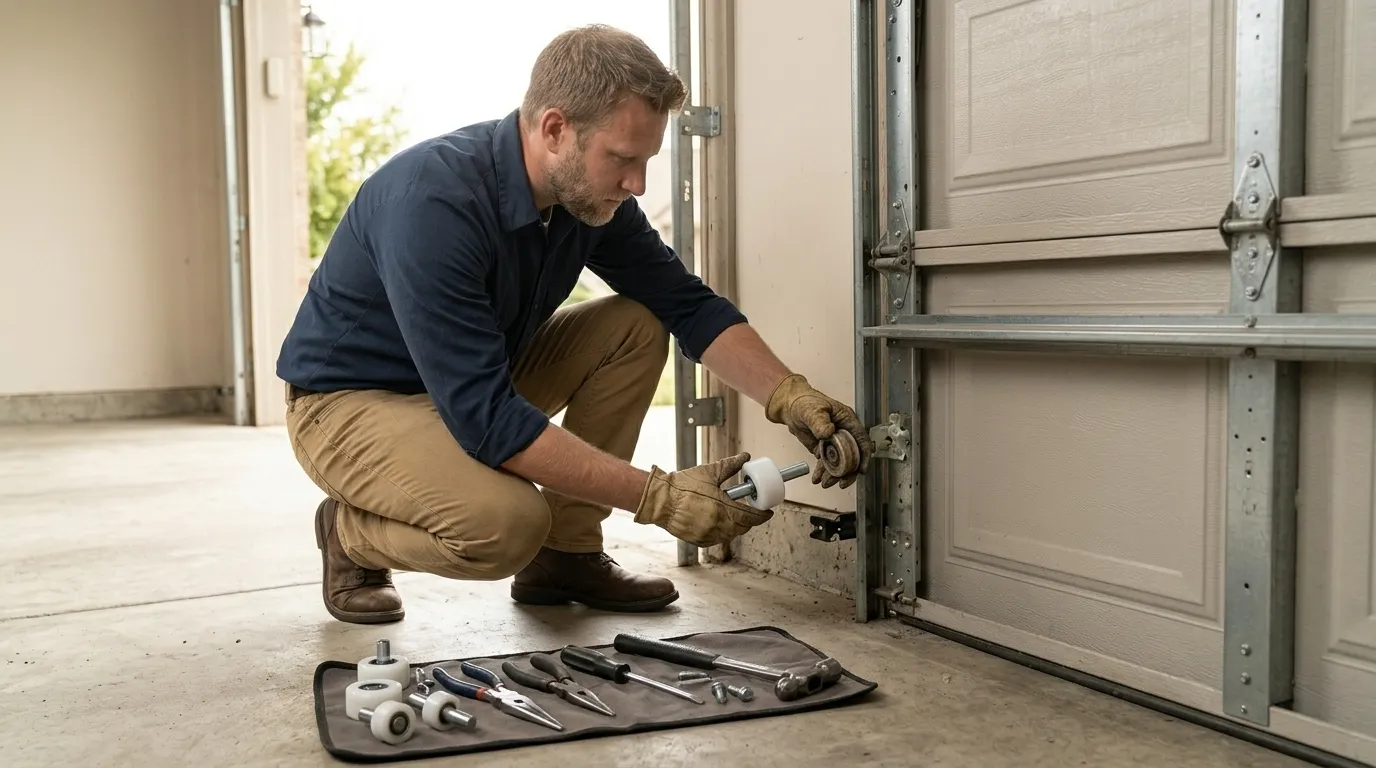
An off-track door is rarely just cosmetic. The most common cause we find is a bent track section, usually from a car bumper tap or a section that's worked loose at the wall brackets over the years. Rollers matter too - steel rollers on older installs wear grooves into themselves, and once a roller is out of round it can climb the lip of the track instead of riding inside it.
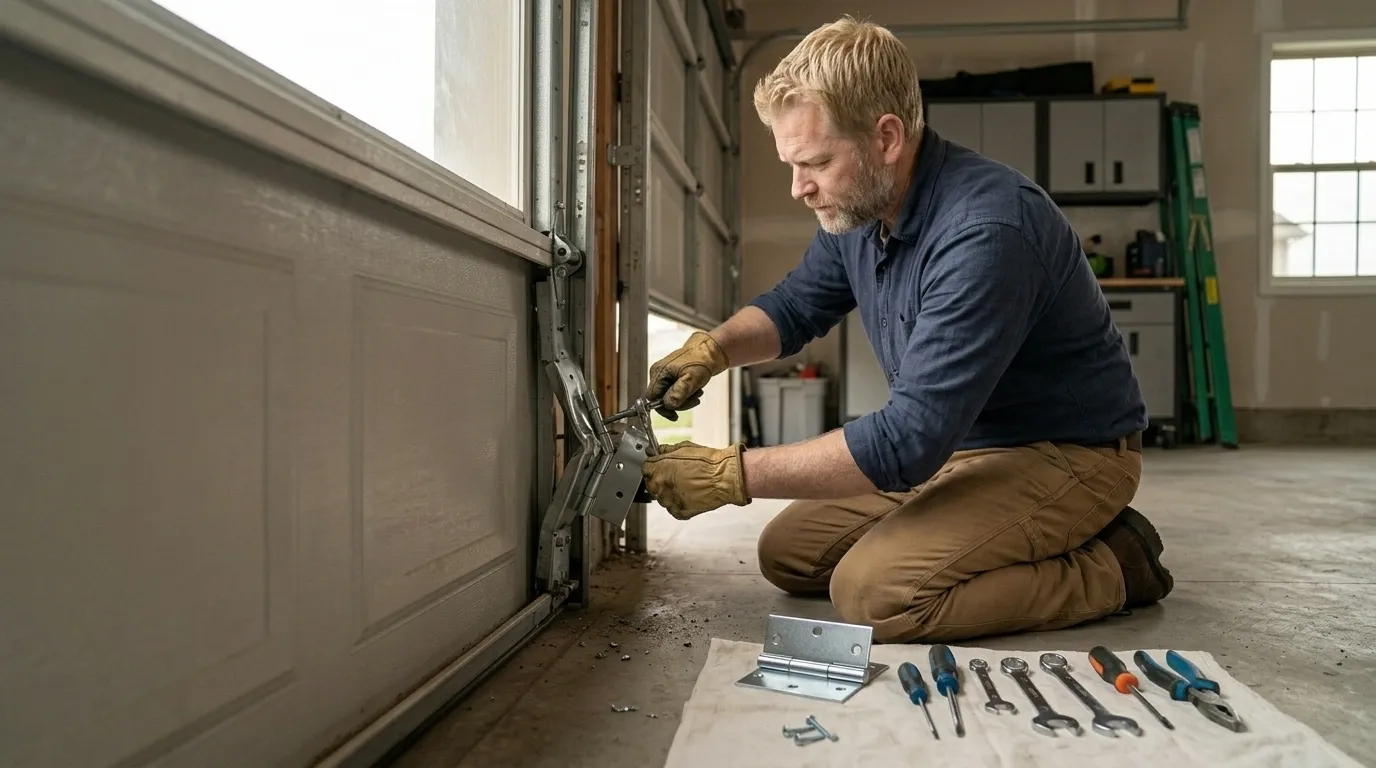
Cables and hinges are the other half of the story. A frayed cable can let one side of the door drop while the other stays up, twisting the panel against the track until it pops free. Loose hinges let panels flex, which throws off the door's alignment section by section. None of these are safe to force back into place by hand - a door under spring tension that's off its track can drop suddenly, and the springs themselves store enough energy to cause a real injury if a track or bracket gives way while someone's working on it blind.
How It Shows Up
The signs are usually there before the door fully jumps the rail. You'll hear a grinding or scraping sound as the door travels, or notice it hesitates and jerks partway through the cycle instead of moving smoothly. Sometimes one corner of the door visibly sags lower than the other while it's closing. In other cases the opener will run - you can hear the motor - but the door barely moves, or moves and then stops dead partway, because the track is no longer guiding the rollers where they need to go.
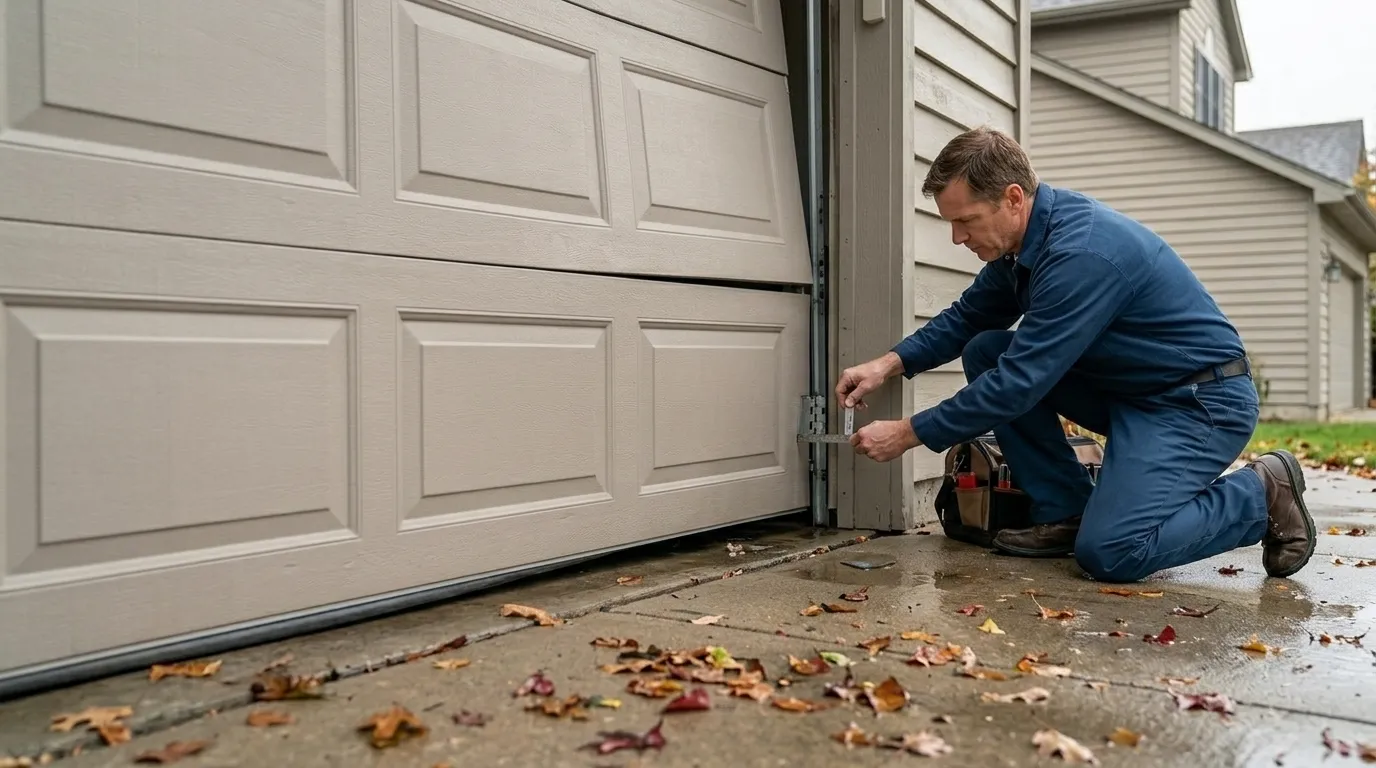
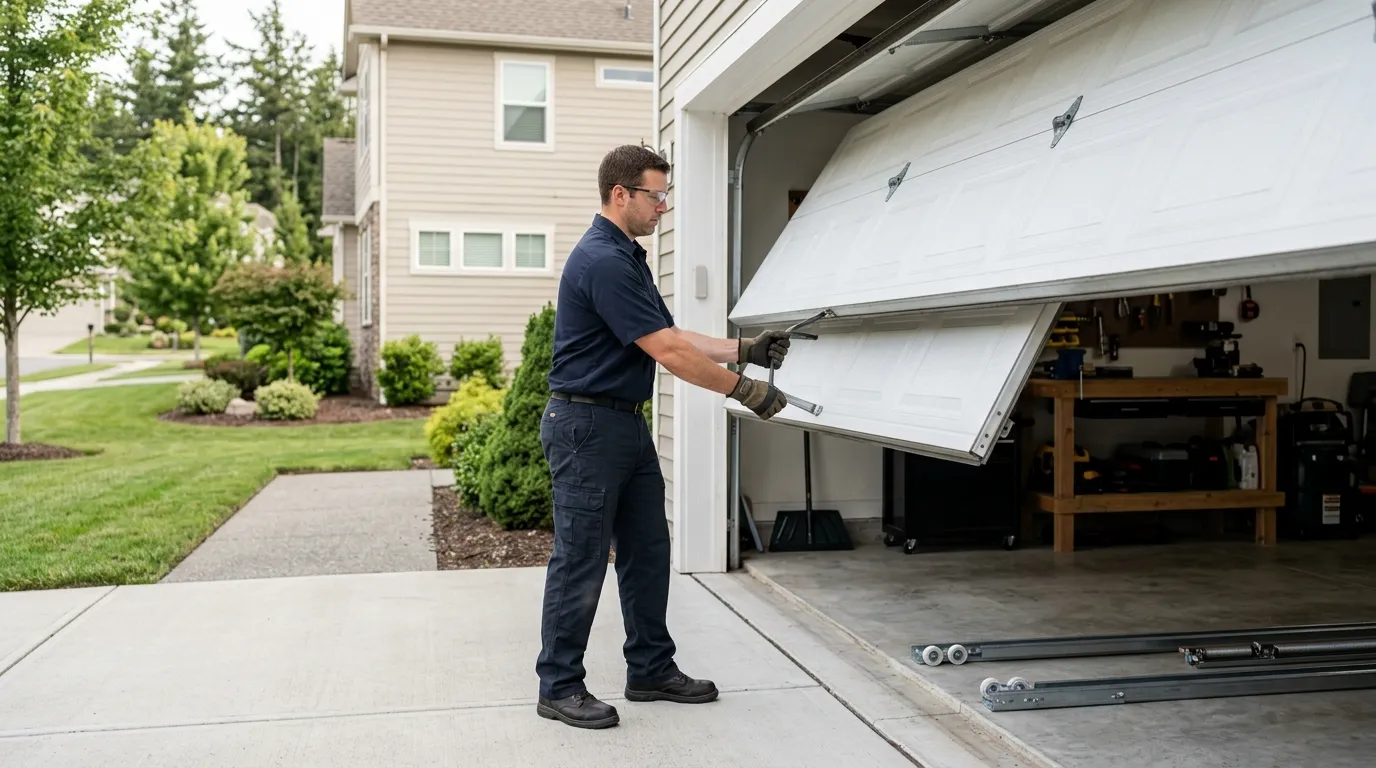
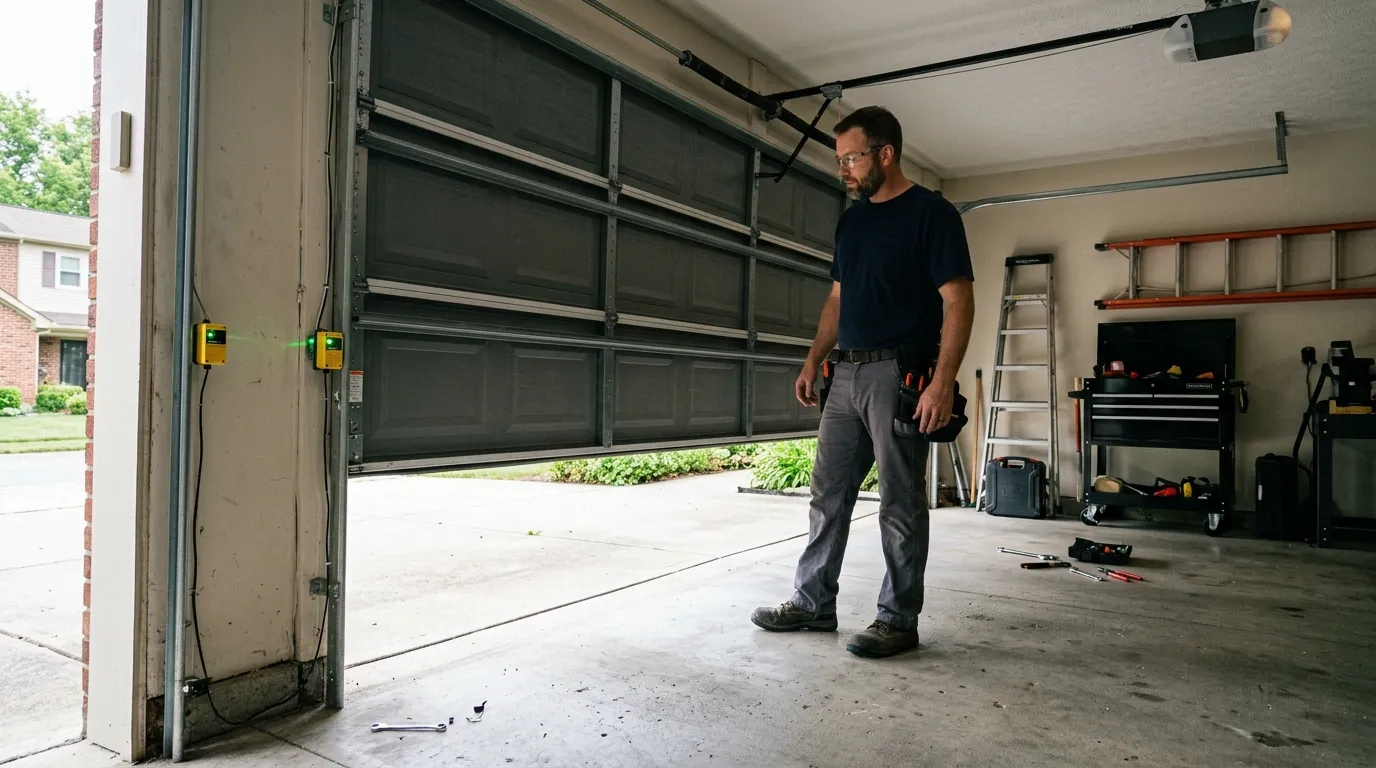
A fully off-track door is obvious: it sits crooked in the opening, won't close flush, or has come to rest at an angle with a visible gap between the track and the rollers. If you see that, don't run the opener again. Running the motor against a door that's already off the rail usually bends the track further or tears a roller bracket loose from the jamb, turning a repair into a replacement.
How We Fix It
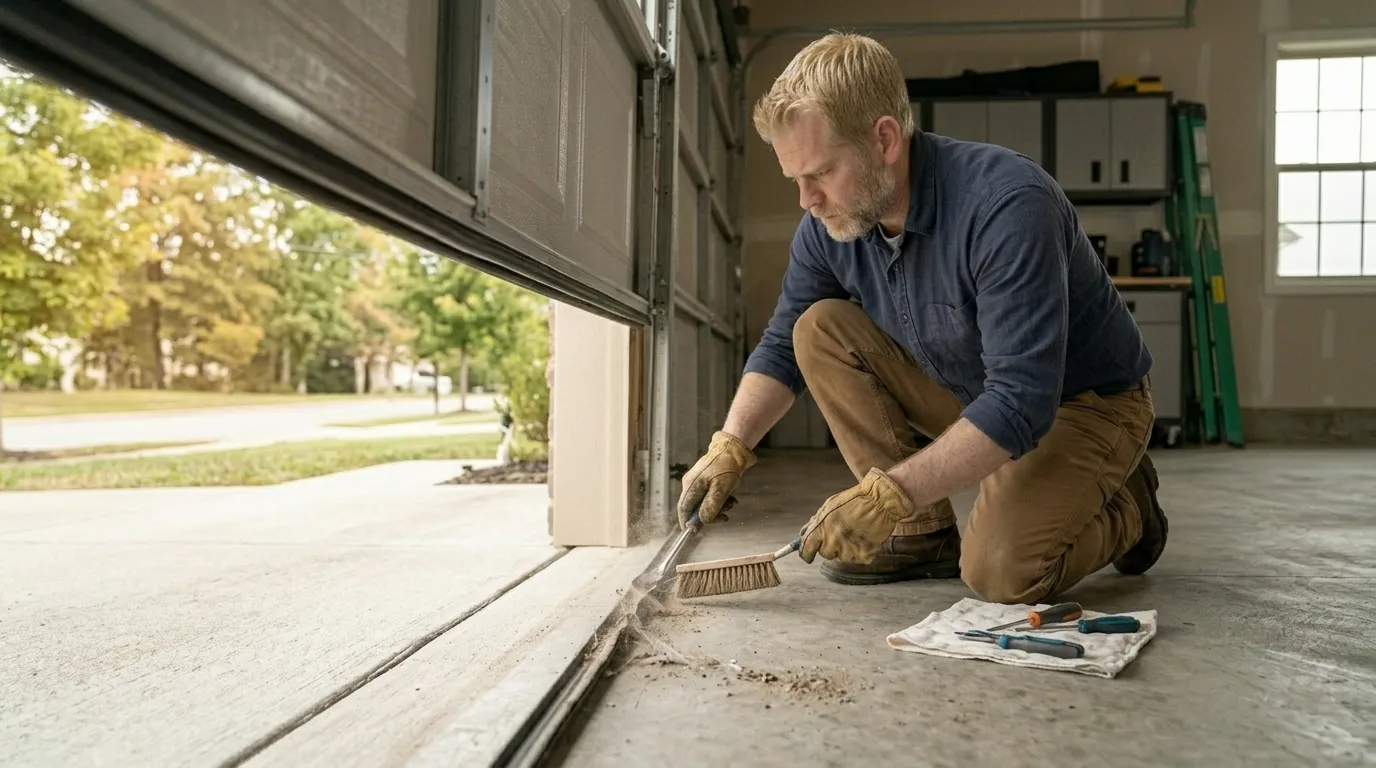
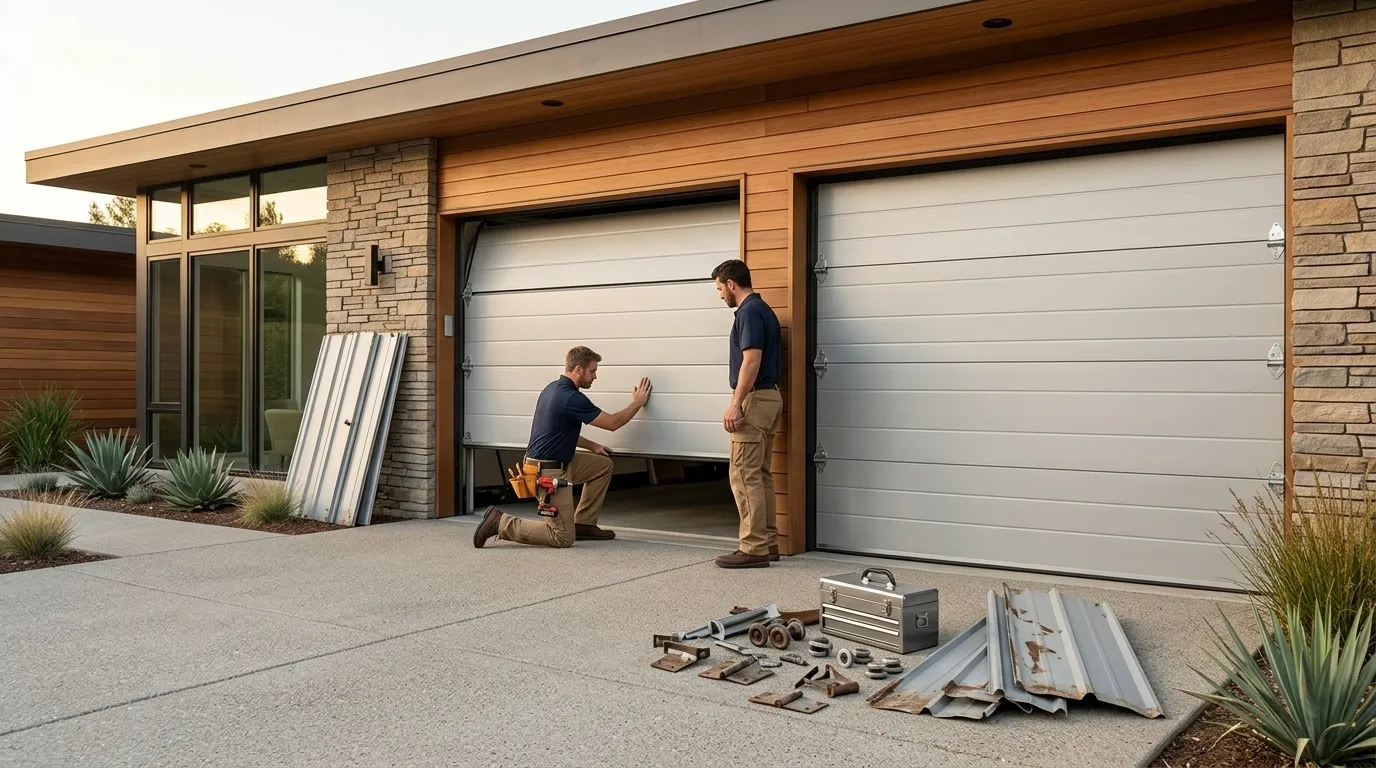
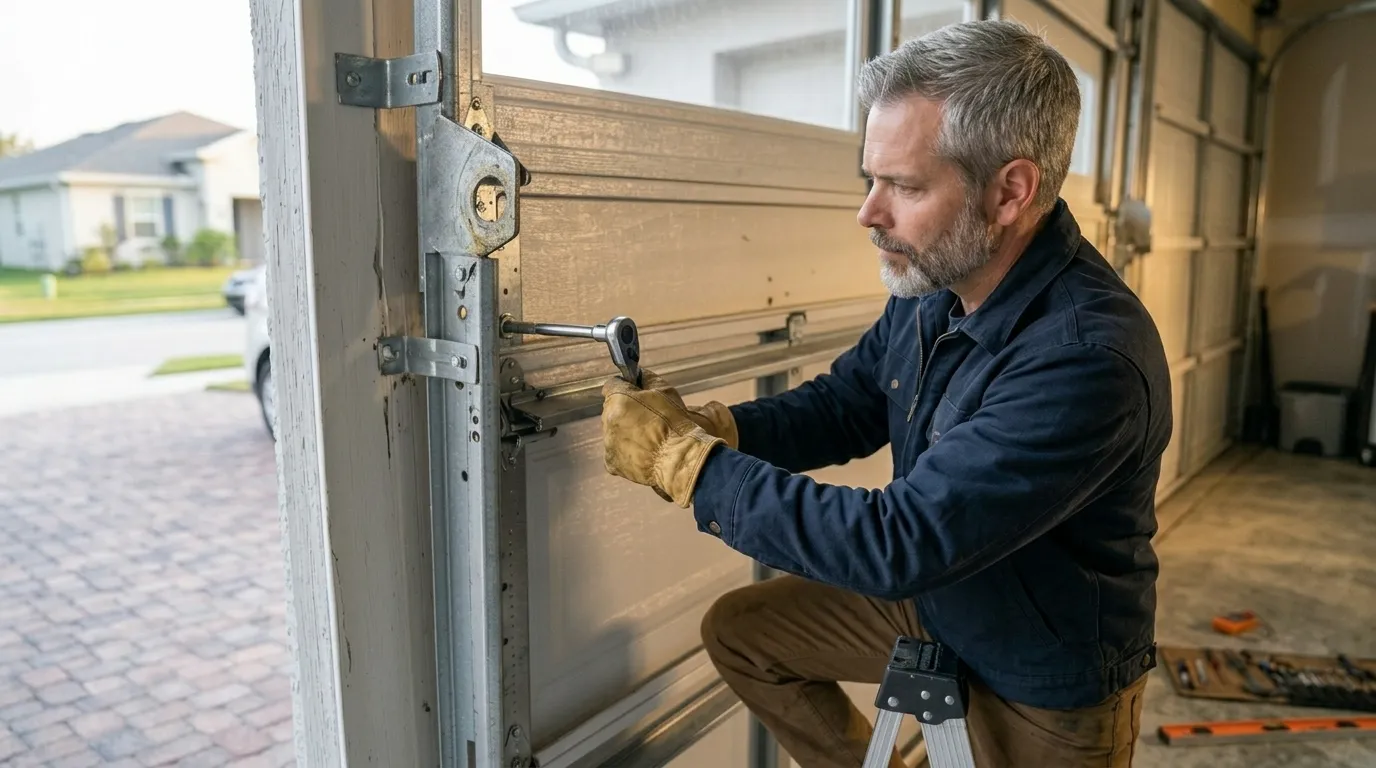
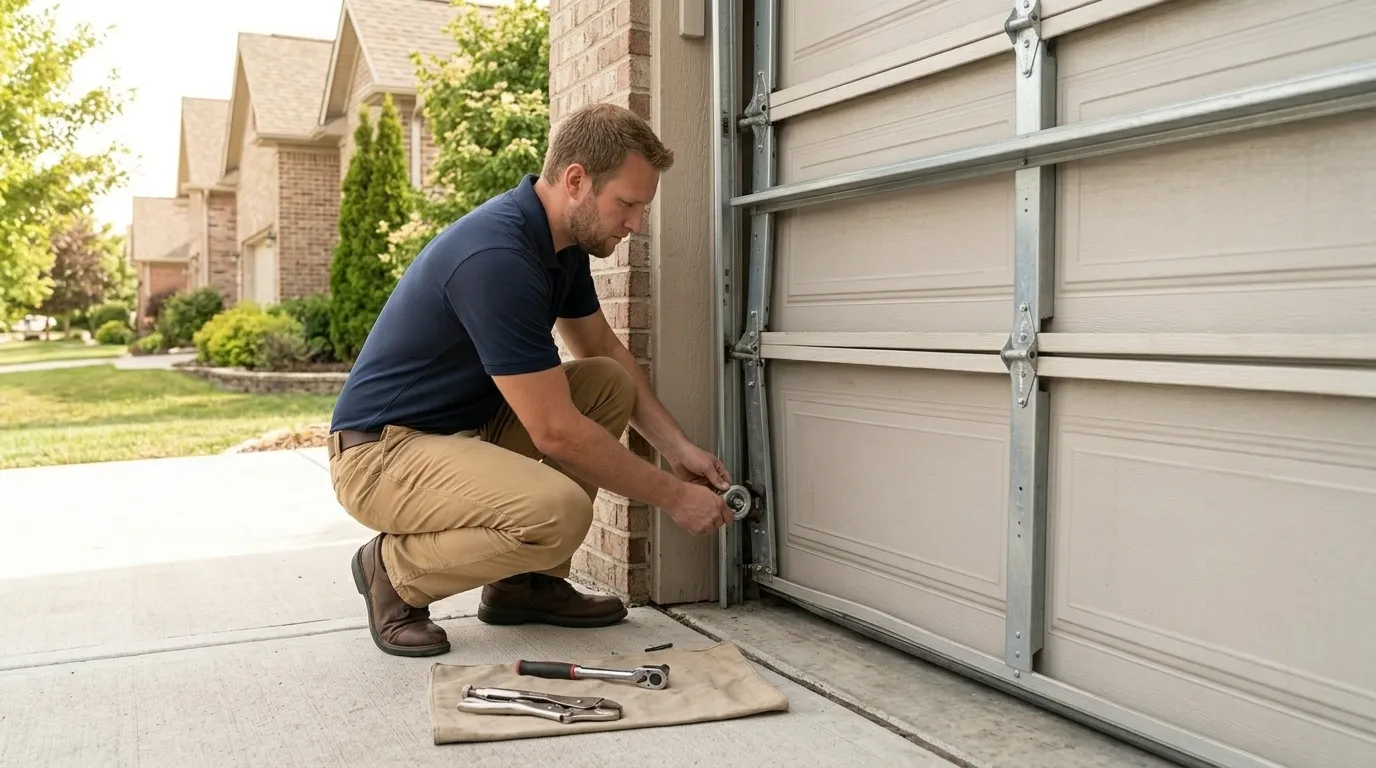
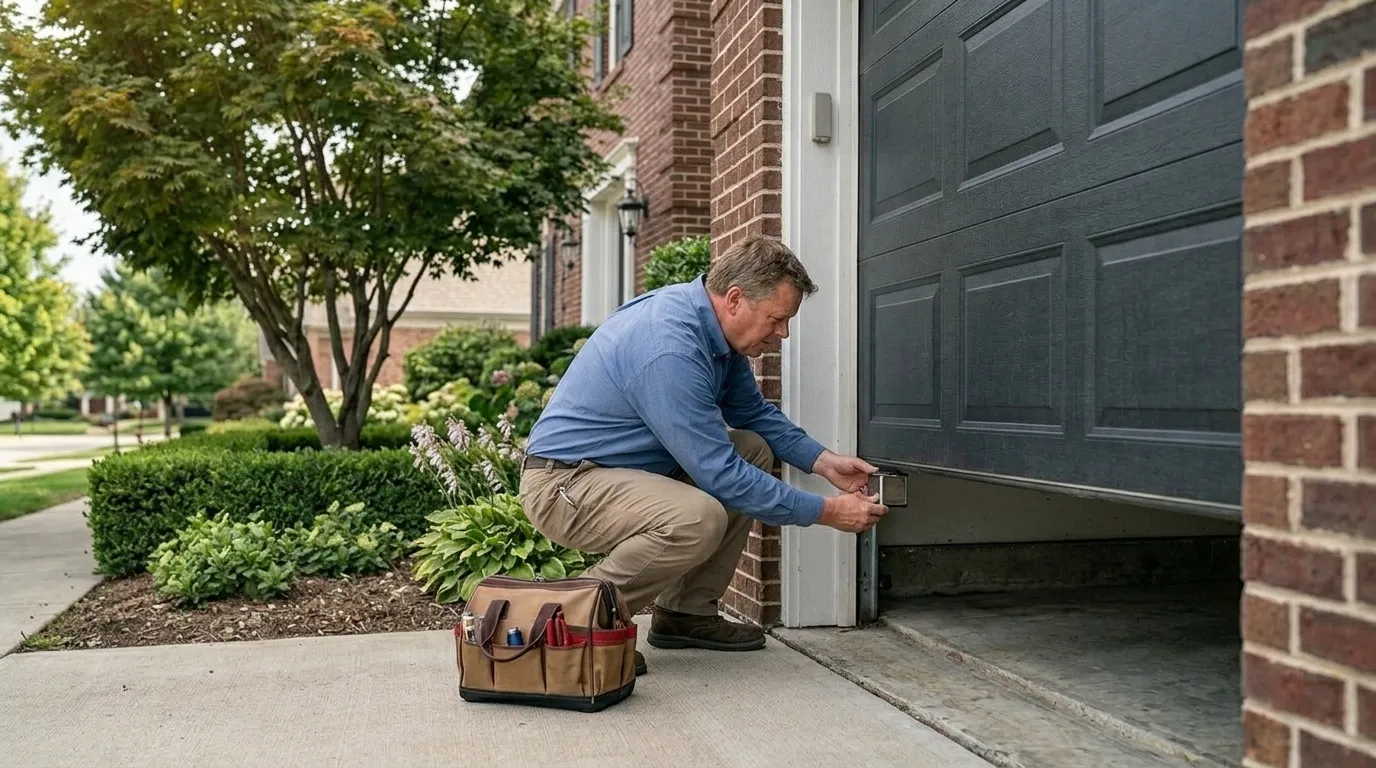
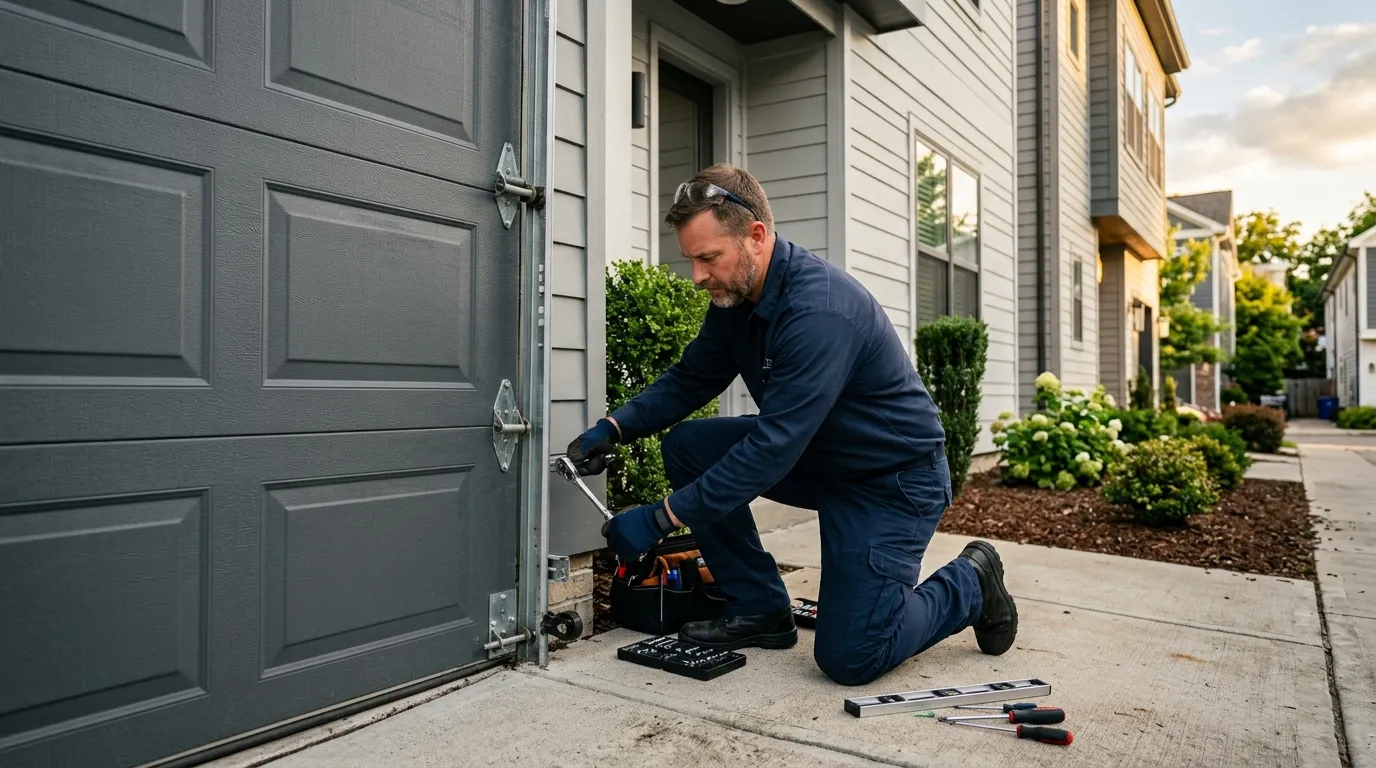
We start by looking at the track brackets and the jamb behind them, since on 1980s and '90s-era houses those brackets have often loosened with decades of wood movement rather than failed outright. If the track itself is bent, we straighten or replace the affected section rather than the whole run when the rest of the rail is still true. Worn rollers get swapped for new ones, and we check hinges and cable tension at the same time, since a door that's gone off track once from a worn roller or loose bracket will do it again if the rest of the hardware isn't brought up to spec.
One honest limitation: if the track is badly bent across multiple sections, or the door panel itself has racked out of square from being forced while off the rail, patching it isn't worth your money - full track and hardware replacement is the more sensible call, and we'll tell you that up front instead of billing you twice.
How it works
From “it’s stuck” to “it’s fixed”
01
Tell us what’s wrong
Describe the symptom - won’t open, loud bang, opener runs but the door won’t move.
02
On-site diagnosis
A technician tests the door under power and by hand and finds what actually failed.
03
Clear, up-front plan
You get the fix that’s needed and what drives the cost - before any work starts.
04
Repaired & tested
The repair is done, the door is set true and tested, and the work area left clean.
Serving Madison, WI - tell us what your door’s doing and we’ll take it from there.
Why did my garage door suddenly come off its track in cold weather?
Cold makes steel track brackets contract slightly against the wood jamb, and grease inside rollers stiffens up. On houses built in Madison's common 1962-2001 window, that combination is enough to let an already-loose bracket or worn roller finally let the door jump the rail, usually on the coldest mornings of the season.
Is it safe to push my garage door back onto the track myself?
No. A door off its track is still under spring tension, and pushing on it can cause a sudden drop or let a bracket tear loose while your hands are near the opening. Leave the opener alone and call for a look before you touch the panel or track.
Can a bent track be repaired or does it need full replacement?
It depends on how much of the rail is affected. A single bent section on an otherwise straight track can often be swapped out. If the bend has racked the door panel or damaged multiple sections, replacing the whole track and hardware run is usually the more sensible and durable fix.
Ready to get your garage door sorted?
Tell us what it’s doing and where you are in Madison - we’ll take it from there.