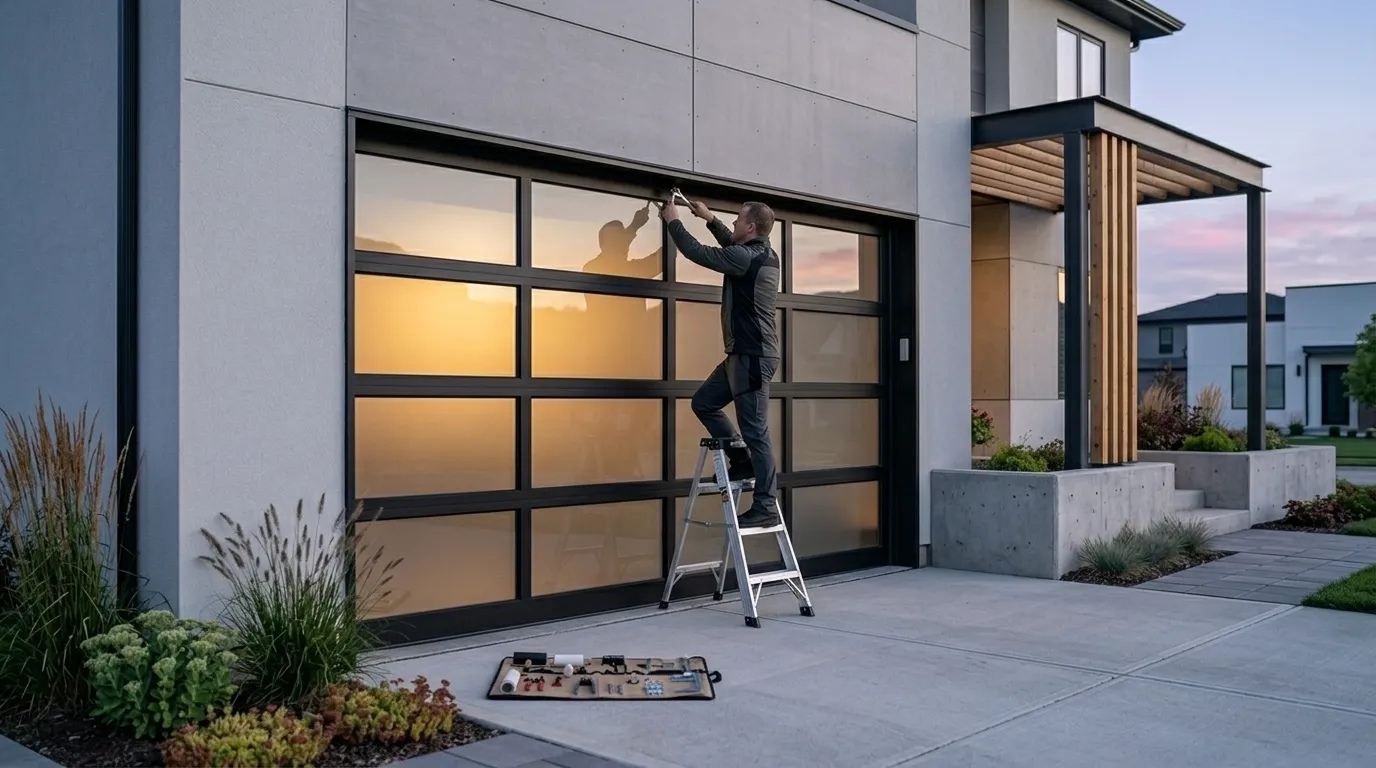
What Is on the Truck
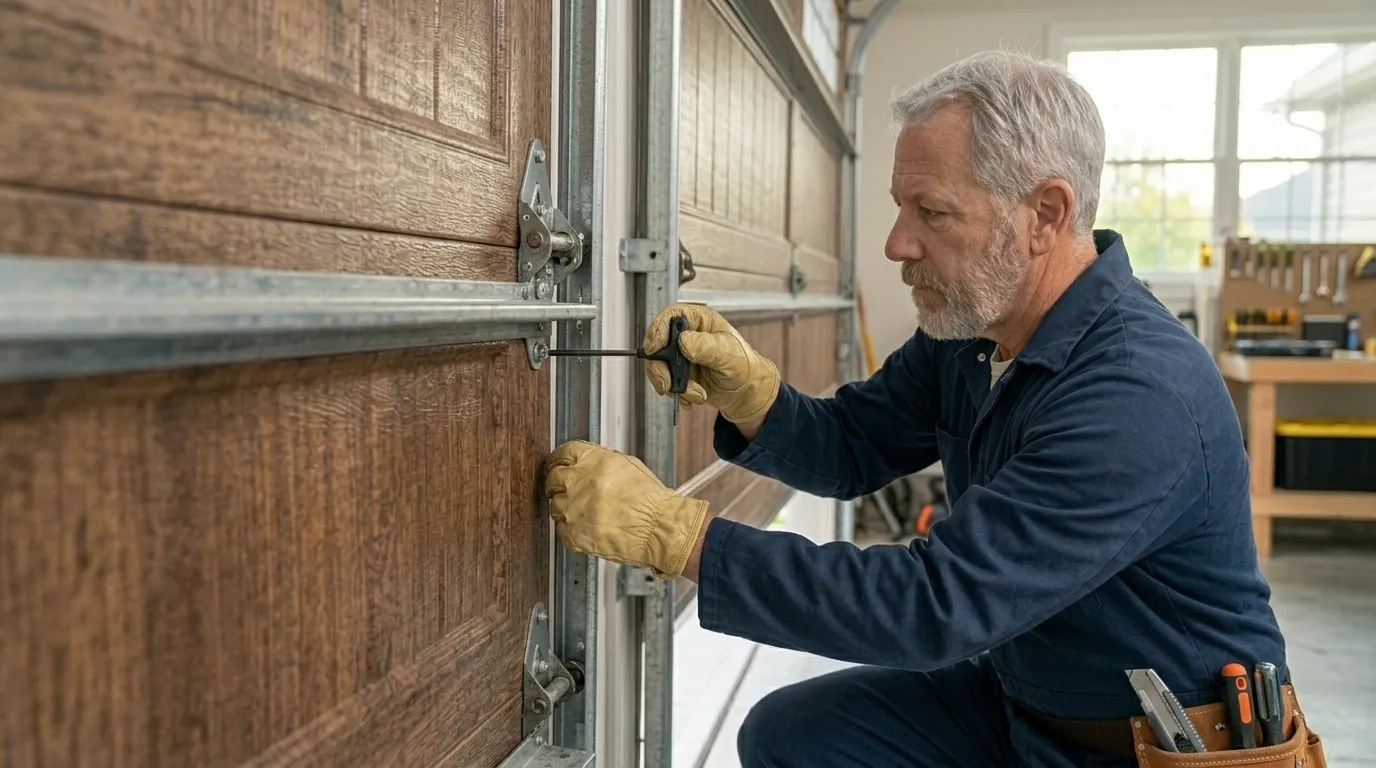
For a house built in the mid-1990s range, which covers a lot of Fitchburg, we stock sealed 10-ball nylon rollers in the common stem lengths and both 2-inch and 3-inch track sizes, since builders in that era mixed both depending on the door line. We carry steel rollers too, for the rare case where a homeowner wants to match an existing all-steel setup rather than switch.
Winters here sit in the cold-moderate band, and that matters more than people expect. Plastic rollers that were fine in a heated showroom get brittle and crack at low temperatures over a few seasons, so we don't stock the cheapest nylon - we carry the sealed-bearing kind that holds up through a Wisconsin winter without turning chalky. We also carry the mounting hardware and short lengths of track for the stretch of rail that usually wears fastest, right at the bottom rollers where the door takes the most flex opening and closing.
How It Shows Up
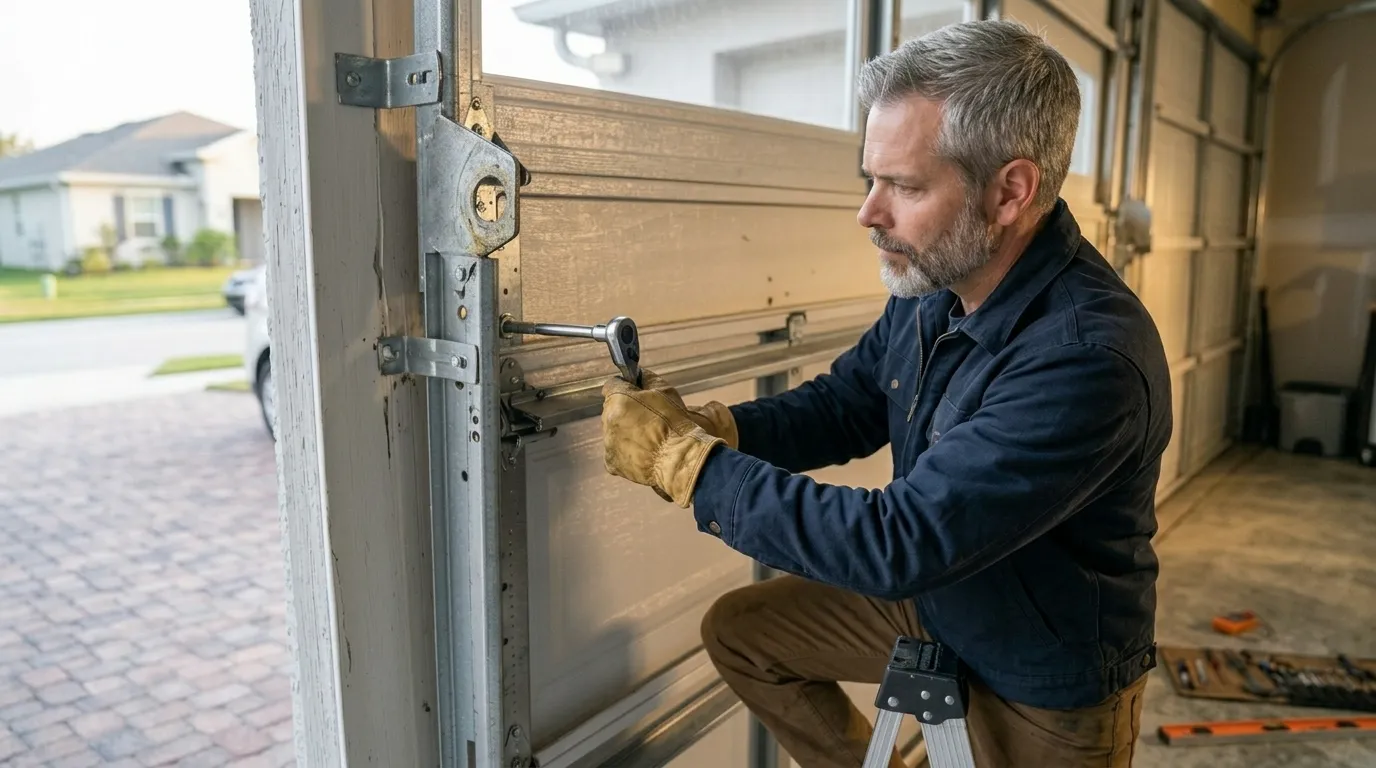
On a house from the 1990s build wave, the fault pattern is pretty consistent. The bottom two rollers on each side wear first because that's where the door flexes hardest on the way up, and by the time an owner calls, those rollers usually have flat spots or a wobble you can see with the door half open.
It rarely shows up as total failure. It shows up as noise - a squeal that gets worse over a few weeks, then a grinding sound, then the door starts catching at the same spot in the track every time. Some owners describe it as the door "skipping" a few inches from the bottom. That skip is the roller riding over its own flat spot instead of rolling smooth, and it's the clearest sign we're past lubrication and into replacement.
Time on the Job
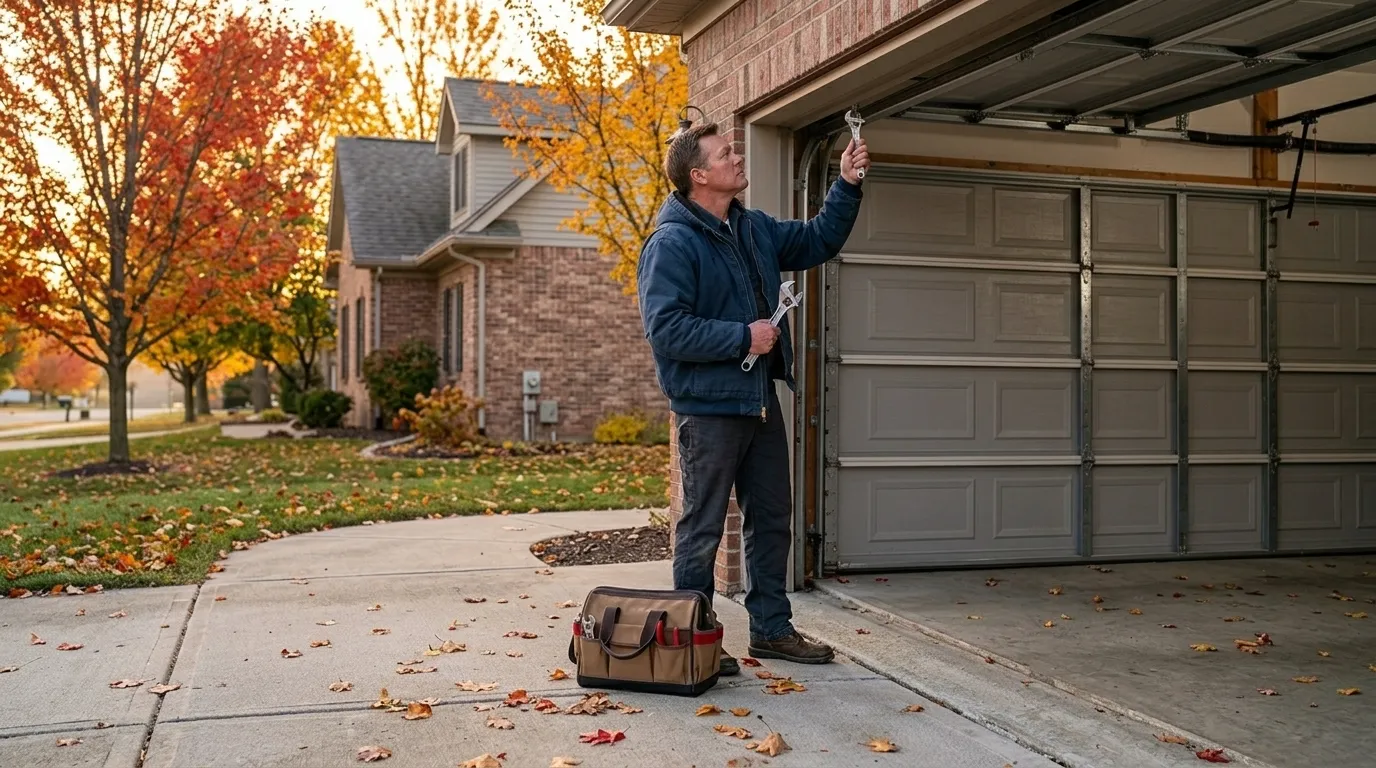
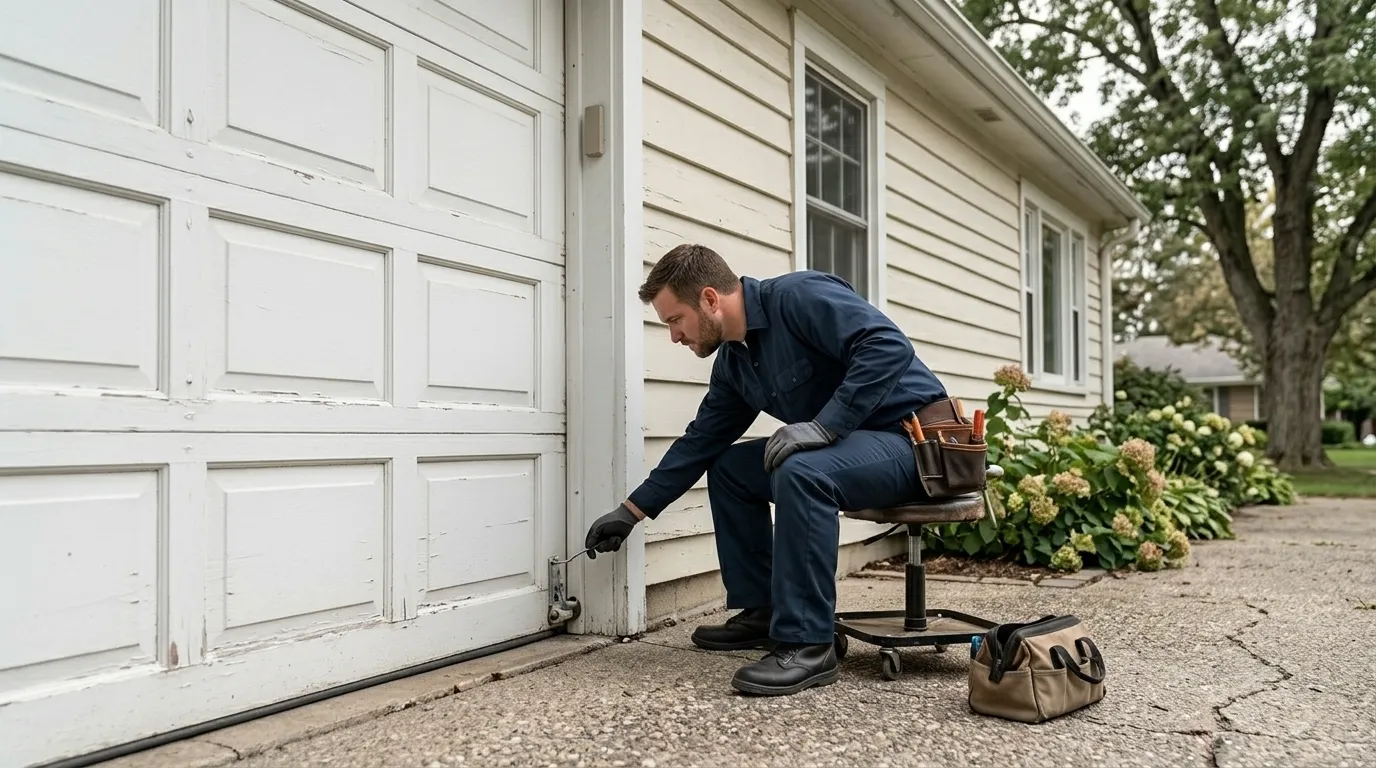
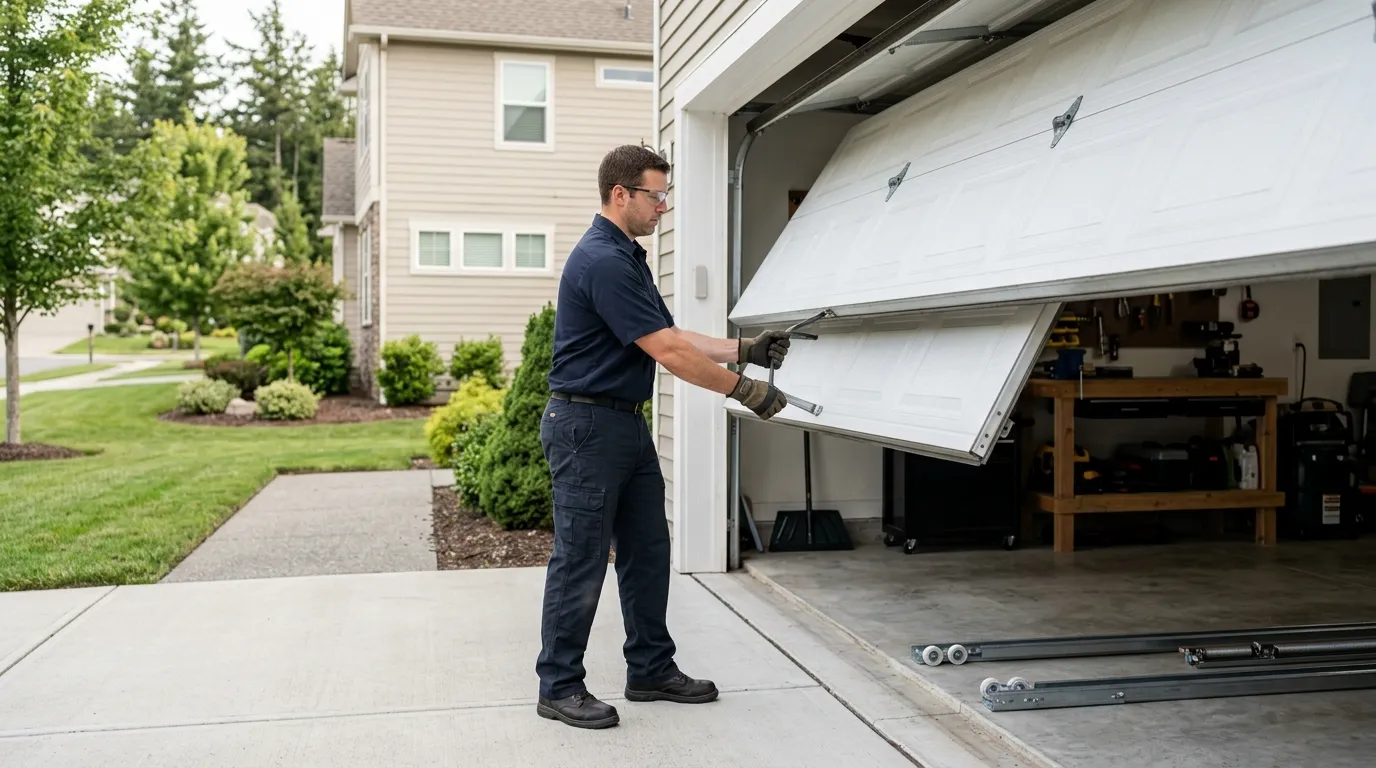
A standard roller swap on a single door, all ten rollers, runs about 45 minutes to an hour once we're set up, assuming the track and cables are in decent shape. Double doors or doors where we're also correcting a bowed section of track take longer, because we're realigning rail as well as swapping hardware.
Most of the Fitchburg calls we get are single-door jobs on houses from that same era, and the rollers are original to the house - nobody's touched them since the builder installed the door. That means we're not guessing at what's in there; a 30-year-old steel roller with a stamped stem is a known quantity, and it comes out fast once the spring tension is released safely.
The Cost of This Job
We don't have a set price to publish here, because the honest number depends on how many rollers are worn, whether the track needs straightening, and whether we find a bent bracket once the panel's open. What we can tell you is that a straightforward roller job, without track work, costs a lot less than letting a bad roller take out a section of track or crack a panel.
Given the income range across the households we serve out of Madison, most owners choose the sealed nylon upgrade over a like-for-like steel swap, since the price difference is small and the nylon runs quieter for years longer. We'll give you an exact number once we've looked at the door in person, not before.