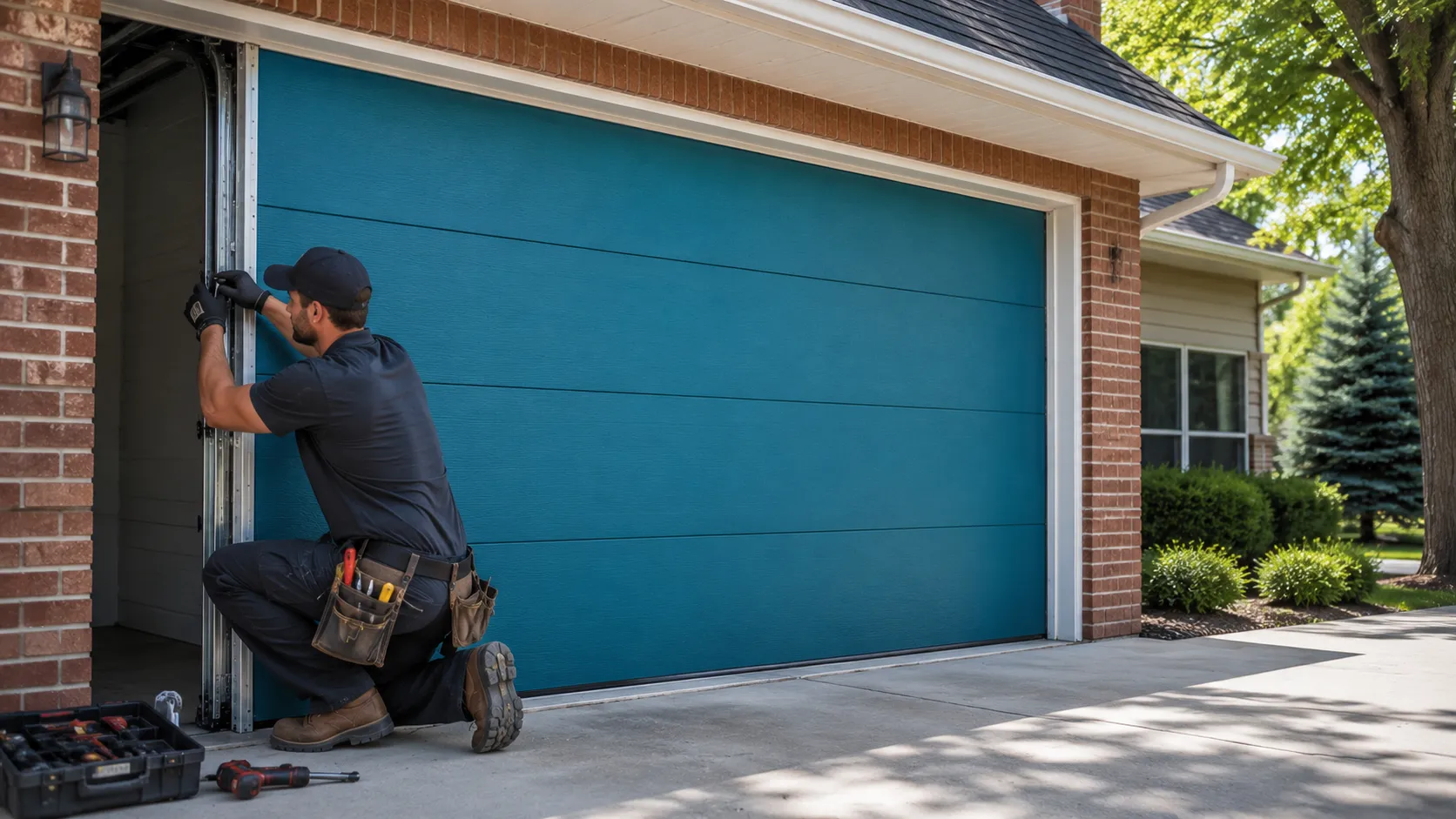
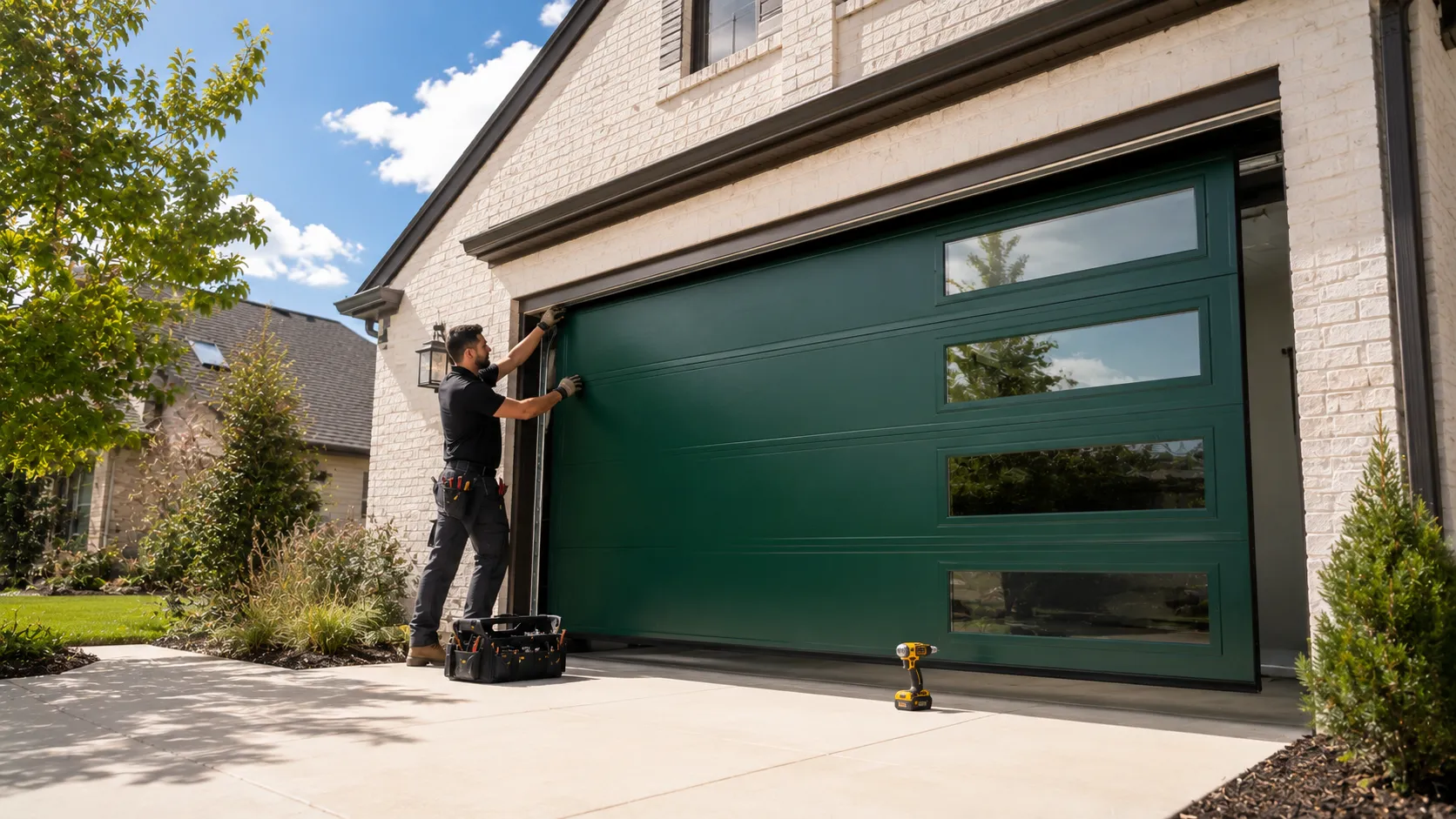
Middleton homes mostly went up around 1996, later than the wider service area's 1986 median build year. We travel from Madison, about 7 miles away, to fix what that era of door throws at you.
Middleton's housing stock skews newer than a lot of what we see across the rest of the service area. Where the broader coverage area runs from 1962 to 2001 with a median build year of 1986, Middleton's own median lands around 1996. That decade matters. Doors going up in the mid-90s came standard with steel panel sections and torsion spring setups, not the older extension-spring hardware still common on 1960s and 70s houses elsewhere in the area. Torsion systems are safer when they're maintained, but the springs on a 1996 door are now roughly three decades old, which is well past the point where a spring should still be trusted on a stretch cycle count basis. What we get called for in Middleton is less "door falling off old extension cables" and more "torsion spring finally let go" or "opener from that era grinding through its gears." Steel panels from the 90s also dent and rust at the bottom section after enough winters, since the galvanizing on doors from that period wasn't always as heavy as what's made today. Openers of that generation are also reaching the end of their working life, and parts for some of those chain-drive units are getting hard to source new.
How We Fix It
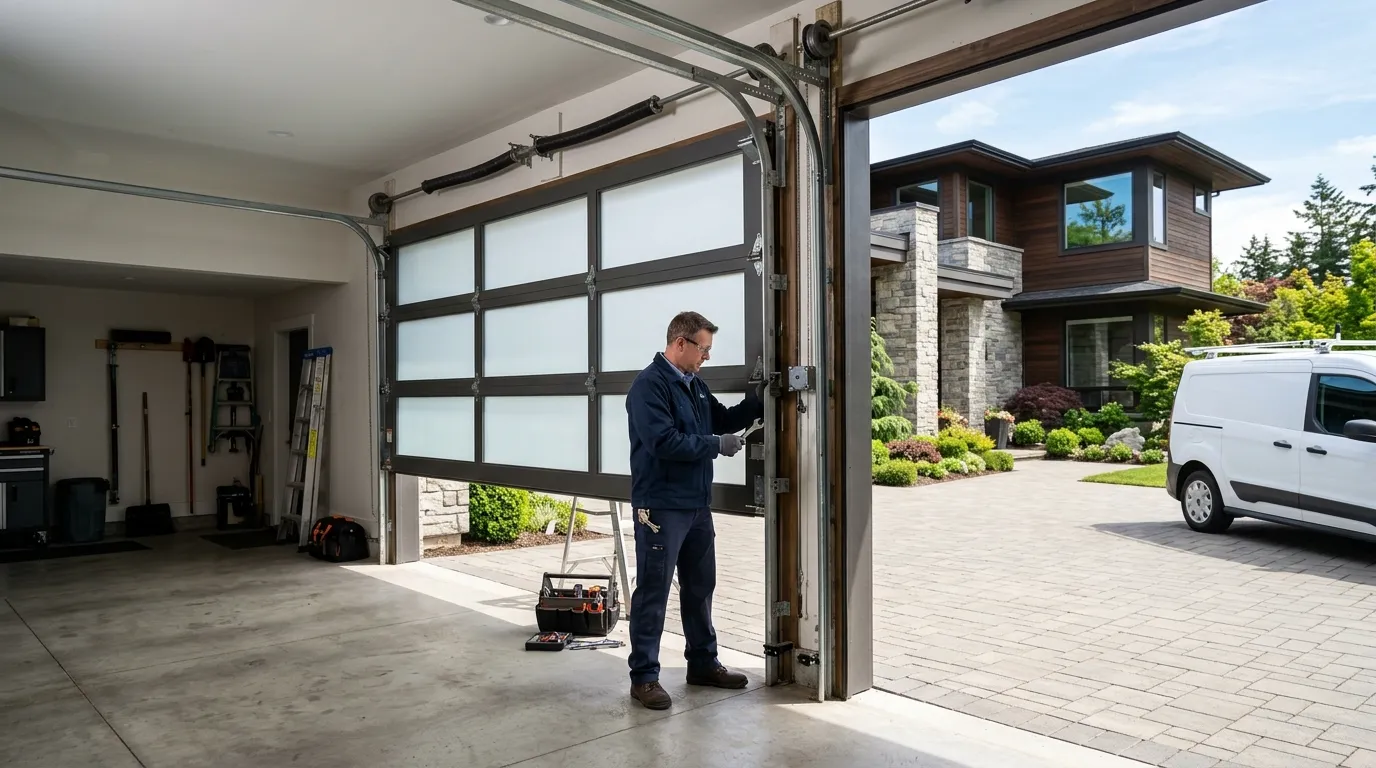
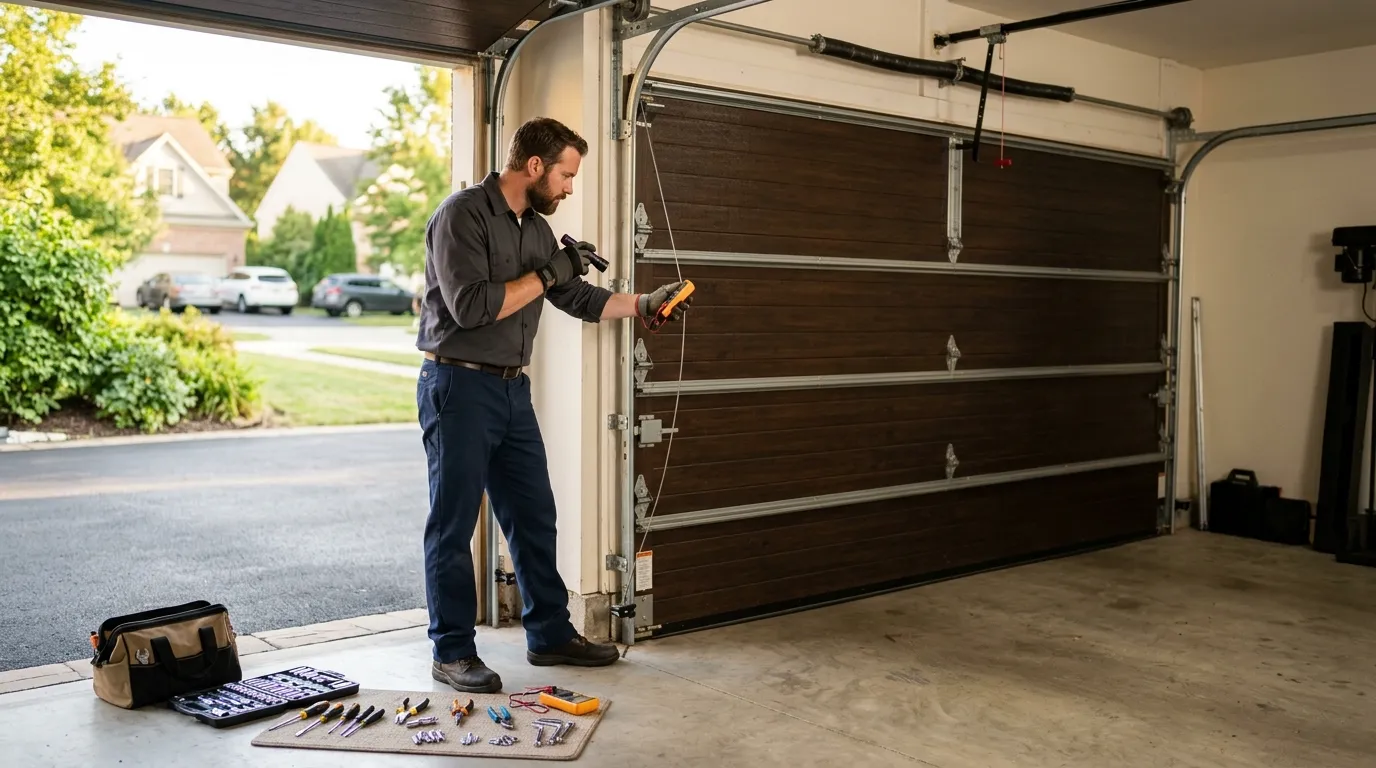
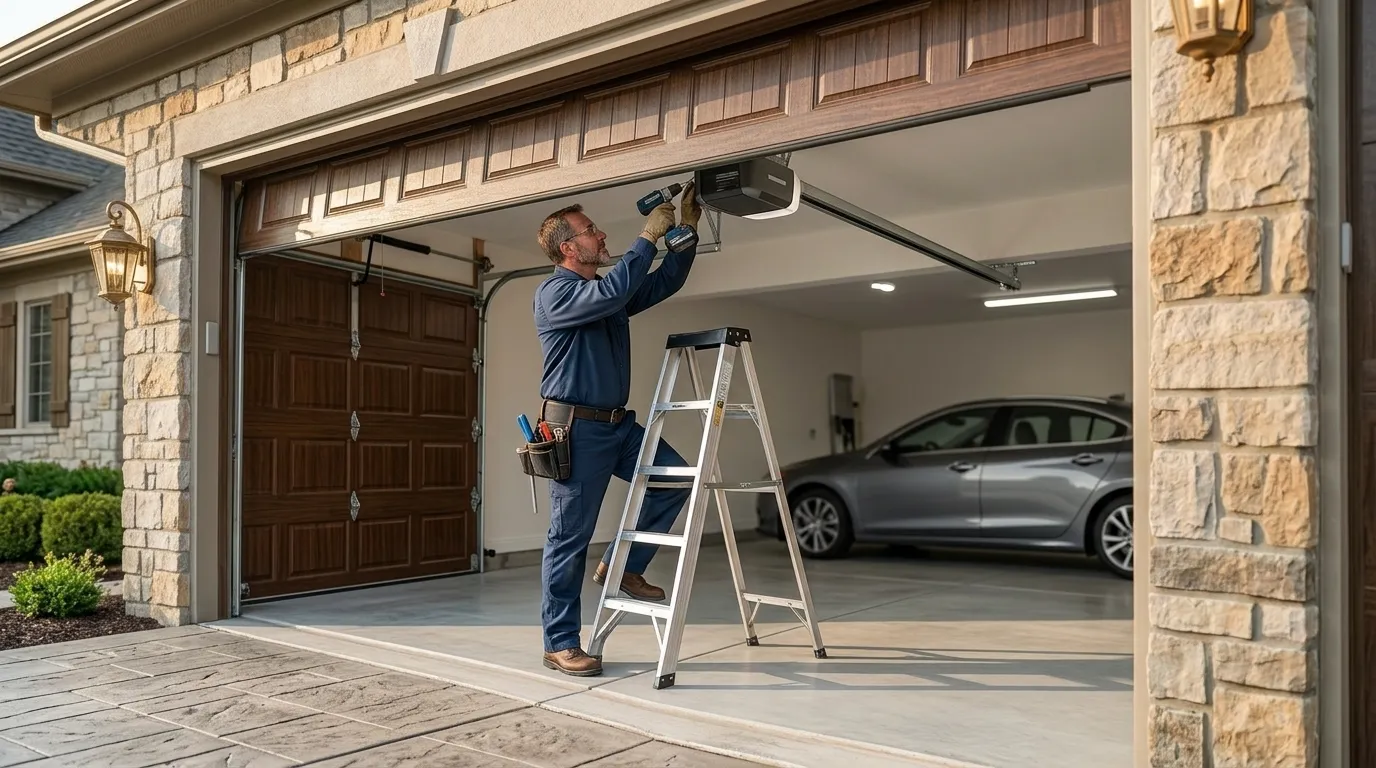
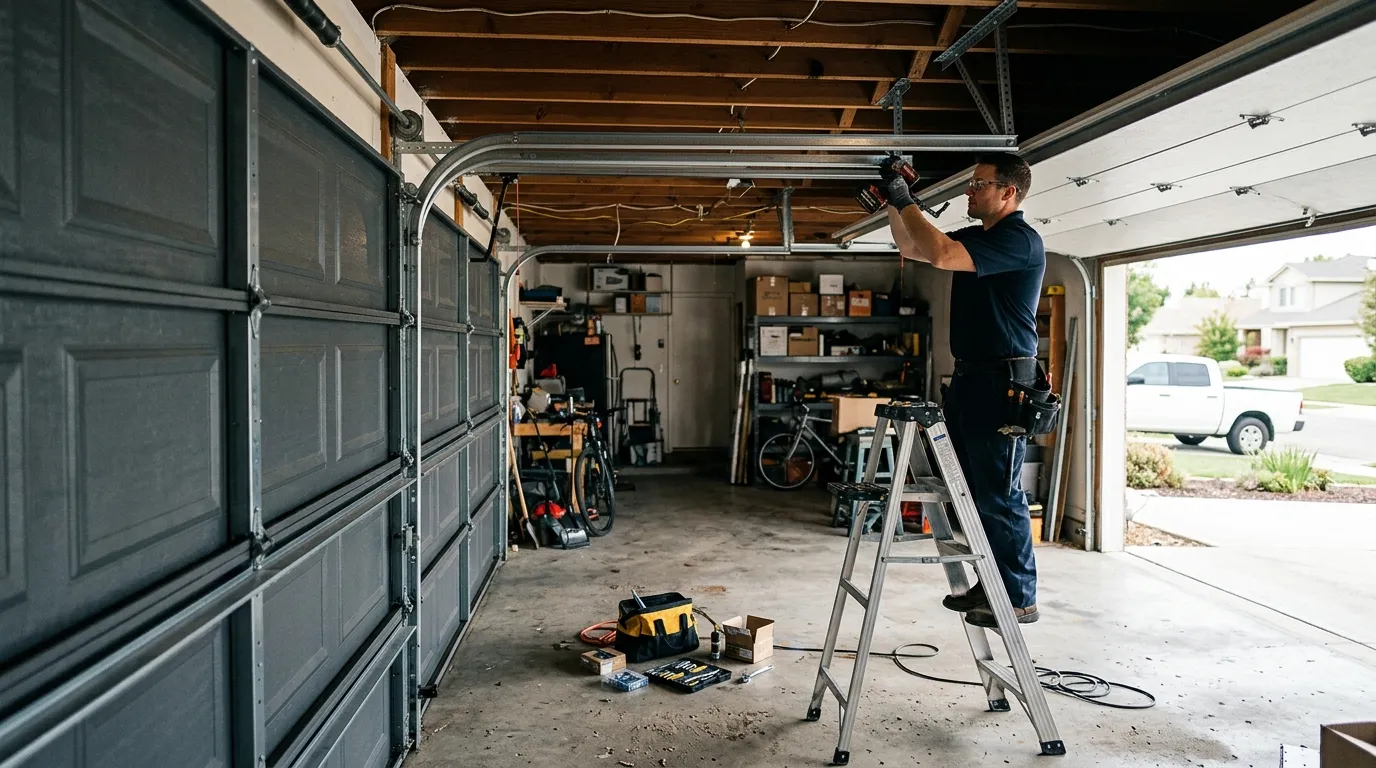
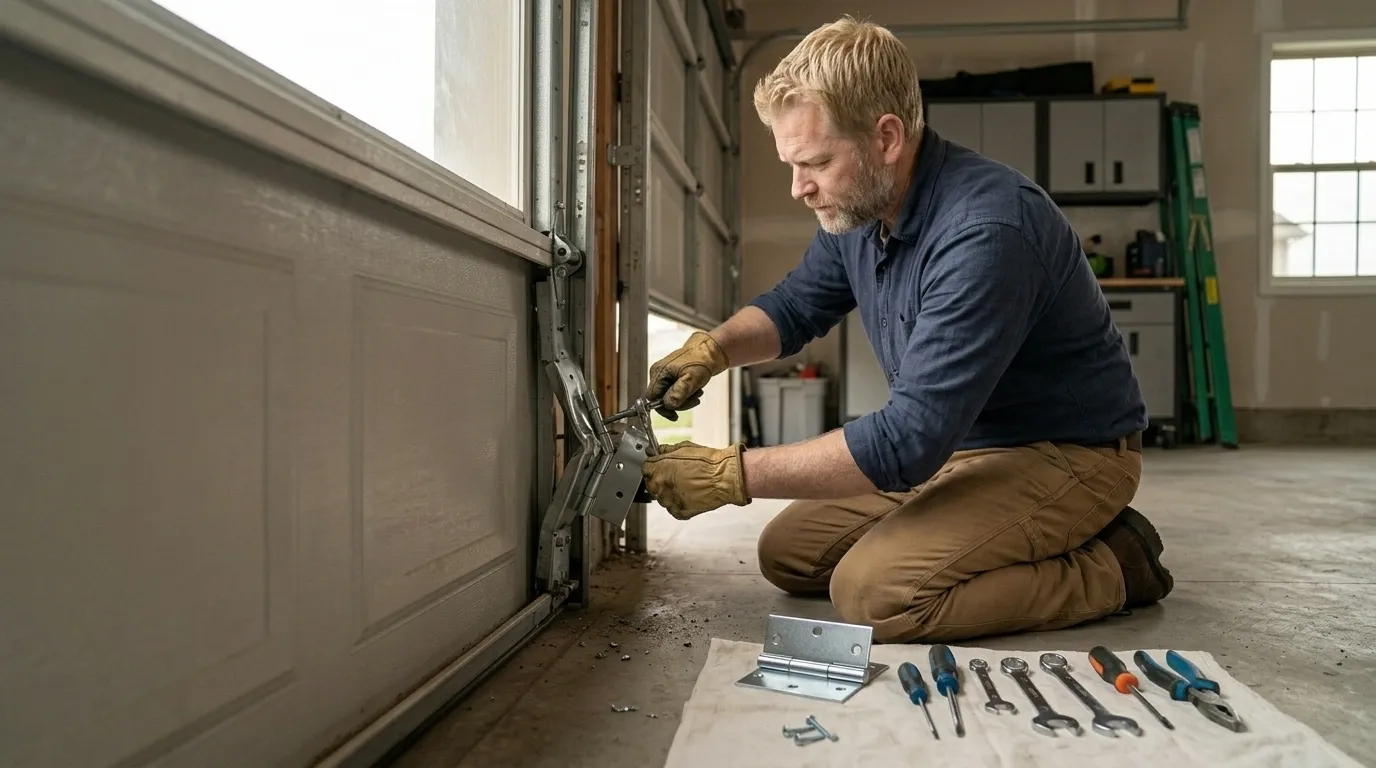
We come out from Madison, about 7 miles away, and diagnose the door on site before quoting anything. On a 1996-era torsion system, that usually means checking spring wind, drum condition, and whether the cable is fraying at the drum - a common failure point once a spring assembly hits this age. If the spring itself is the only failure, we replace it and check the rest of the torsion hardware while we're there, because a spring failing at year 28 or 29 often means its matched twin isn't far behind. If the opener is the issue, we look at whether it's worth repairing an aging chain-drive unit or replacing it outright - Middleton's household incomes run well above the wider service area's median, and a fair number of owners here choose replacement over patching an opener that's already outlived its expected service life. We don't push replacement when a repair holds up structurally sound. That's the honest call more often than people expect.
What Is on the Truck
For a service area where the winters sit in the cold-moderate band, we carry torsion springs sized for the standard residential door weights common to 1980s-2000s steel construction, since that's most of what we're pulling up to across the 28 named areas we cover, Middleton included. We stock replacement cables, rollers, and drums to match, along with photo-eye sensor units and standard opener logic boards for the more common drive types. What we don't carry on the truck is anything sized for older wood-panel doors or oddball import hardware - those jobs sometimes need a special order, and we'll tell you that up front rather than have you wait on a truck that doesn't have the part. Cold-moderate winters also mean we carry weatherstripping and bottom seals sized for steel panel doors, since that rubber hardens and cracks faster here than it would somewhere with a milder climate.
Doing It Yourself
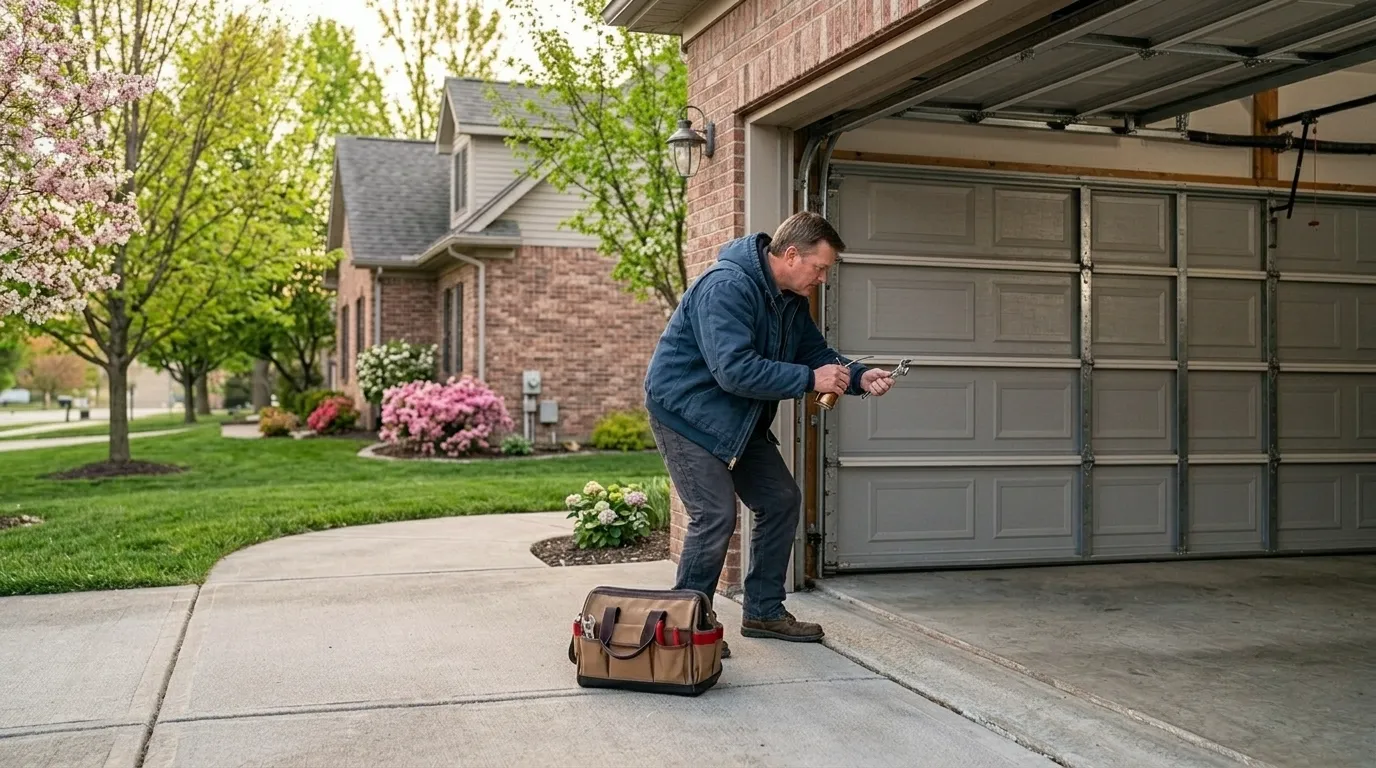
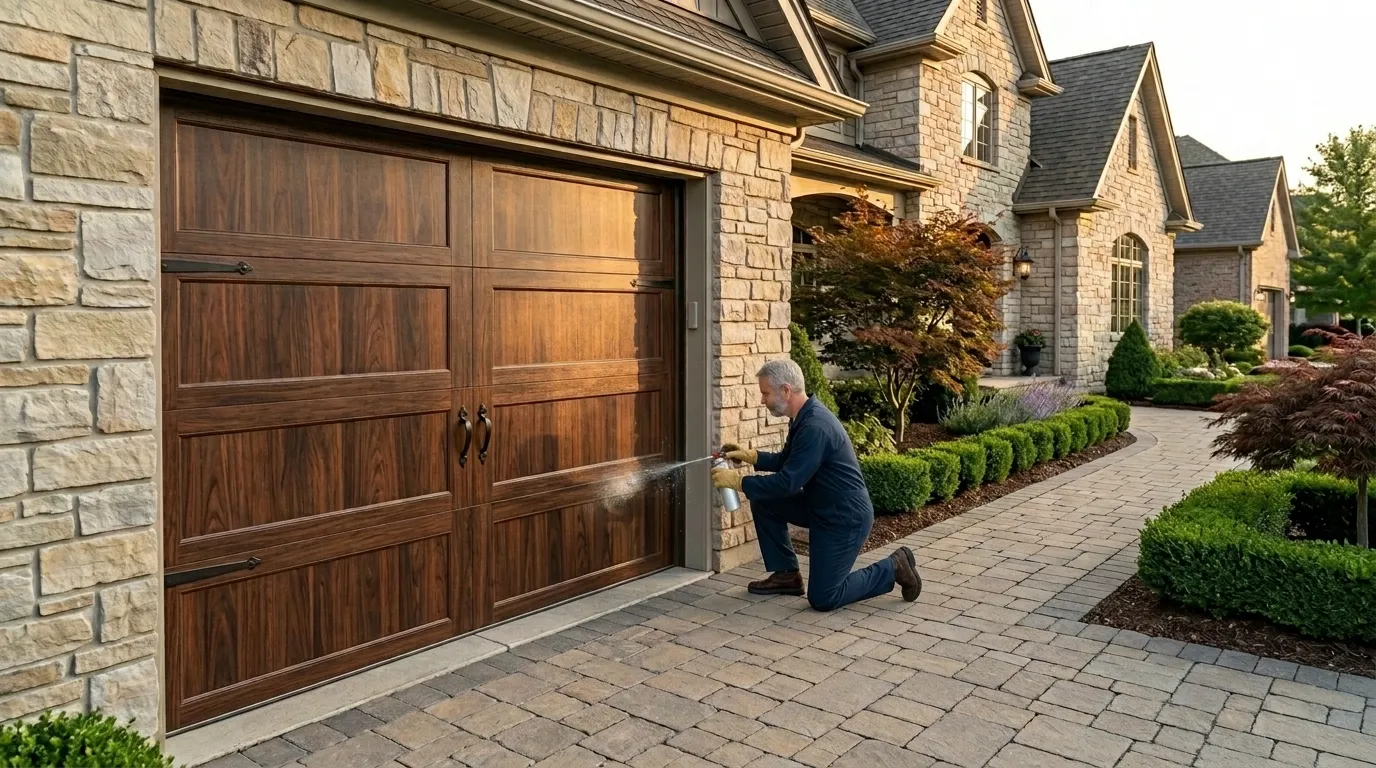
There's a real limit to what's safe to handle yourself here. Anything involving the torsion spring itself - winding, unwinding, or replacing it - isn't a DIY job. A wound torsion spring holds enough stored force to cause serious injury, and that risk doesn't shrink because the door is newer. What you can reasonably do yourself: check the bottom seal for cracking, clean and lubricate rollers and hinges, and make sure the photo-eye sensors near the floor are aligned and not caked in dust, especially after a winter of road salt spray getting kicked up. If your opener is from the original 1996 install and it's started making a new grinding sound or reversing on its own, that's worth a call rather than a guess - logic board issues on units that old aren't always obvious from the symptom alone, and Middleton's newer housing stock means a good number of these openers are all reaching that age around the same time.
How it works
From “it’s stuck” to “it’s fixed”
01
Tell us what’s wrong
Describe the symptom - won’t open, loud bang, opener runs but the door won’t move.
02
On-site diagnosis
A technician tests the door under power and by hand and finds what actually failed.
03
Clear, up-front plan
You get the fix that’s needed and what drives the cost - before any work starts.
04
Repaired & tested
The repair is done, the door is set true and tested, and the work area left clean.
Serving Madison, WI - tell us what your door’s doing and we’ll take it from there.
Why does Middleton need different parts than older parts of the service area?
Middleton's homes mostly went up around 1996, a decade newer than the service area's overall median build year of 1986. That means torsion spring systems and steel panel doors were already standard, rather than the older extension-spring hardware still found on 1960s and 70s houses elsewhere in the area.
How far is Middleton from your Madison location?
About 7 miles. We don't run a separate branch or depot in Middleton - every job here is dispatched from Madison, so factor that distance into scheduling when you call.
Is my 1996-era torsion spring due for replacement even if it hasn't broken yet?
Torsion springs are rated by cycle count, not calendar age, but a spring installed in the mid-90s has likely seen tens of thousands of cycles by now. If it's still working, it's not an emergency, but it's worth having checked rather than waiting for it to snap.
Should I repair or replace an opener that old?
Depends on the failure. A dead capacitor or worn gear is often a straightforward repair. A failing logic board on a discontinued model usually isn't worth chasing parts for, and that's when replacement makes more financial sense than repair.
Ready to get your garage door sorted?
Tell us what it’s doing and where you are in Madison - we’ll take it from there.