Roller Replacement for Middleton's Newer Garage Doors
Middleton's housing runs newer than most of the service area - median build year 1996. Here's what that means for roller wear and what we carry on the truck.
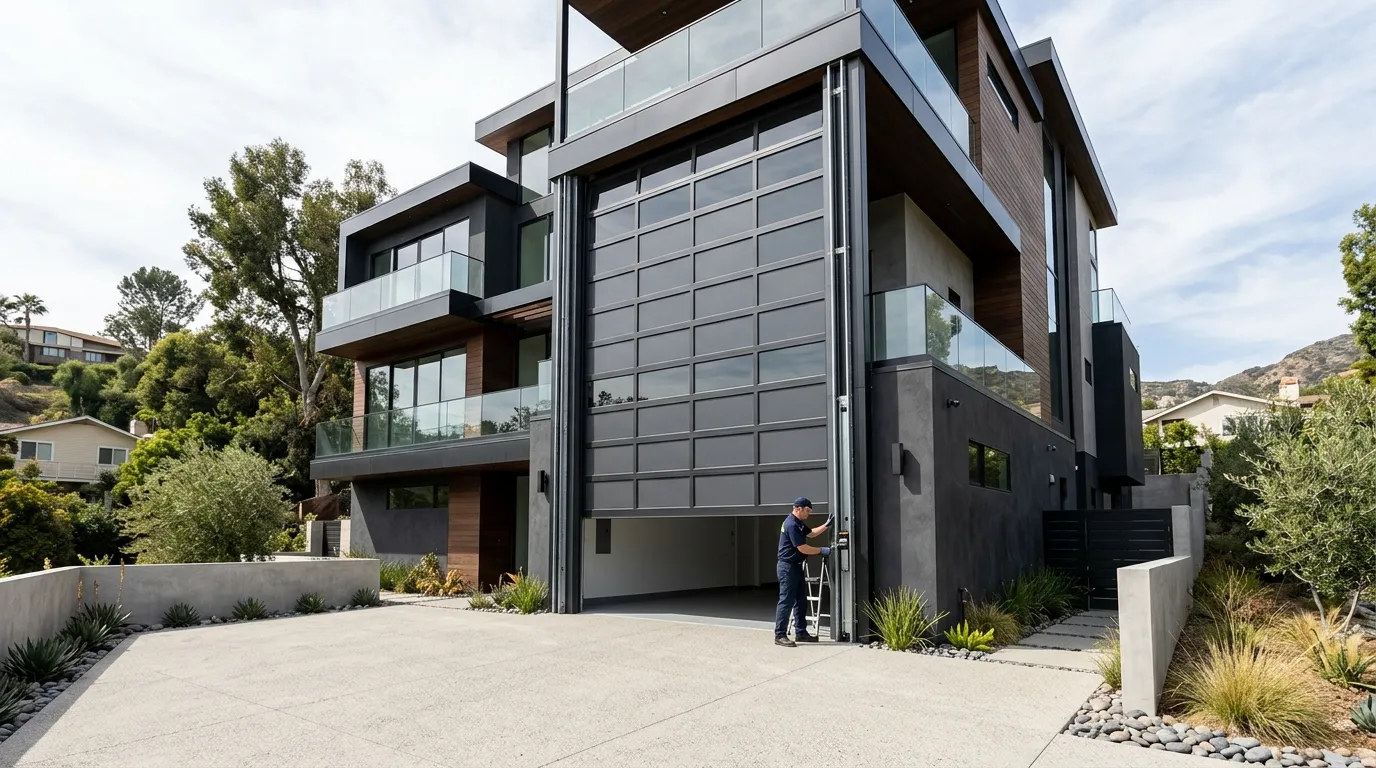
Middleton's housing stock runs newer than most of the service area - the median year built here is 1996, later than the 1962-2001 range and 1986 median across the broader 28-area footprint. That later build year matters for rollers because it usually means steel sectional doors, often the 16-foot double on a two-car garage, riding on galvanized track with factory-installed nylon or steel rollers rather than the older single-car wood doors you see closer to the county line.
On a door this size, the roller stems take more load per cycle, and over a couple decades the nylon wheel wears round-shouldered or the steel bearing dries out and starts to grind. You'll hear it before you see it - a rhythmic squeal or a knock as each roller hits the same worn spot in the track. Cold makes it worse. The service area sits in a moderate-cold climate band, and metal track contracts in winter, so a roller that's borderline in October can bind or jump the track by January. On a double door, one bad roller near the bottom section throws the whole panel off level, which is often what actually brings people to the phone - not the noise, but the door refusing to sit flush at the floor.
How We Fix It
We come out from Madison, about 7 miles, so we're not swinging by on a whim - we book the visit, then handle the whole roller set in one trip rather than replacing one at a time as they fail. On a 16-foot double door that's typically ten rollers across both tracks, and we do the full run so you're not paying a truck fee twice in the same year.
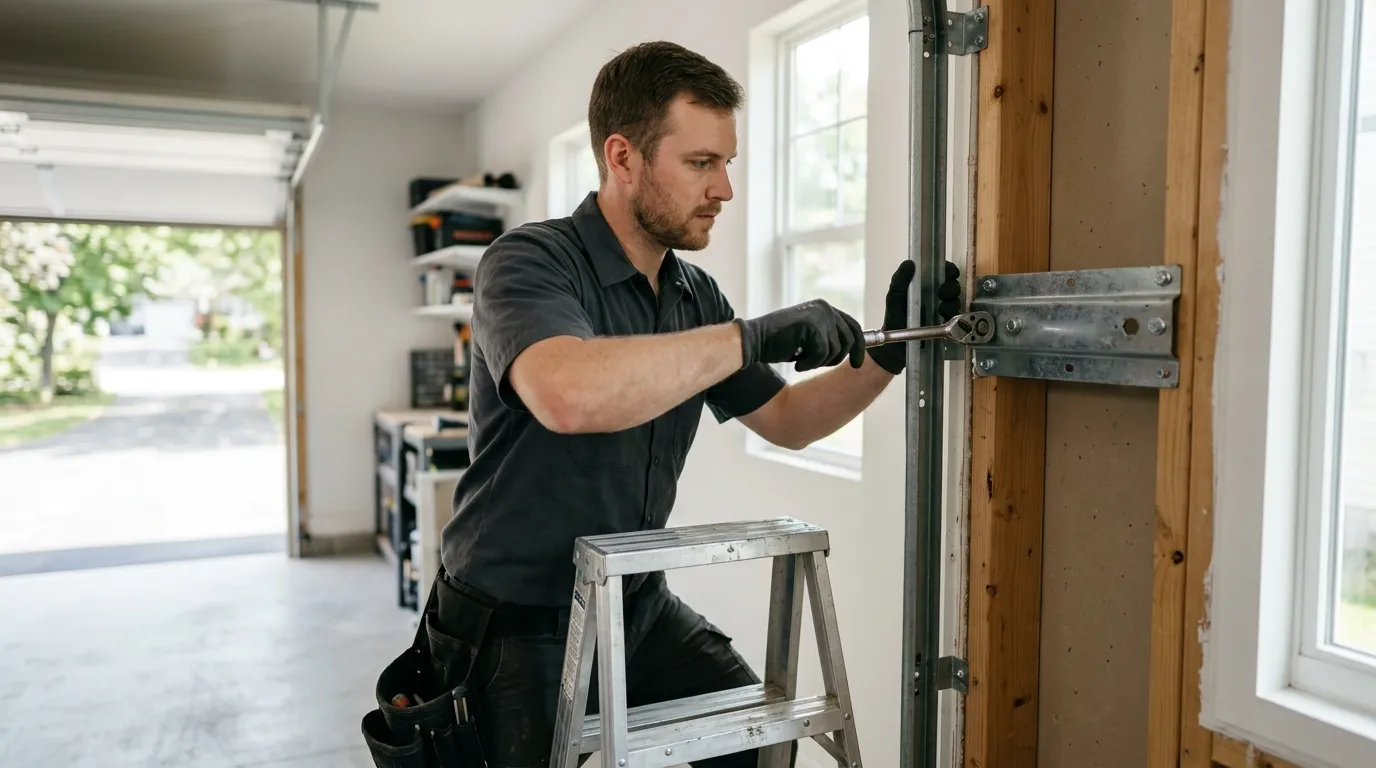
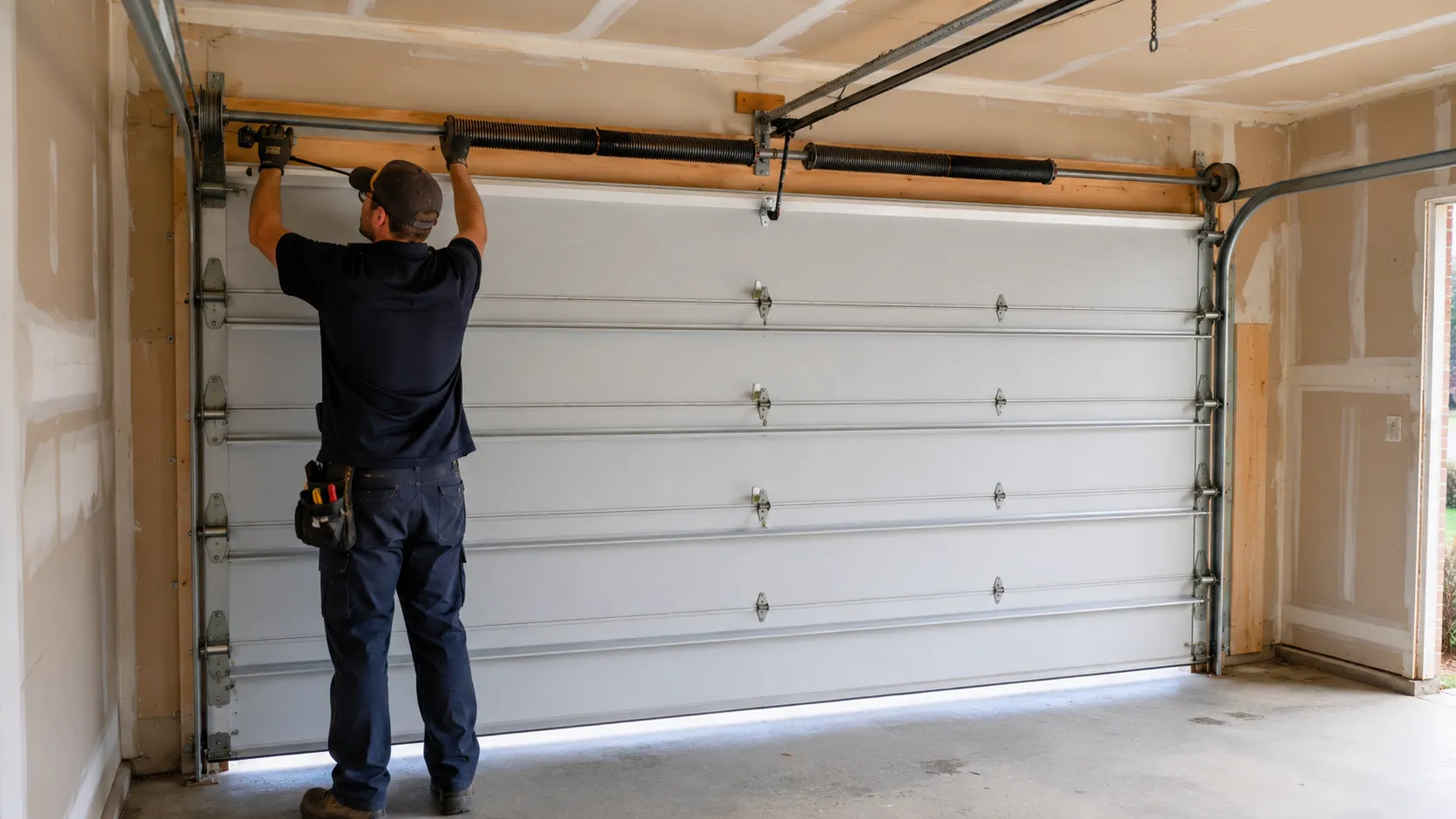
We pull the door under control with the opener disconnected, work section by section so the door never comes off balance, and check the track alignment while the rollers are out - worn rollers often mean the track's taken a knock too, and a straight track with a bad roller still fails again. We also check spring tension while we're in there, since a door lifted with the wrong tension puts extra drag on new rollers and shortens their life. If a section's track is bent past what a straightening job will hold, we say so before you pay for rollers that will just wear again against bad rail.
What Is on the Truck
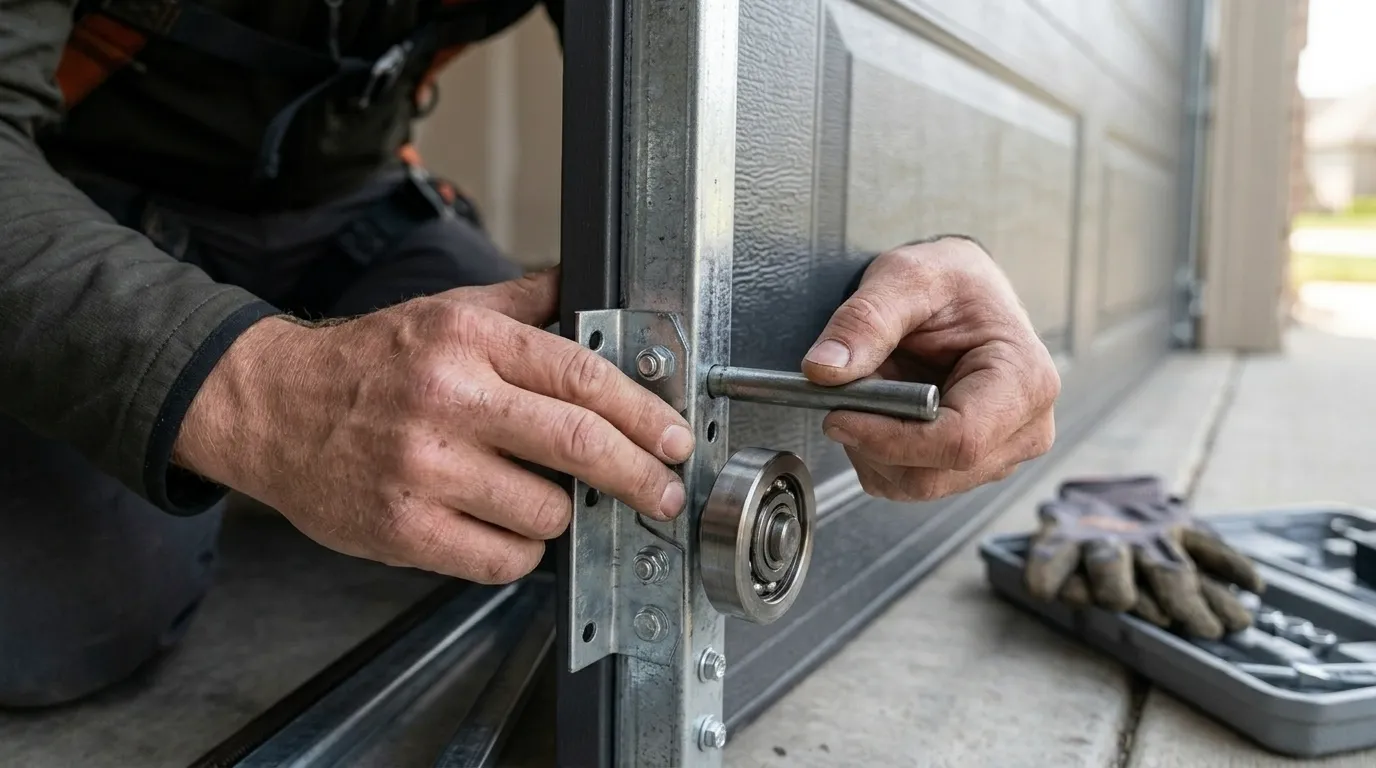
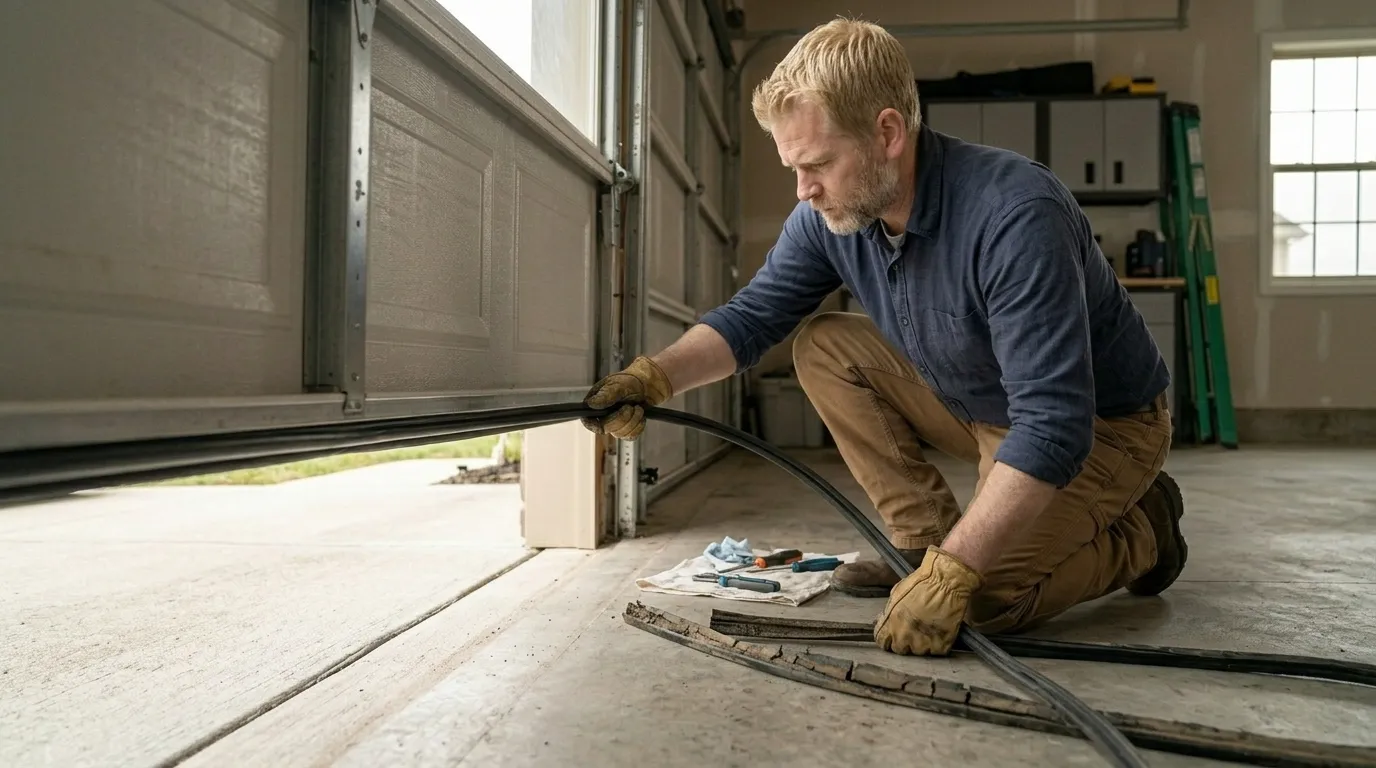
For the door sizes common in Middleton's newer stock, we carry both nylon and steel ball-bearing rollers in the stem lengths that fit standard 1996-era sectional hardware, plus the hex-stem and round-stem variants for the couple of manufacturers that didn't standardize. We stock galvanized track sections and the brackets that go with them, since a roller swap on an older track sometimes turns into a bracket swap once we're up there.
We don't stock every proprietary roller from every door brand - some newer composite doors use a roller stem specific to that manufacturer, and if that's what's on the door, it may mean a short wait on a part rather than a same-visit fix. That's the honest limitation: we'd rather tell you it's a two-trip job than force a roller that's close enough and have it fail again in a year.
Doing It Yourself
Swapping a bottom roller on an unloaded section is within reach for a lot of homeowners - pull the roller bracket, slide the new one in, done. Where it gets dangerous fast is anywhere near the bottom brackets on a door still under spring tension, or on the rollers closest to the cables. A double door this size carries real spring load, and a cable or bracket that lets go while you're working it can put you in the ER.
If you're hearing the grinding but the door still opens and closes level, you have some time to book it rather than treat it as an emergency. If the door's dropped out of level or a roller's already jumped the track, stop running the opener - running it further usually turns a roller job into a track and bracket job.
How it works
From “it’s stuck” to “it’s fixed”
01
Tell us what’s wrong
Describe the symptom - won’t open, loud bang, opener runs but the door won’t move.
02
On-site diagnosis
A technician tests the door under power and by hand and finds what actually failed.
03
Clear, up-front plan
You get the fix that’s needed and what drives the cost - before any work starts.
04
Repaired & tested
The repair is done, the door is set true and tested, and the work area left clean.
Serving Madison, WI - tell us what your door’s doing and we’ll take it from there.
How many rollers does a typical Middleton garage door need replaced at once?
On the common 16-foot double door built to 1990s-era standards, that's ten rollers across both tracks. We replace the full set in one visit rather than one at a time, since the rest are usually close behind the one that failed and a second truck visit costs more than doing them together.
Does cold weather really affect the rollers, or just the springs?
Both, but rollers show it differently. The service area sits in a moderate-cold climate band, and galvanized track contracts in winter. A roller that's slightly worn can start binding or jumping the track once temperatures drop, even if it was fine all summer.
Can you match the roller to my specific door brand?
Usually, yes - we carry nylon and steel rollers in the common stem lengths for standard sectional hardware. A few composite doors use a proprietary stem, and if that's what's on your door, it may mean ordering the part rather than a same-visit swap.
Ready to get your garage door sorted?
Tell us what it’s doing and where you are in Madison - we’ll take it from there.