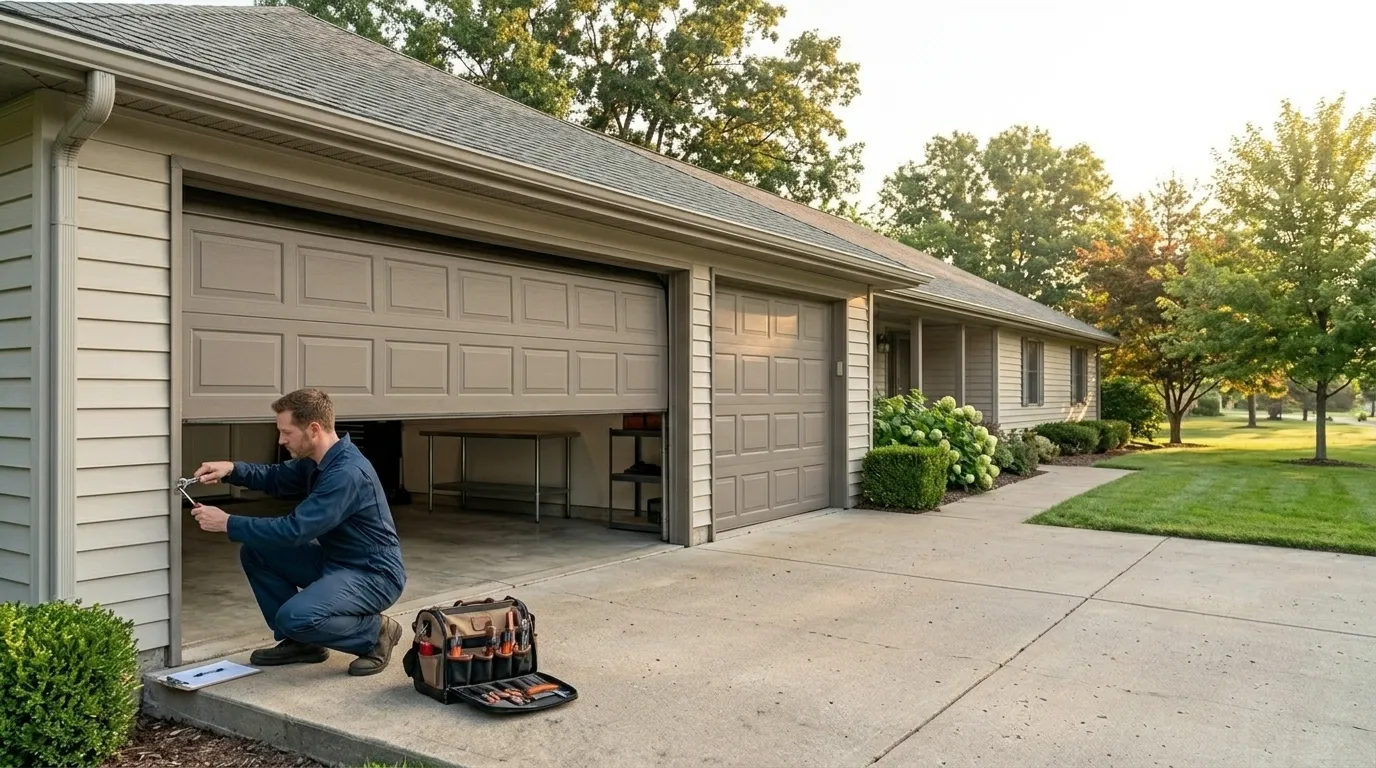
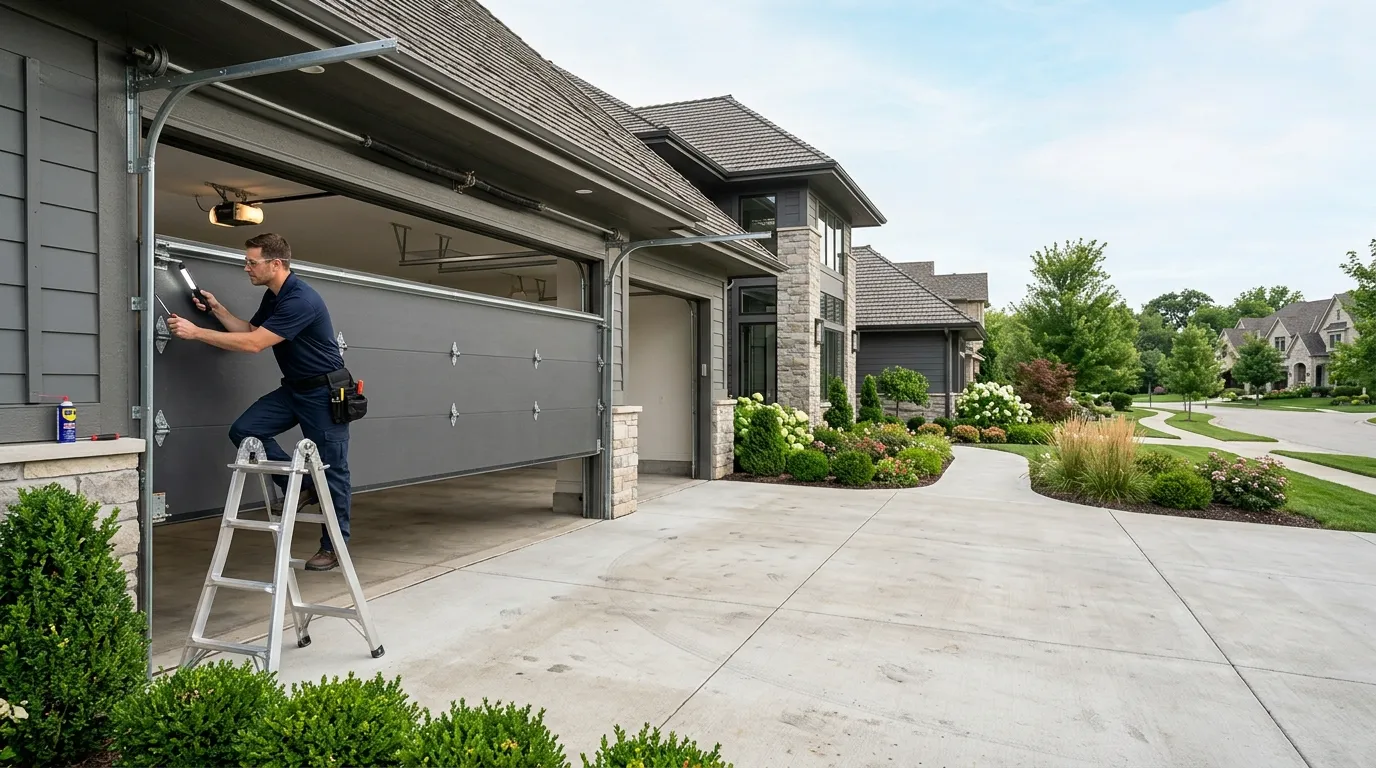
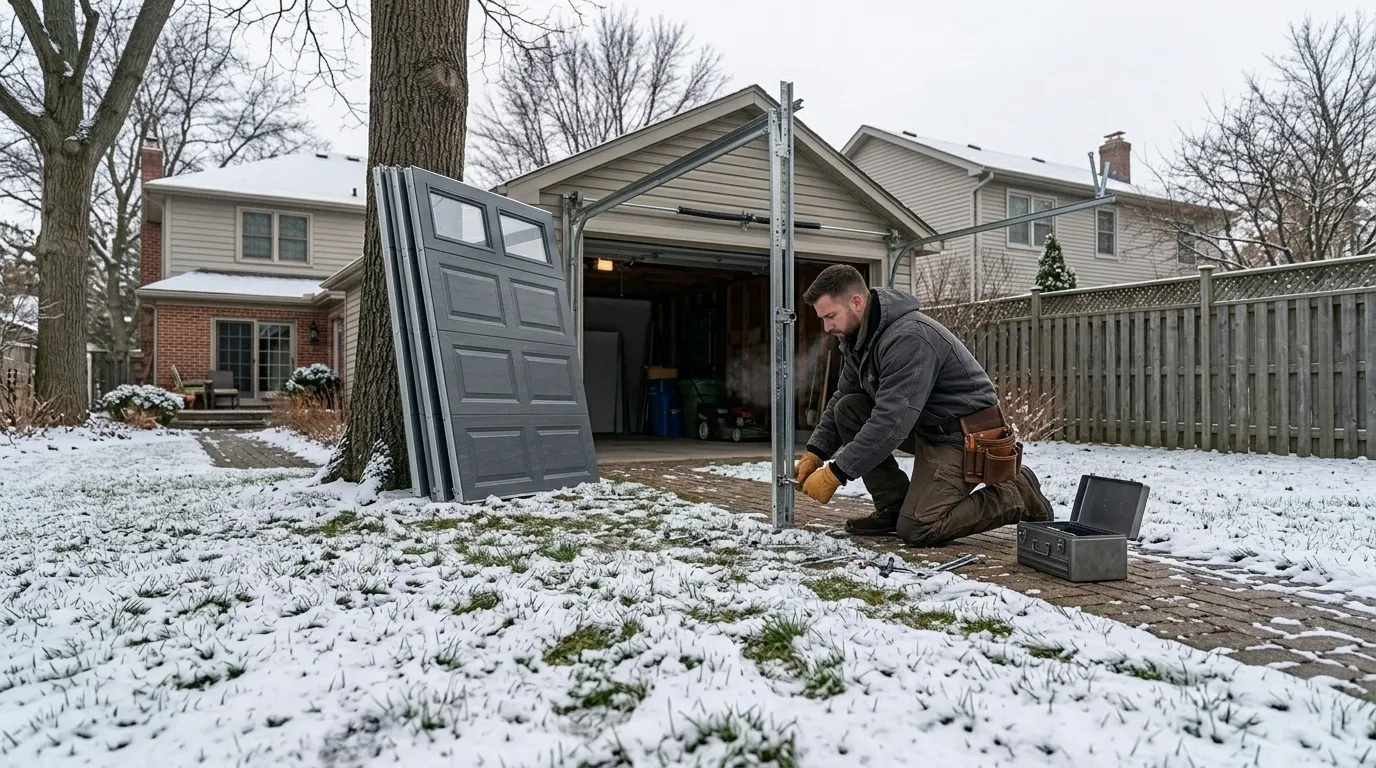
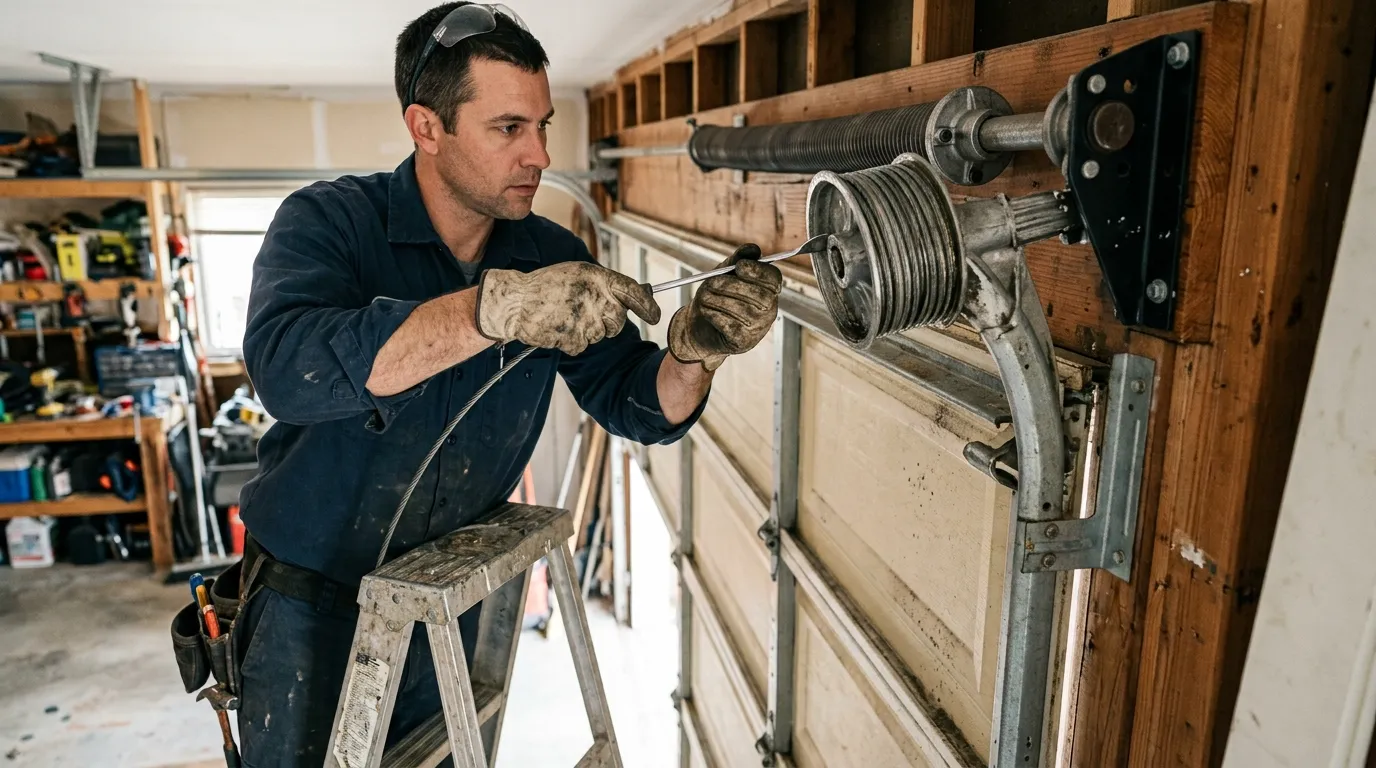
Middleton's housing stock runs newer than most of the Madison area, so off-track doors here usually start with bent 1990s-era track, not worn-out old hardware.
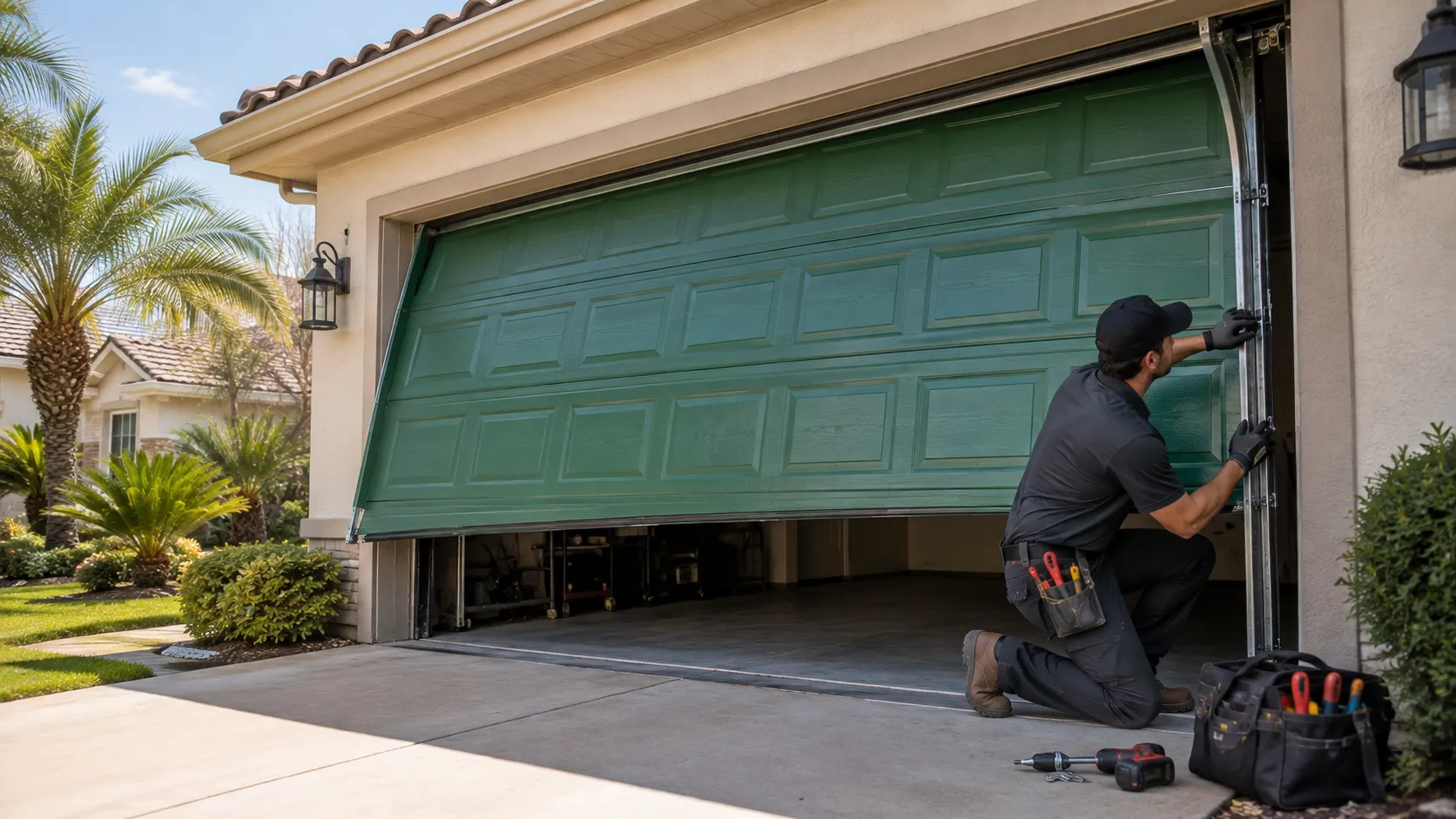
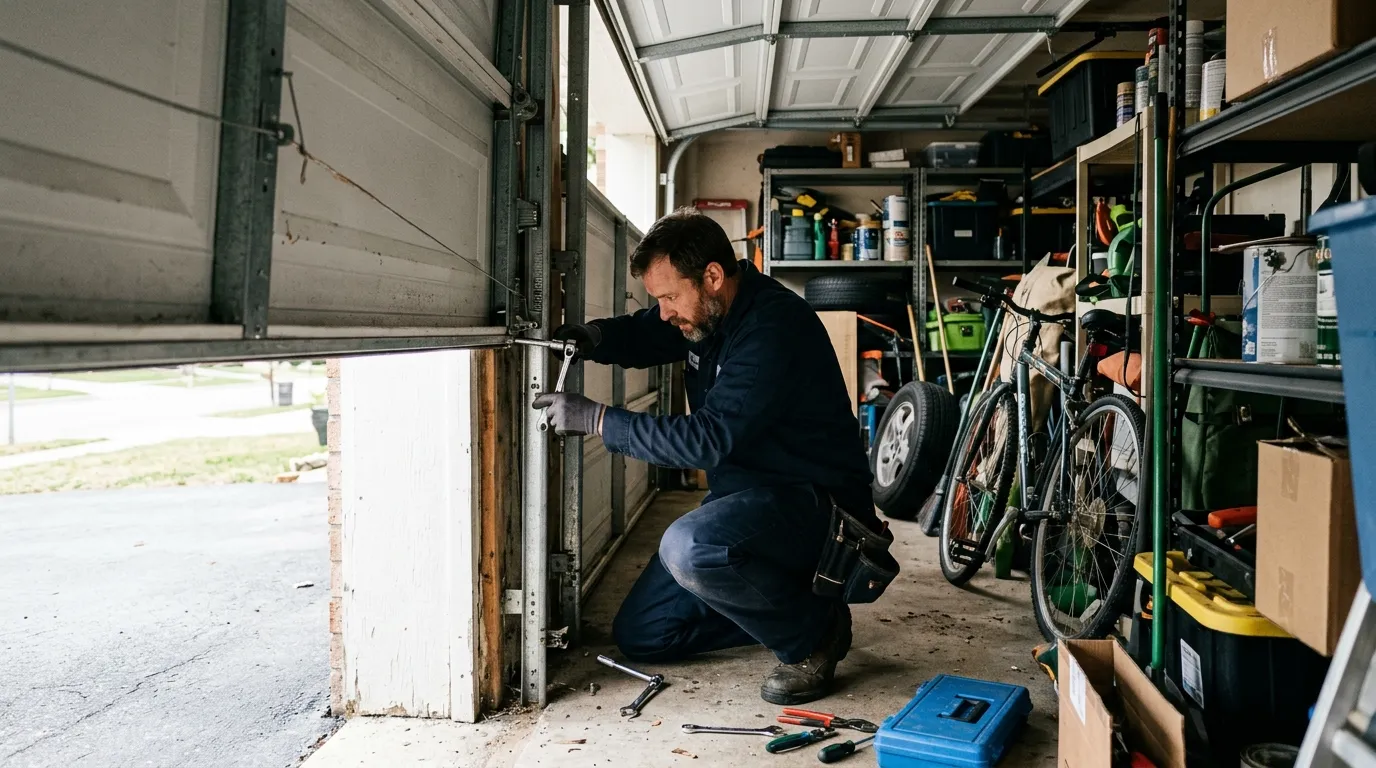
Most of the trouble we see on Middleton off-track calls starts with the door's rollers jumping the horizontal track where it bends up toward the ceiling. That bend is the weak point on any door, but the way it fails here has a lot to do with when these houses went up. Middleton's housing stock runs newer than the area median - a lot of it built after 1996, versus a service-area median build year of 1986. Newer track from that era is lighter-gauge steel with plastic-capped rollers, built for the original door weight, not for whatever got bolted on later.
That matters because a fair number of these houses have since had their original door swapped for a heavier insulated model - the kind homeowners in a higher-income area (F7 shows the wider Madison service area median at $98,943, and Middleton runs well above that) tend to upgrade to. The extra weight on 1990s track brackets shows up as a slow bend, then one hard stop or a car bumper tap knocks the roller clean off the rail. We also see track knocked loose where it's fastened to jamb studs that were never re-shimmed after the door swap - a install-quality issue, not a wear issue.
How We Fix It
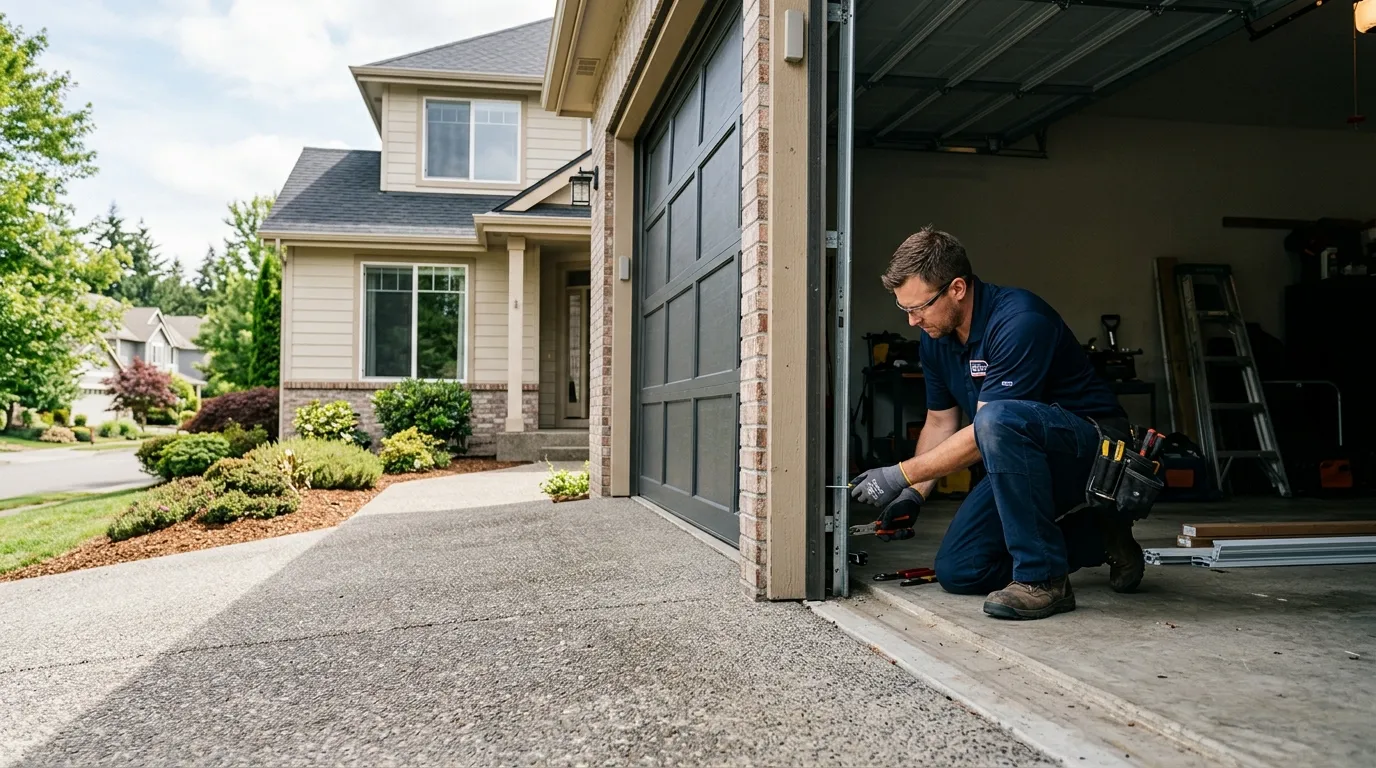
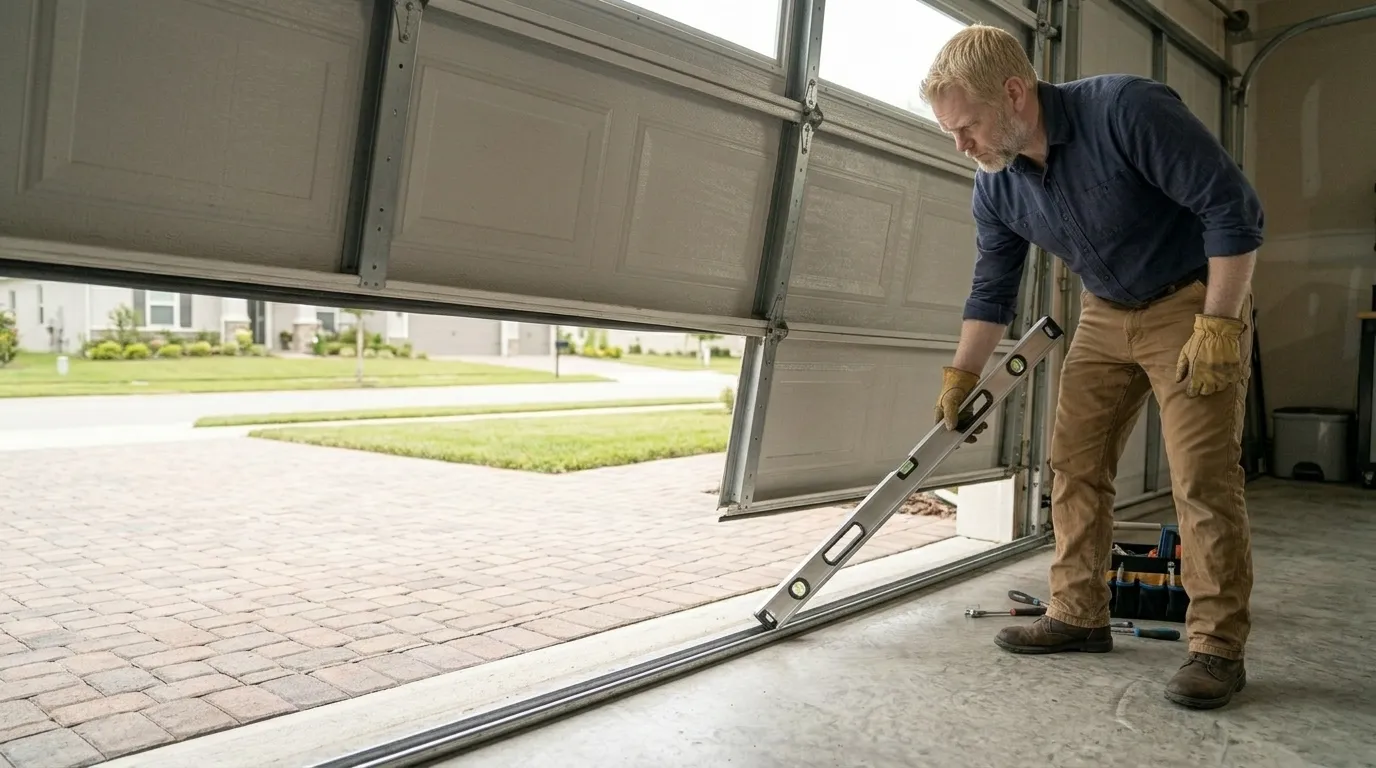
First thing on site is figuring out whether the track bent or just came loose from the wall brackets, because those are two different jobs. A loose bracket gets re-shimmed, plumbed, and lagged back into the framing - fifteen minutes of work if the track itself is straight. A bent section is a different call: we pull it, check the door against the new alignment, and swap in matching-gauge track rather than hammering the old piece back into shape, which never holds for long on the lighter track common in Middleton's 1990s-built garages.
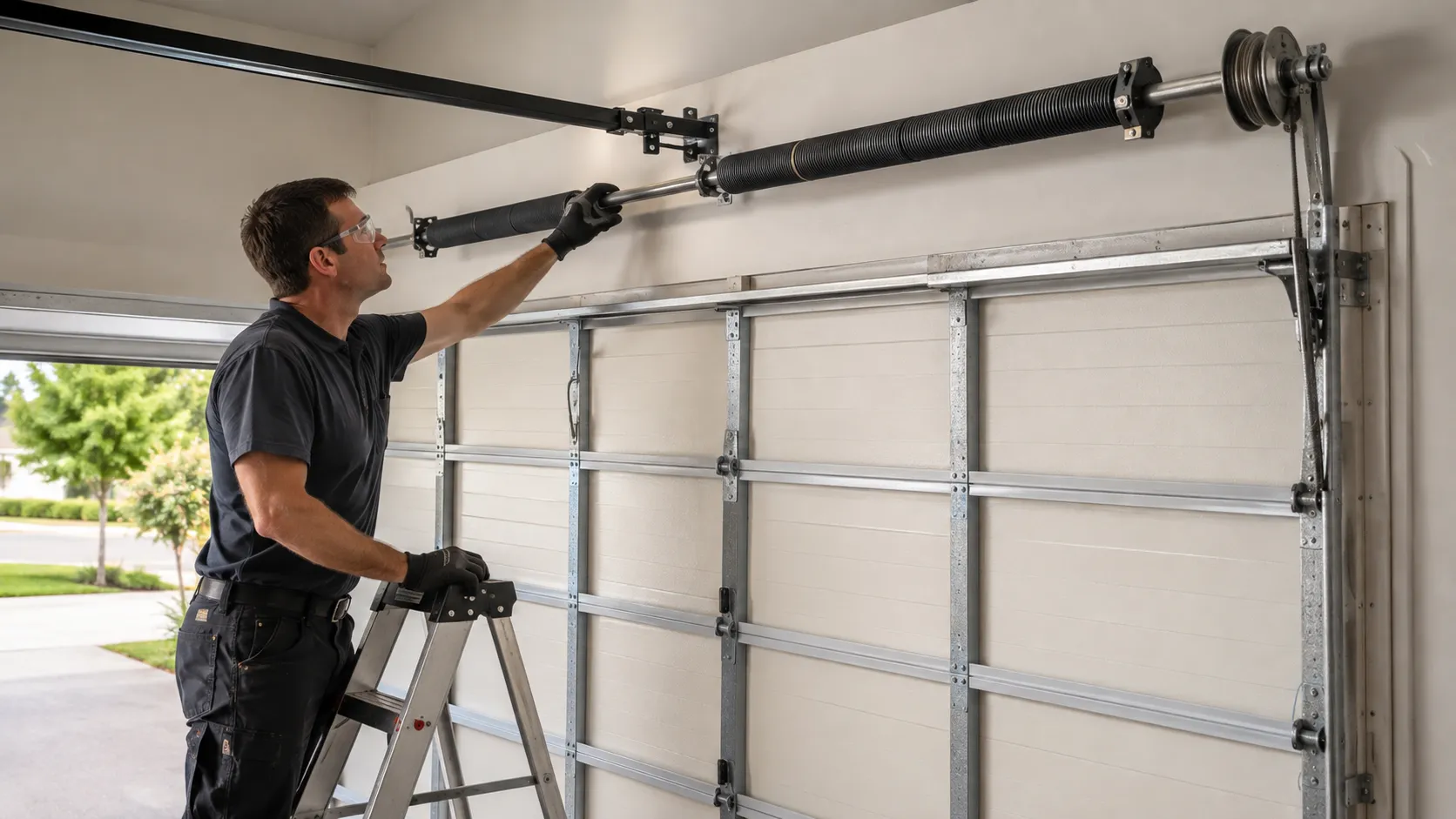
Once the track's square we walk the rollers, since a jumped door usually chews up at least two or three on its way off the rail, and worn plastic rollers are what let it happen again. We also check the cable drums and the bottom brackets on that side, because a door that's been running crooked for a while will have stressed the cable on the low side. None of this needs the opener touched unless the door was running when it jumped - if it was, we check the limit settings before we call the door done.
What Is on the Truck
We carry standard-width track sections, both flag brackets and top-of-wall brackets, and rollers in nylon and steel for the roller sizes common on 1980s-through-2000s doors, which covers most of what's on Middleton streets. Track hardware from this era is common enough that we don't usually wait on parts.
Where we do sometimes have to order: track for oversized or custom-width doors, and any hardware sized for a door heavier than what the original opener and springs were set up for - which comes up more here than in older neighborhoods, given how many doors have been upgraded to insulated models since the original build. If that's the case, we'll say so on site rather than force a fix that won't hold, and we'll tell you what the wait looks like before we leave.
Doing It Yourself
If a door's off track but the opener is unplugged and the door isn't under spring tension in a bad spot, you can usually get it back on the rail yourself with a rubber mallet and a helper - loosen the roller brackets, guide the wheel back into the channel, and check that the door swings freely by hand before you plug the opener back in.
Where we'd stop you: if the track itself is visibly bent rather than just knocked off the wall, tapping it back doesn't fix the underlying problem, it just buys you a week before it happens again. And if the door came off because a cable snapped or a spring let go, leave it - that's not a track problem anymore, and a door under broken spring tension can move without warning. Call for that one instead of working around it.
How it works
From “it’s stuck” to “it’s fixed”
01
Tell us what’s wrong
Describe the symptom - won’t open, loud bang, opener runs but the door won’t move.
02
On-site diagnosis
A technician tests the door under power and by hand and finds what actually failed.
03
Clear, up-front plan
You get the fix that’s needed and what drives the cost - before any work starts.
04
Repaired & tested
The repair is done, the door is set true and tested, and the work area left clean.
Serving Madison, WI - tell us what your door’s doing and we’ll take it from there.
Why does my door keep jumping the same spot on the track?
That's usually a bent section, not a one-time knock. Once track bends even slightly, the roller catches the same spot every time the door runs past it. Straightening it back by hand rarely holds - the fix that lasts is replacing that section with matching track, which we carry for the roller and track sizes common on Middleton's 1980s-2000s builds.
Is a jumped track an opener problem?
Not usually. The opener just keeps pulling the door along whatever path the track gives it, so if the track's bent or the rollers are worn, the opener has nothing to do with why it jumped. We check the opener's limit settings after a fix mainly because a door that ran crooked for a while can throw those off.
Can I keep using the door if it's partly off the track?
For a short trip in and out, maybe, but running a door that's partly derailed usually finishes the job of bending the track or chewing up the rollers on that side. It's a small repair while it's just off-track. Left running, it turns into a track and roller replacement instead.
Ready to get your garage door sorted?
Tell us what it’s doing and where you are in Madison - we’ll take it from there.