What Can Go Wrong
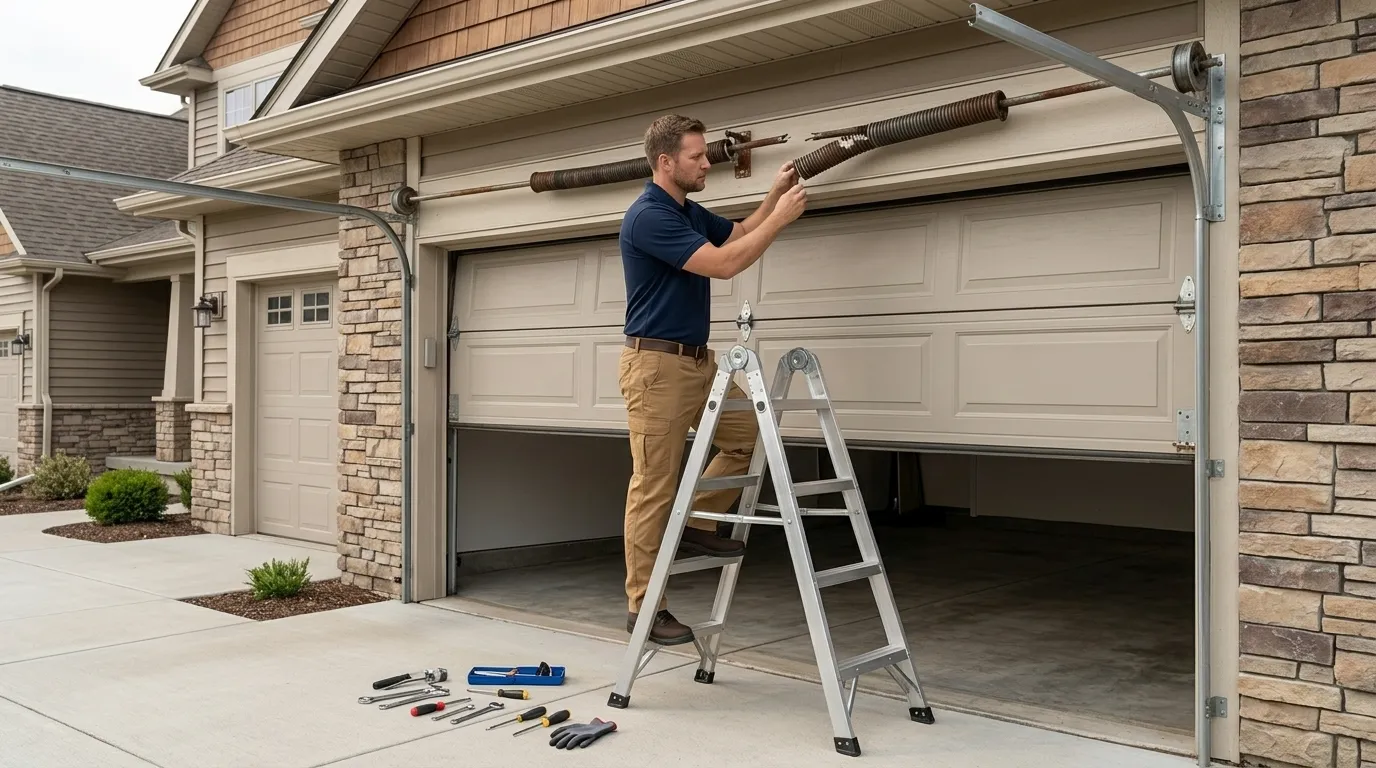
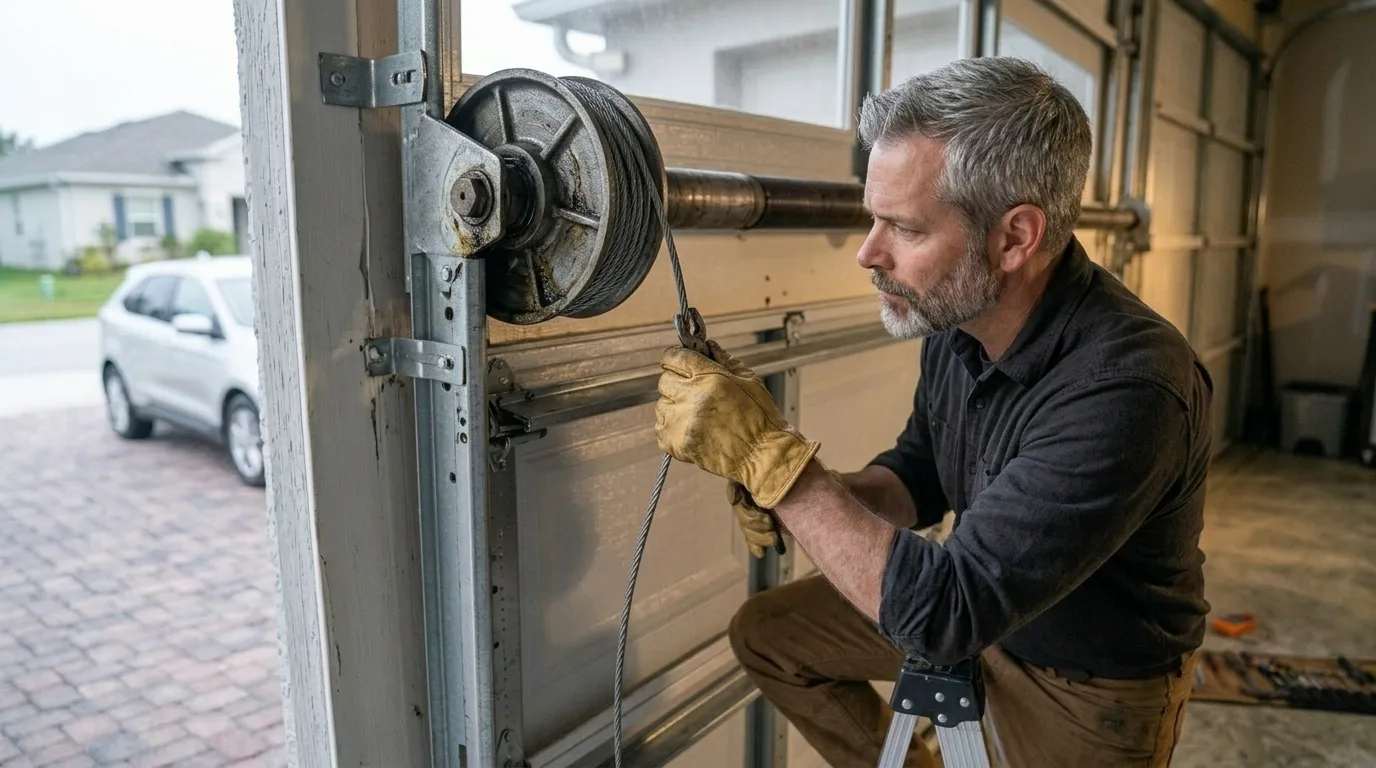
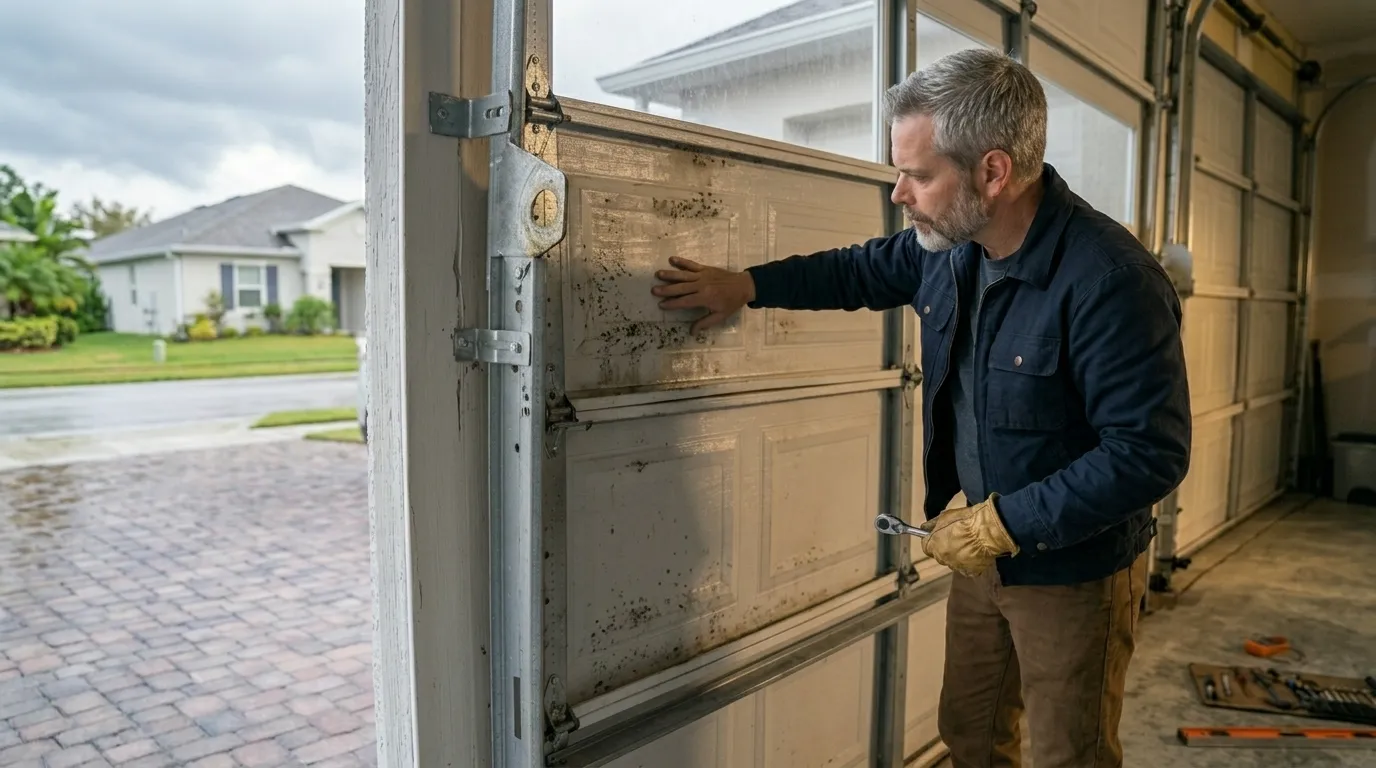
Homes built through the 1990s in this area were mostly built with steel torsion springs rated for a certain cycle count, and by now a lot of those original springs are past it. The other common failure is a bottom bracket or cable that's frayed from age rather than damage - nothing dramatic, just years of use on a door that was never serviced. Winter is the other variable. This area sits in a cold climate band, and cold makes steel brittle and grease stiff. A spring that's been weakening for months will often pick the coldest morning of the year to actually break, because the metal has the least give left in it right then. Openers fail differently - usually the drive gear or the circuit board, not the motor itself, and that's often mistaken for a spring problem until we're standing in front of it. One thing we won't do is tell you a repair will hold if the door's structure or track is bent badly enough that the fix is temporary at best; sometimes the honest call is replacement, not another patch.
The Cost of This Job
We don't have a posted price list for this page, and we're not going to invent one - costs vary with spring size, door weight, and whether it's a repair or a full opener swap. What we can tell you is where this area sits relative to what drives cost decisions: median household income here runs a bit above $100,000, noticeably higher than the roughly $98,943 median across the wider service area we cover. That doesn't set your price, but it does shape what kind of fix homeowners here tend to choose - more often opting for a full spring or opener replacement over a stopgap repair, since the extra cost to do it right is a smaller share of the budget. We'll give you the real number over the phone once we know what's actually broken, not before.