What Can Go Wrong
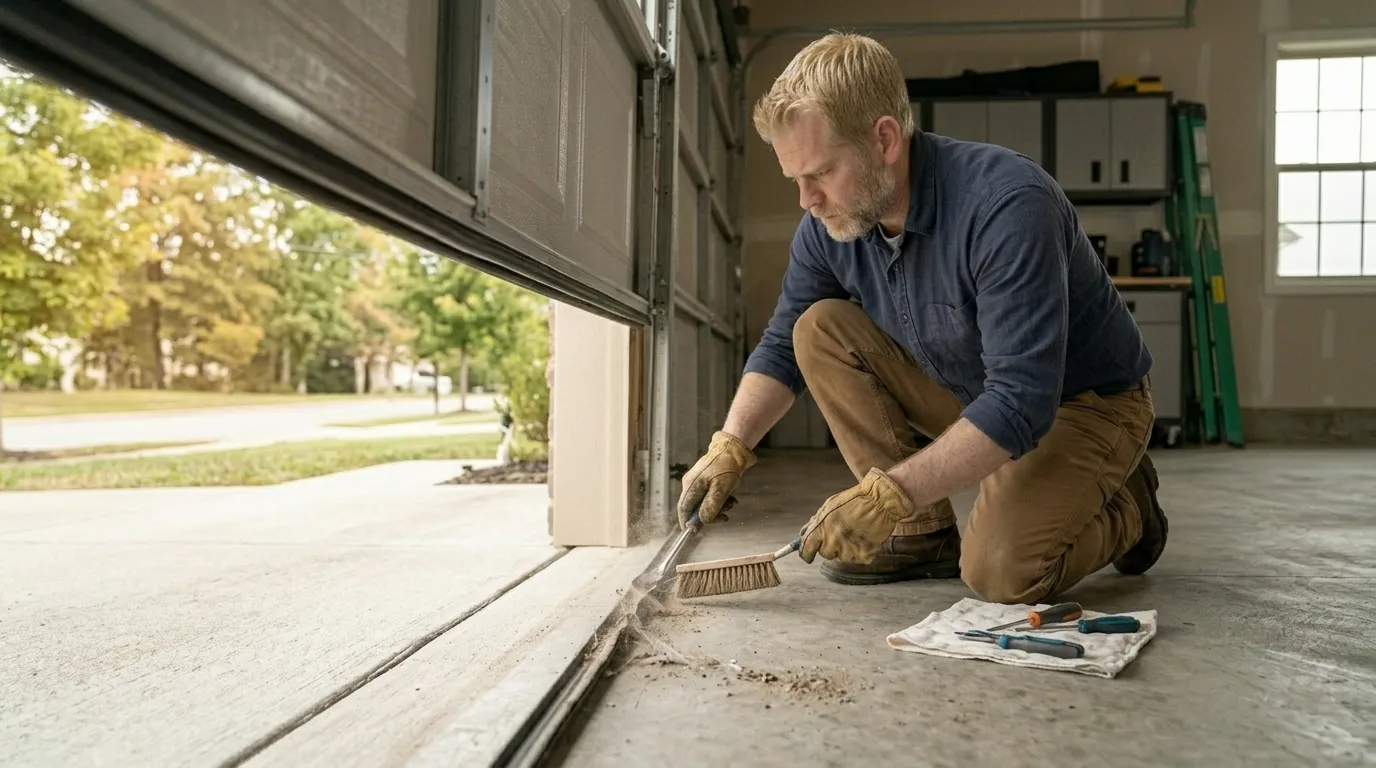
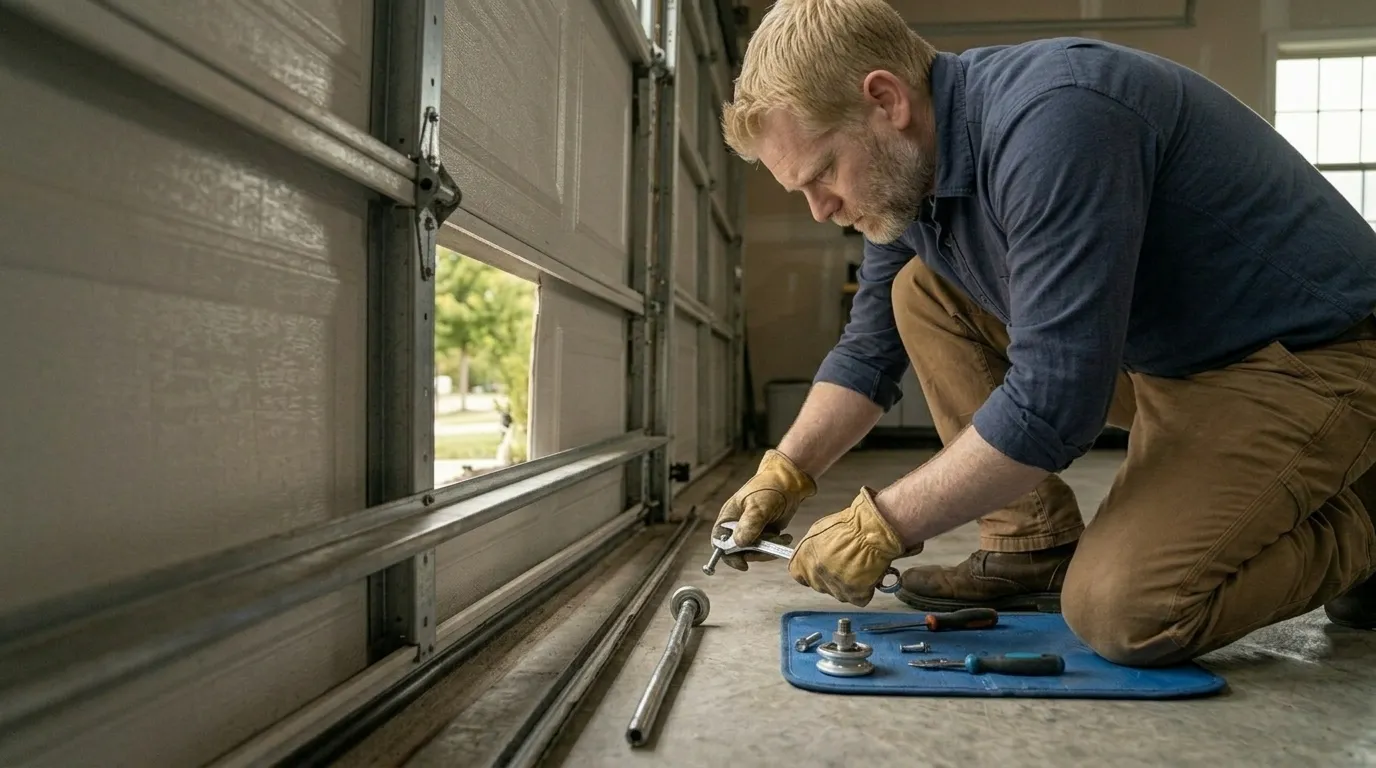
Cold makes steel roller wear worse, not better. In a moderate-cold climate like ours, metal contracts, grease stiffens, and a roller that was merely noisy in October can seize partway through January. When a roller seizes instead of turning, it drags against the track wall instead of rolling along it - and dragging steel against steel scores the track. Once the track is scored, a new roller alone won't fix the noise; you're replacing hardware and dressing the track in the same visit.
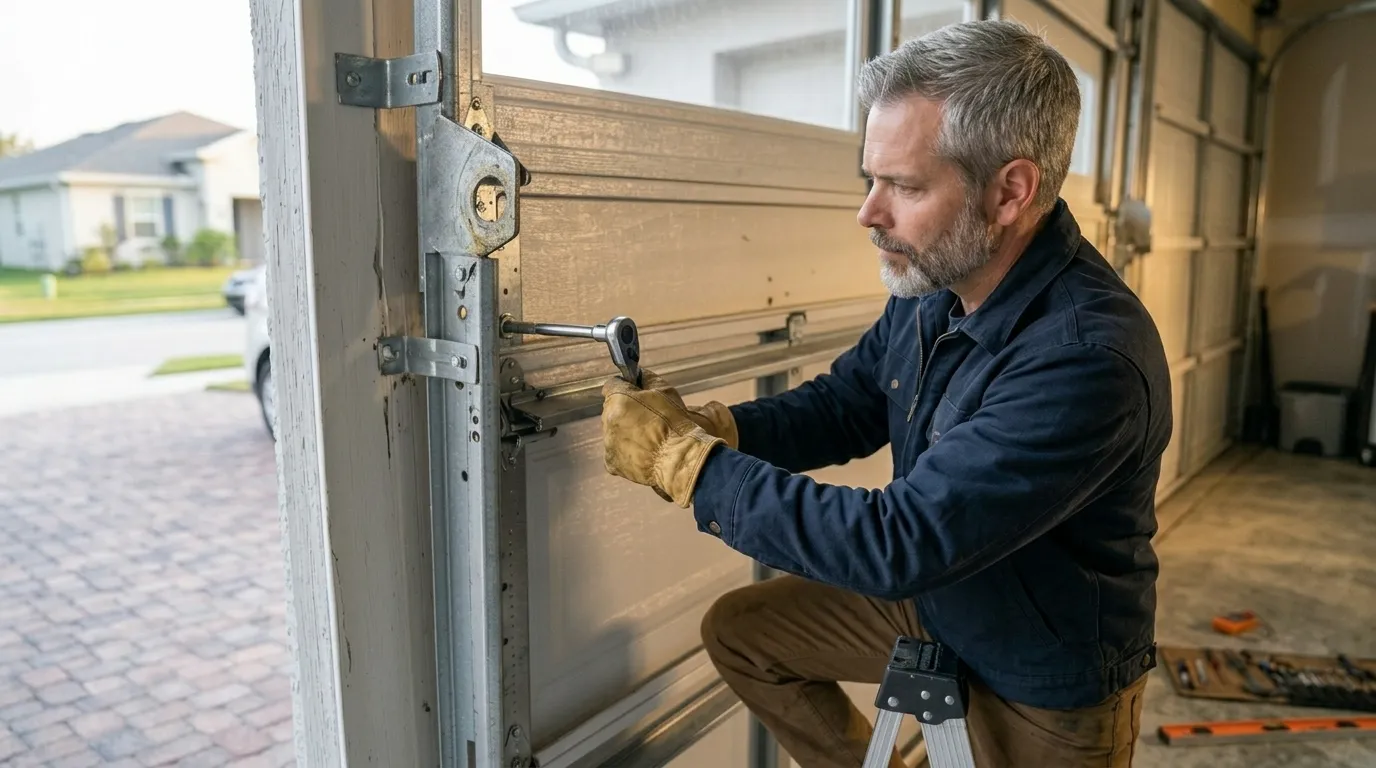
The other failure mode on original 1990s-era doors is a bent roller stem. Steel stems from that build period are thinner gauge than what's used today, and a door that's been slammed or hit by a car bumper over three decades will often show a stem bent just enough that the roller rides at an angle. That angle wears one side of the roller and one side of the track unevenly, so the noise gets worse in the same spot on every open and close.
We don't replace rollers we haven't inspected. If a stem is bent or a track is gouged, telling you it's "just rollers" and charging for that alone doesn't fix the actual problem - it just delays the second call.
The Cost of This Job
We don't quote roller jobs sight unseen, because the honest price depends on what's actually worn - rollers only, or rollers plus track work, or rollers plus a bent stem that needs swapping too. What we can tell you is what tends to drive the cost in this area: doors built around the early 1990s usually need a full set of ten rollers replaced at once, not two or three, because if one bearing has gone dry from age, the rest are close behind on the same clock.
Households in the Oregon area report a median income near $100,695, and we price the same job the same way whether it's here or closer into Madison - by what the door needs, not by the zip code. If your rollers are original to a 1991-built garage, plan on the full set. Spot-replacing one or two on a door that old is a short-term fix at best.
Time on the Job
A straight roller swap - ten rollers, no track damage - usually runs under two hours once we're on site. Add track dressing for a scored section and you're looking at longer, because that work has to be done carefully or the new rollers wear the same way the old ones did.
The one limitation worth saying plainly: if a stem is bent badly enough that the roller bracket itself is deformed, that's not a roller repair anymore - that's a bracket and hardware replacement, and we'll tell you that before we start rather than after. On a door built in the early '90s, that's not rare. It's the kind of thing three decades of use does to thin steel.