Doing It Yourself
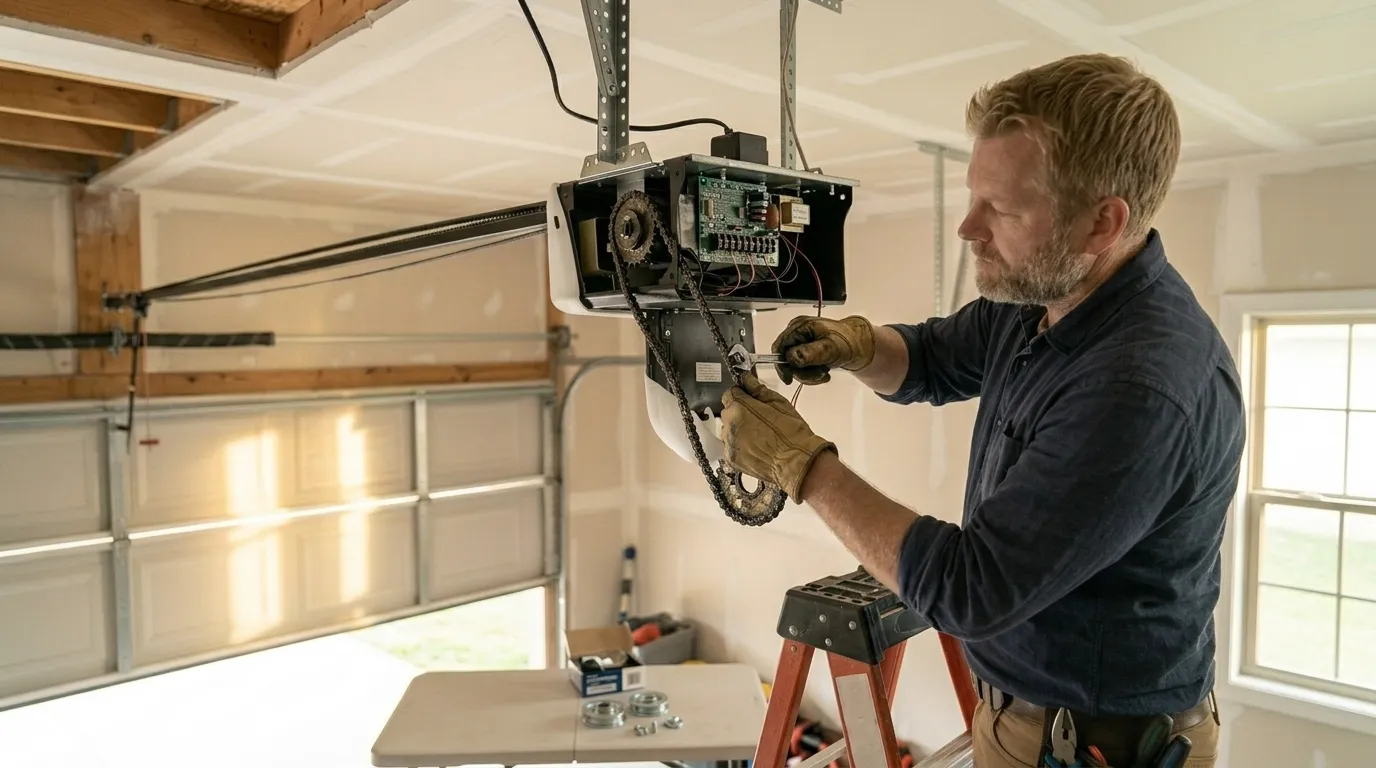
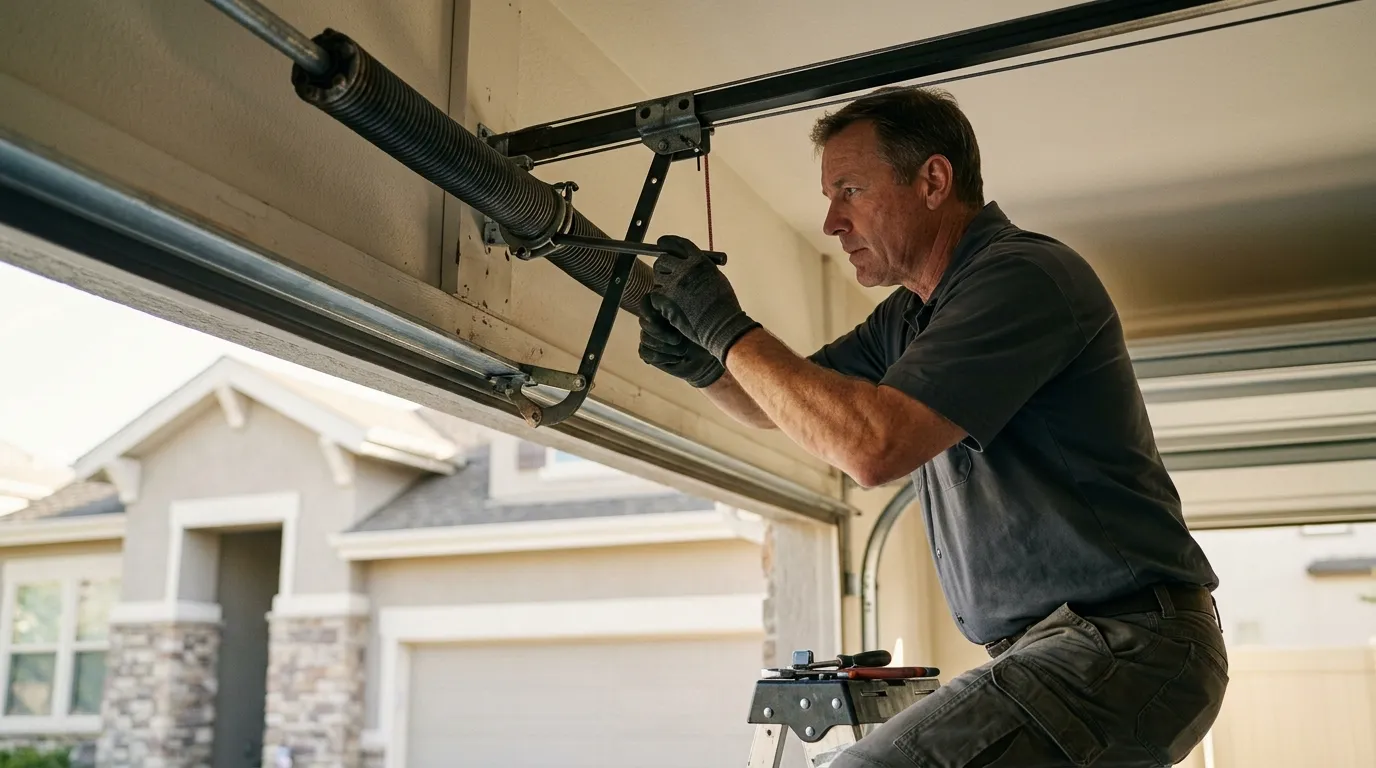
Verona's housing stock is newer than a lot of what we see closer to Madison, most of it going up well after 1986, the median build year for the wider service area. That means most doors here still run on newer torsion spring setups and openers with circuit boards rather than the old chain-drive relay systems you'd find on a house from the 1960s. Newer isn't the same as simpler. A torsion spring under tension can put you in the ER whether the house is from 1965 or 2005, and a newer opener's logic board can get fried by a homeowner troubleshooting a sensor issue with the power still on.
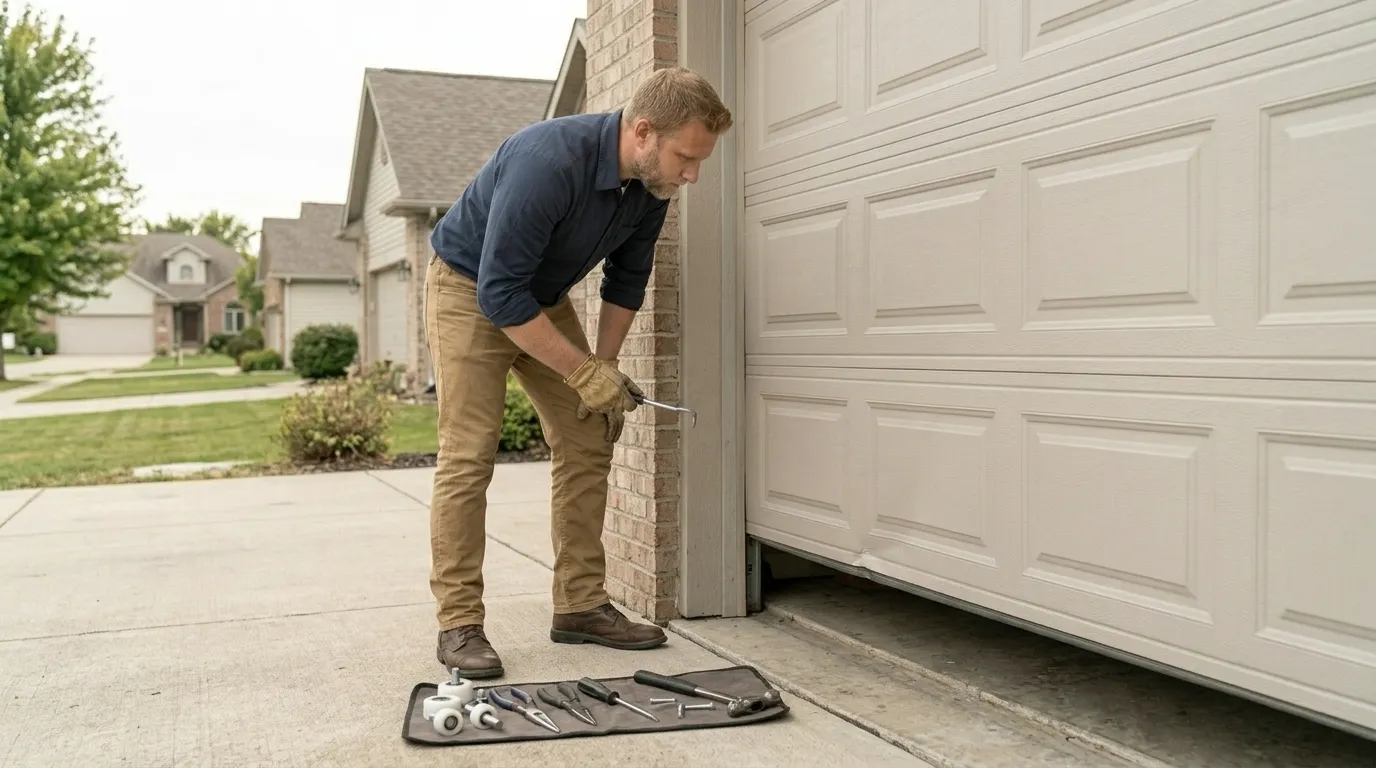
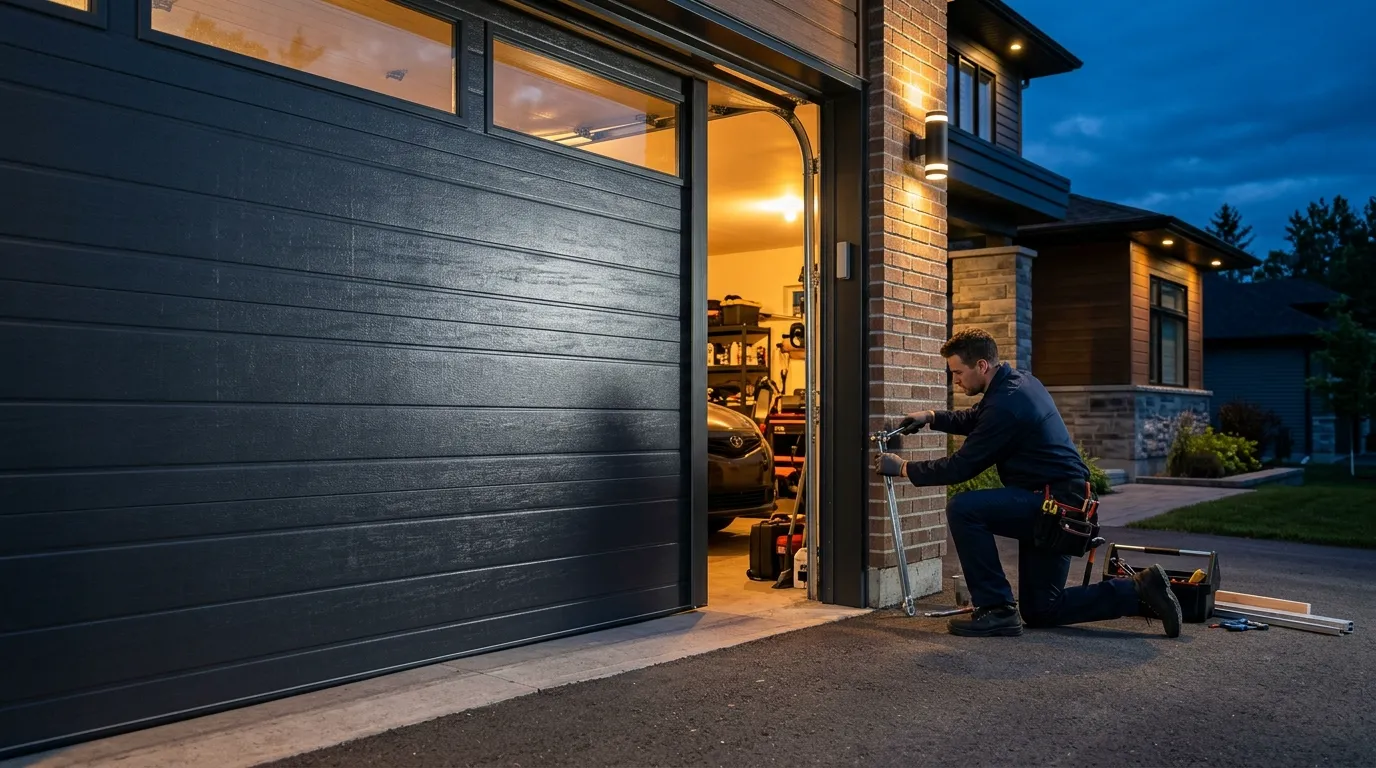
What you can safely do yourself: clear the photo-eye sensors near the bottom of the tracks, check that the tracks are free of debris, and tighten the visible bolts on the bracket if the door's rattling. What you shouldn't touch: the spring, the cable drums, or anything that requires you to stand under a door held up by a winding bar. We'd rather get the call before the trip to urgent care than after.
Time on the Job
We run this service out of Madison, and Verona sits nine miles out, one of the closer calls on our route compared to towns further out. That distance adds real drive time to and from every job, which is part of why we ask for a decent description of the problem when you call rather than just an address. A broken spring on a double door and a stuck sensor are both "the garage door won't work," but they're different truck loads and different amounts of time on site.
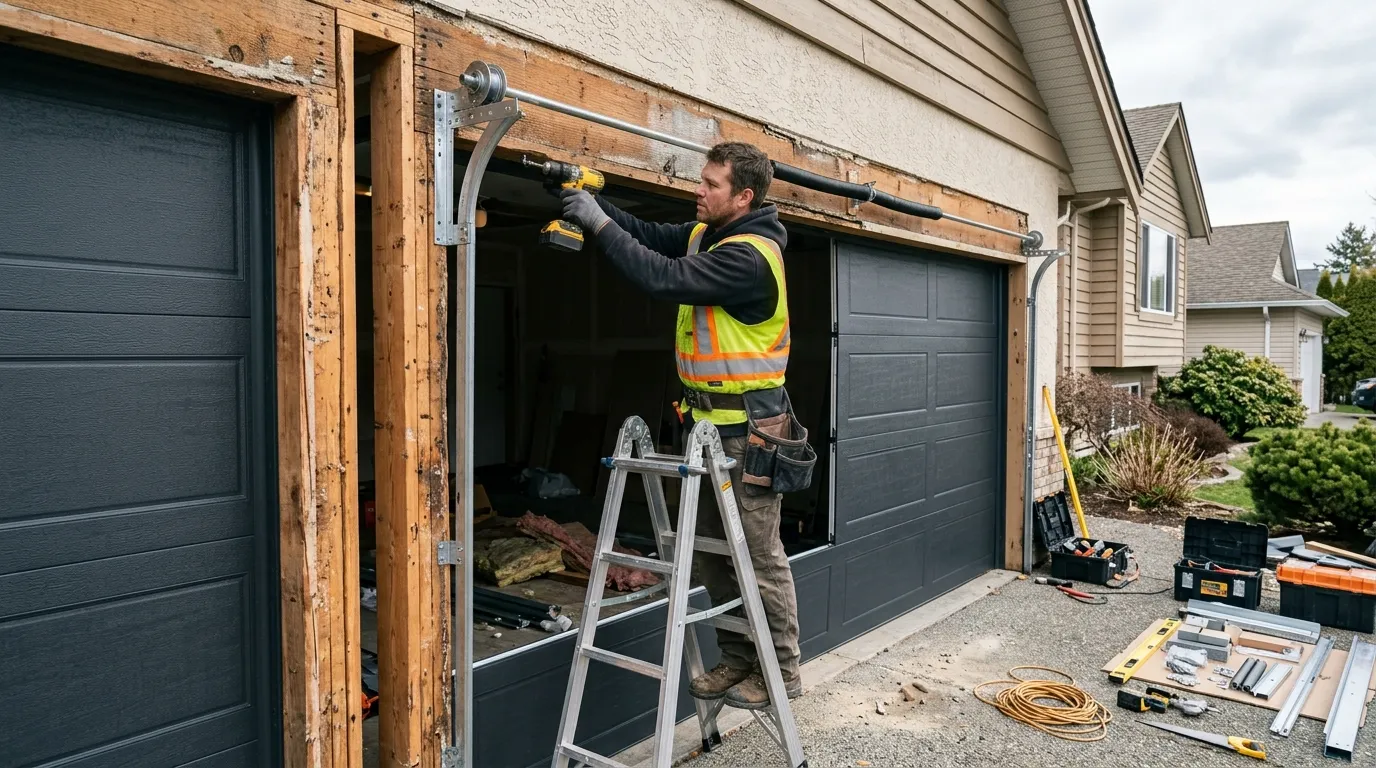
Once a tech is in your driveway, most single-spring repairs and opener swaps run inside a couple hours. Full two-car door replacements take longer, mostly because of insulation panel fitting and track alignment on a wider opening, not because the trip out was long. We don't quote a fixed response window here, since that depends on the day's schedule out of Madison, but the extra minutes on the road for a Verona call are modest next to some of the towns further out on our list.
What Is on the Truck
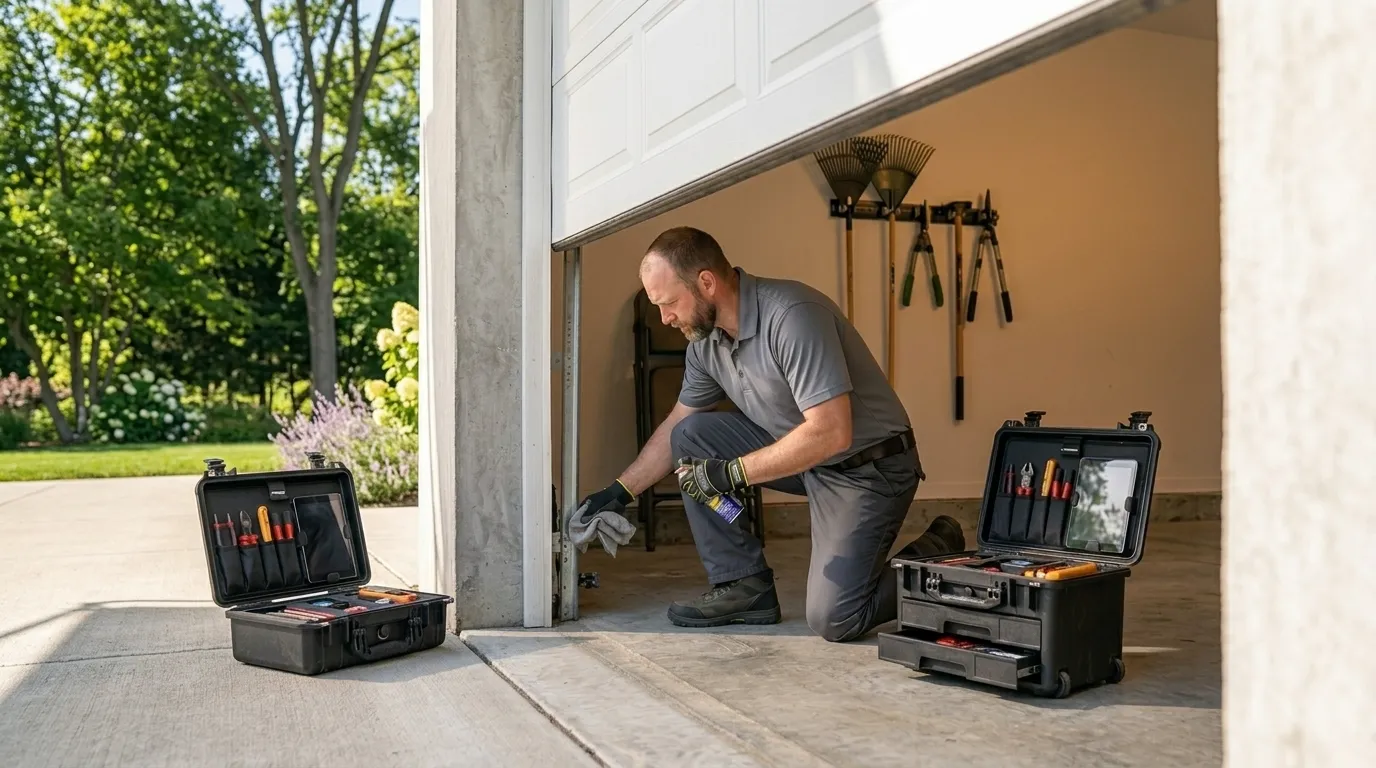
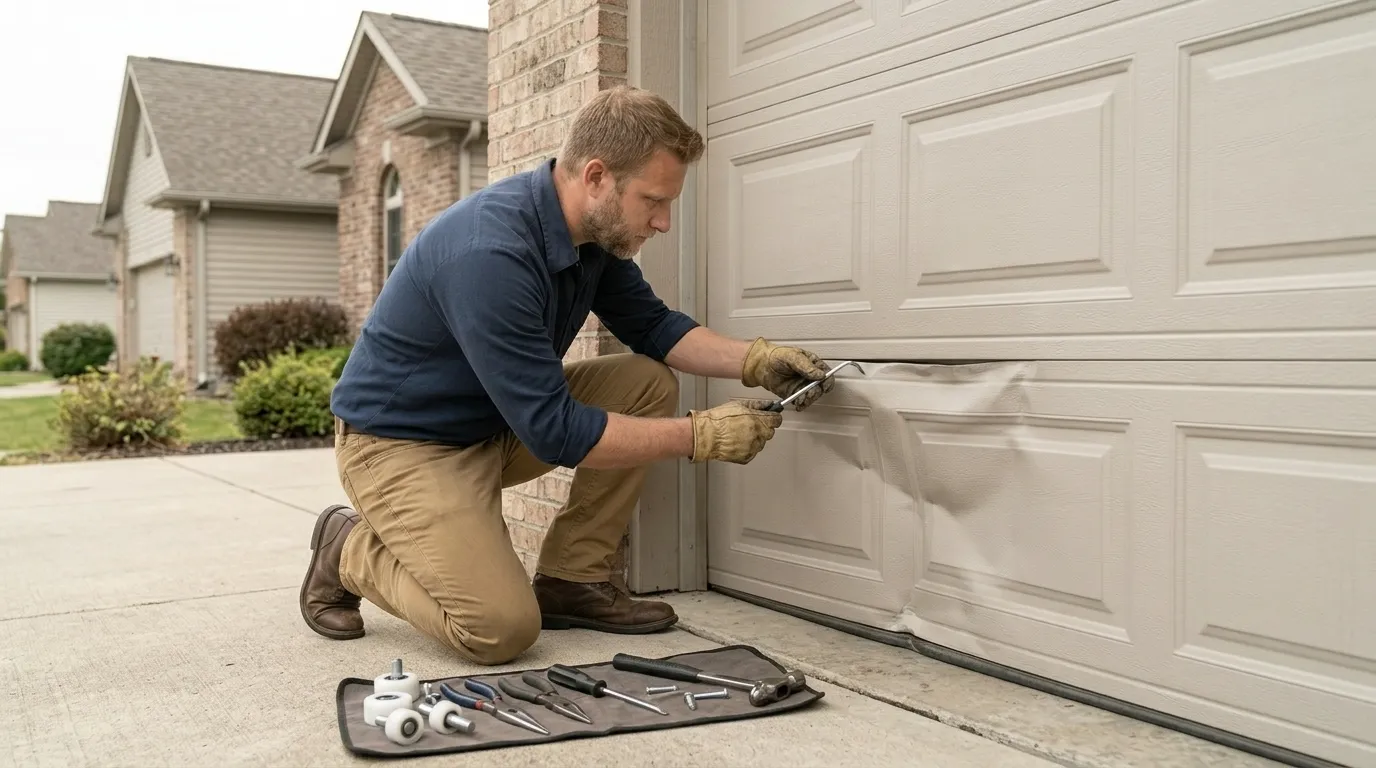
For a Verona call we carry the standard torsion spring sizes that match doors from the early 2000s build era, along with the sensor and circuit board parts that fit the openers commonly installed in that period. What we don't always carry is a part for a specific proprietary opener model if it's an older or less common brand; on those we sometimes have to order the exact board and come back for a second trip. That's the honest limit here: we'd rather tell you a part needs to be ordered than jury-rig something that fails again in six months.
Rollers, cables, and standard hardware are stocked in enough sizes to cover the vast majority of doors we see on this side of the county. For a full door replacement, the truck carries samples and spec sheets, but the actual door gets ordered to fit your opening once we've measured it on site.