What That Sound Coming From Your Garage Door Actually Means
Madison houses built mostly 1962-2001 carry original hardware nearing end of life. Here's what each noise means and when a cold-climate fix is overdue.
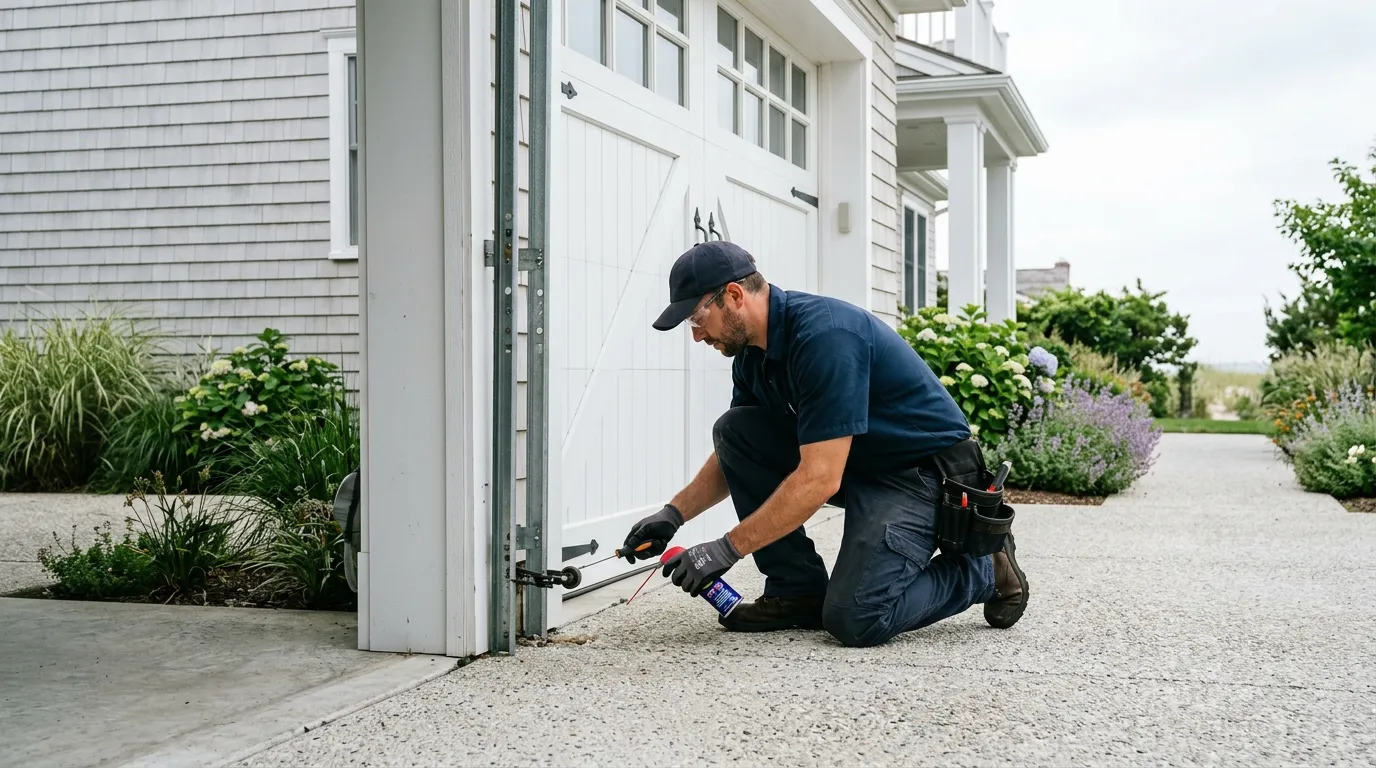
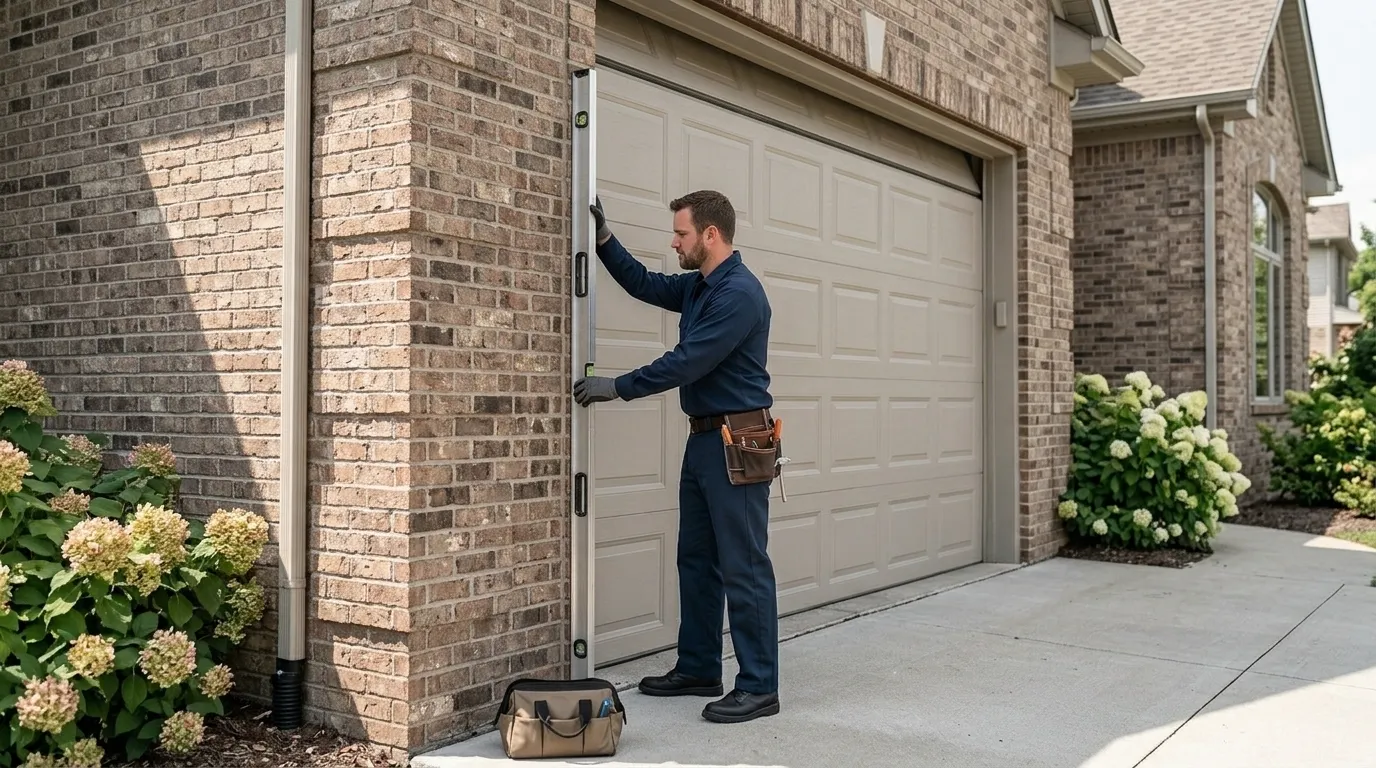
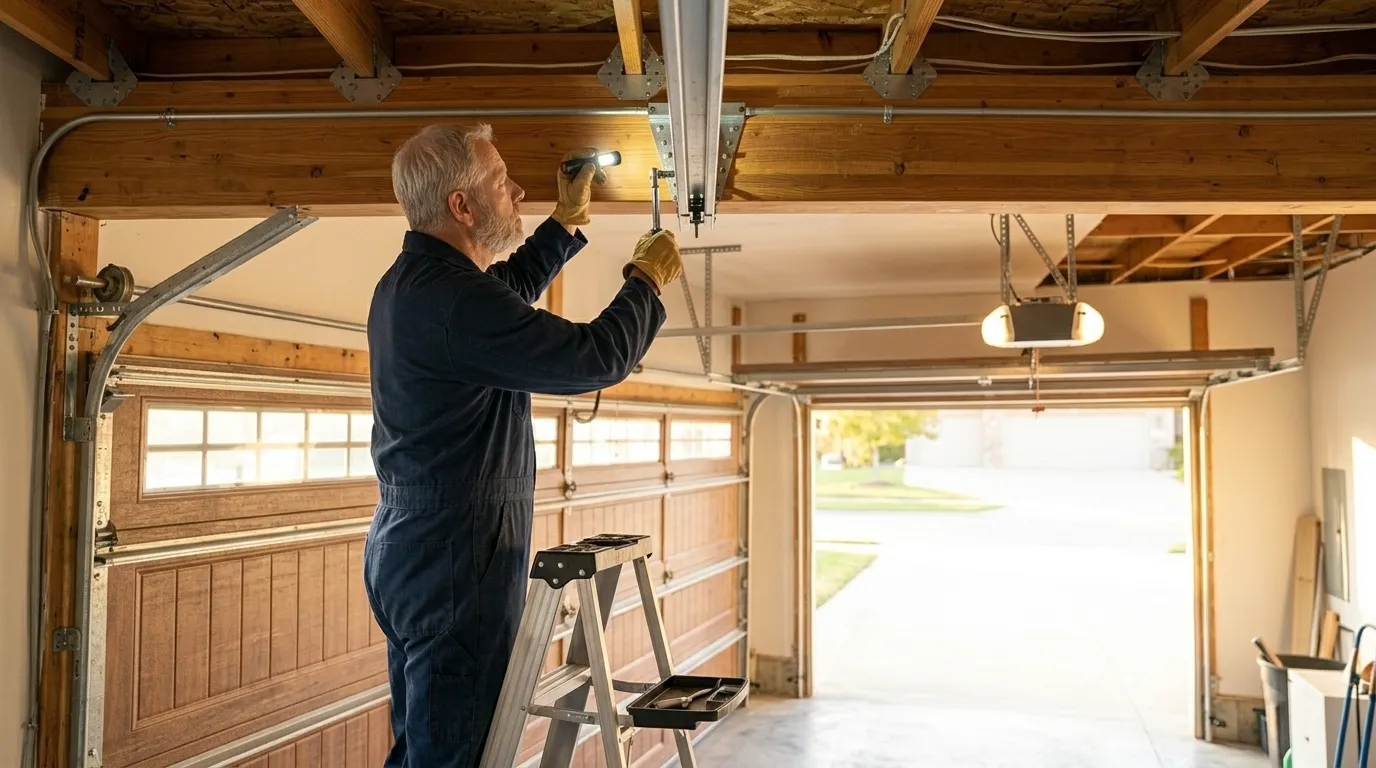
Start with the hardware, not the noise. Most houses in the Madison service area went up between 1962 and 2001, with the median build year sitting around 1986. That means a lot of doors out there are still running on the torsion springs, rollers, and openers that came with the house - thirty-plus years old in a good number of cases. Look at the springs first: a torsion spring under that kind of age shows rust streaks, gaps between coils when the door is down, or a visible stretch on one side compared to the other. Next check the rollers. Original steel rollers from that era were never sealed, so if you hear a rhythmic clunk as the door travels, it's likely a roller riding worn track rather than anything electrical. Check the track brackets too - lag bolts loosen over three decades of seasonal wood movement, especially on houses framed before engineered lumber was standard. One honest limit here: if you can't tell whether a noise is the spring or the opener chain without watching a full open-close cycle, don't guess. Misdiagnosing a spring issue and trying to force the door is how people get hurt.
Season by Season
Madison sits in a cold, moderate climate band, and that swing matters more to a garage door than most people expect. In winter, grease inside original 1980s-90s rollers and hinges thickens up, so a door that was quiet in July starts groaning in January - that's usually not damage, just cold lubricant asking for a change to a low-temperature product. Spring is when torsion springs that survived a winter of temperature swings finally let go; metal fatigues faster with repeated contraction and expansion, and a spring rated for a certain number of cycles doesn't care what season it breaks in, but cold snaps accelerate the wear. Summer heat does the opposite: metal expands, and a track that was slightly out of alignment all winter can suddenly bind harder as panels swell against weatherstripping. Fall is when it's worth checking cables and pulleys before the first hard freeze locks any slack in place. None of this is dramatic, but a door built for one season's tolerances and run through all four for two or three decades will tell you about it eventually - usually with sound before it fails outright.
What Is Going On
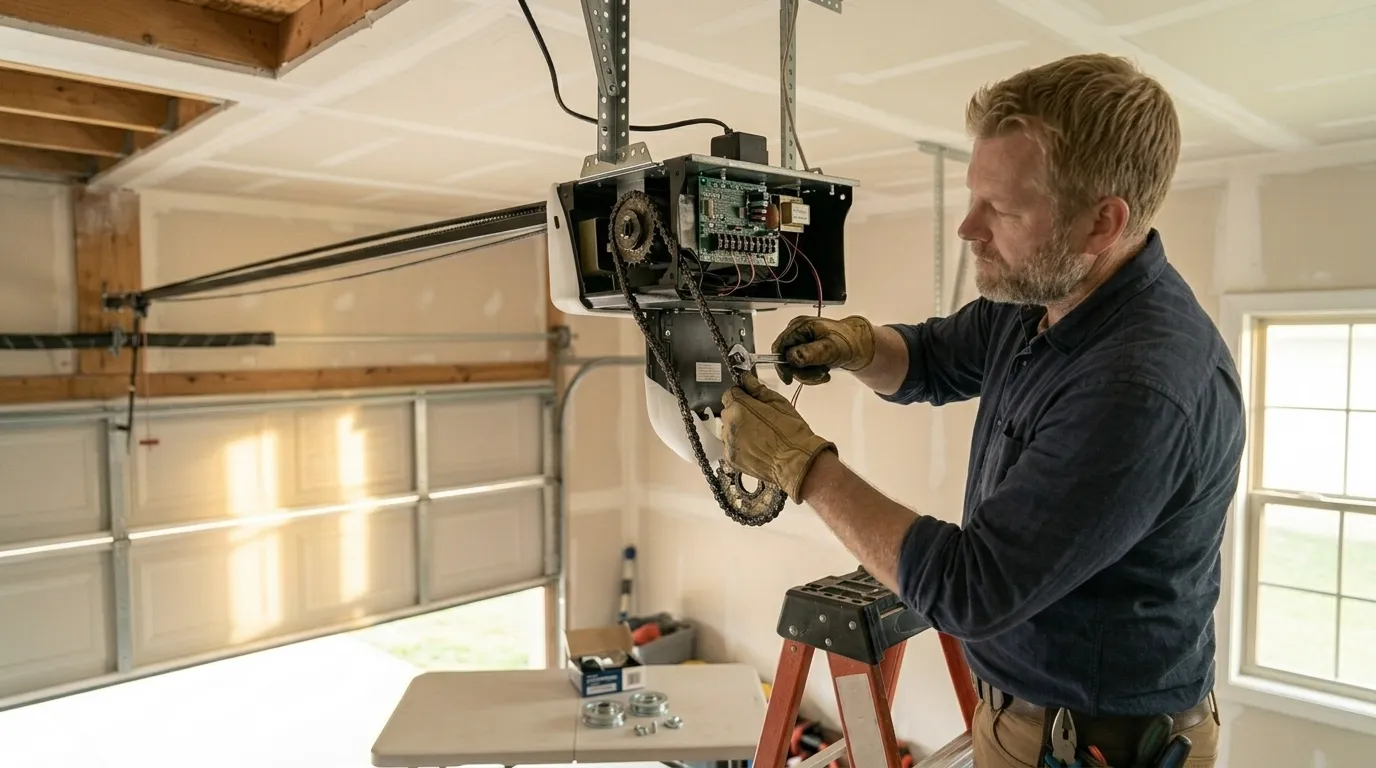
A slow grinding sound almost always means a roller has lost its bearing lubrication or the track has debris in it - common in houses from the 1962-2001 build wave where tracks were installed with less tolerance for settling than newer construction allows. A loud bang, usually once, is a torsion spring letting go; it sounds worse than it is structurally but means the door won't open safely until it's replaced. A rhythmic squeak on every rotation points to a dry hinge, the cheapest fix on this list. A metallic snap followed by the door refusing to move points to a cable off its drum, often from a roller that jumped track first. And a hum from the opener with no door movement usually means a worn drive gear, which is common once an opener from that same 1980s-90s stock reaches the end of its service life. The pattern matters more than the volume - a quiet problem ignored for a season becomes a loud one.
How Local Conditions Play In
The service area around Madison covers a wide mix of build eras - 28 named areas, most of them settled during that same 1962-2001 stretch - and the cold winters here put real stress on hardware that other regions don't see. A torsion spring in a moderate-cold climate cycles through more freeze-thaw stress per year than the same part would in a mild one, which shortens its working life even with normal use. Across the broader area - out toward Middleton, Monona, or Waunakee, all within a short drive - the housing stock runs the same age, so the same noises show up on the same schedule. With roughly 37,541 owner-occupied houses in the area built mostly in that window, worn rollers and fatigued springs aren't the exception, they're the expected maintenance event for a door that age. If your door is making noise and it's original to a house from that era, the question isn't whether something needs attention - it's just which part.
How it works
From “it’s stuck” to “it’s fixed”
01
Tell us what’s wrong
Describe the symptom - won’t open, loud bang, opener runs but the door won’t move.
02
On-site diagnosis
A technician tests the door under power and by hand and finds what actually failed.
03
Clear, up-front plan
You get the fix that’s needed and what drives the cost - before any work starts.
04
Repaired & tested
The repair is done, the door is set true and tested, and the work area left clean.
Serving Madison, WI - tell us what your door’s doing and we’ll take it from there.
Why does my garage door only make noise in the winter?
Cold thickens the grease in older rollers and hinges, so a door quiet in summer can start groaning once temperatures drop. This is common in houses from the 1962-2001 build era still running original hardware. It's usually a lubrication fix, not a sign the door is failing, though it's worth checking the spring while you're at it.
Is a loud bang from my garage always a broken spring?
A single loud bang, followed by the door refusing to lift or feeling far heavier than usual, is almost always a torsion spring letting go. It's common in original hardware from the 1980s and 90s that's simply reached the end of its cycle life. Don't try to open the door until the spring is replaced.
How old does a garage door opener have to be before the noise means it's failing?
There's no fixed age, but openers original to houses built in the 1962-2001 window are well past typical service life. A hum with no door movement usually means a worn drive gear at that age. If yours is original to the house, a noise like that is worth taking seriously rather than waiting out.
Ready to get your garage door sorted?
Tell us what it’s doing and where you are in Madison - we’ll take it from there.