24/7 Emergency Service Open 7 days · 7am–8pm Serving Madison, WI & nearby
(608) 534-3638
Madison, WI

Why Your Garage Door Keeps Jumping the Track

Madison's 1962-2001 housing stock and cold winters both play a role in track failures. Here's what to check, by season, and why it happens on this side of town.

Why Your Garage Door Keeps Jumping the Track

What to Check

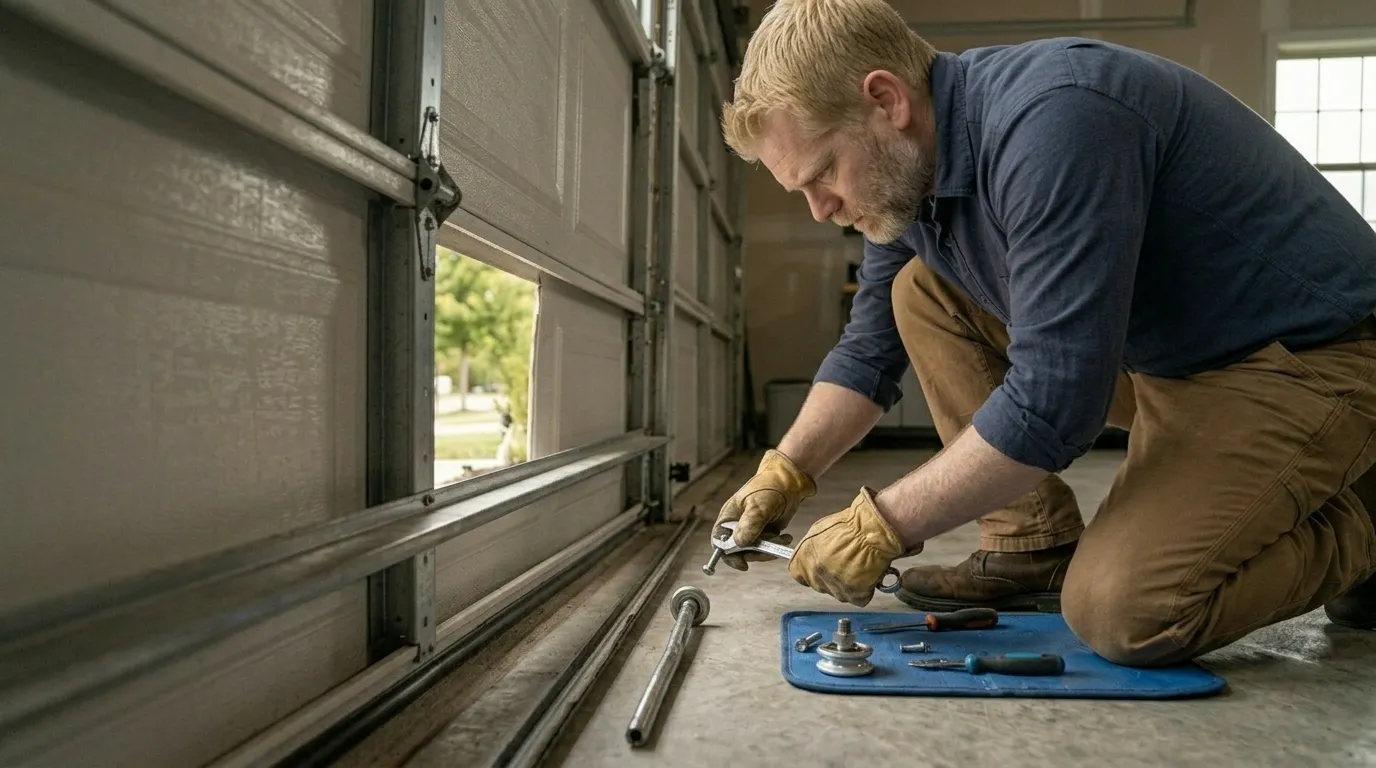
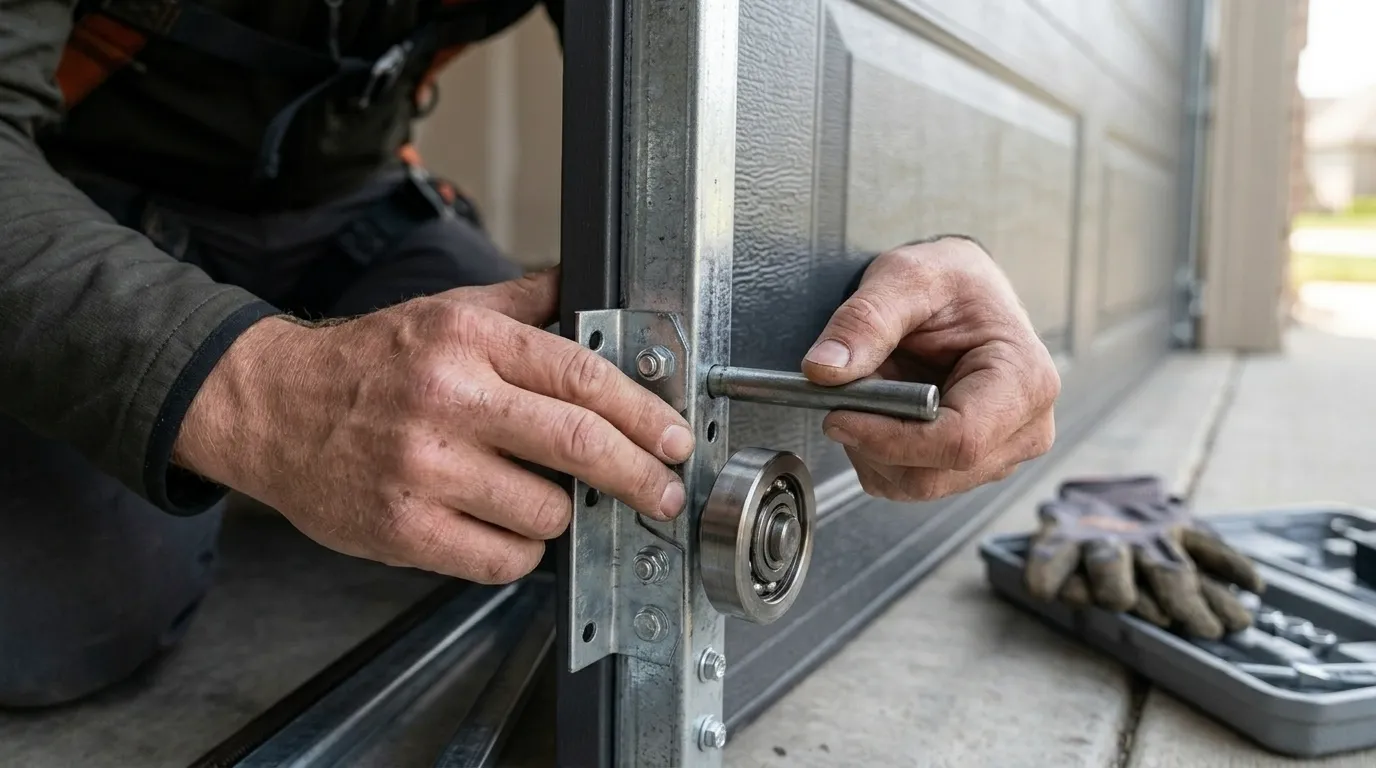
Start at the rollers. On a lot of Madison garages the rollers are still the original steel ones that came with the door when the house was built, and since most of this housing dates to 1962-2001 with a median build year around 1986, those rollers have had decades to wear a groove into the track. Look for a roller sitting crooked in the channel, or a gap between the roller and the track wall on one side only - that's the first sign it's about to walk out.

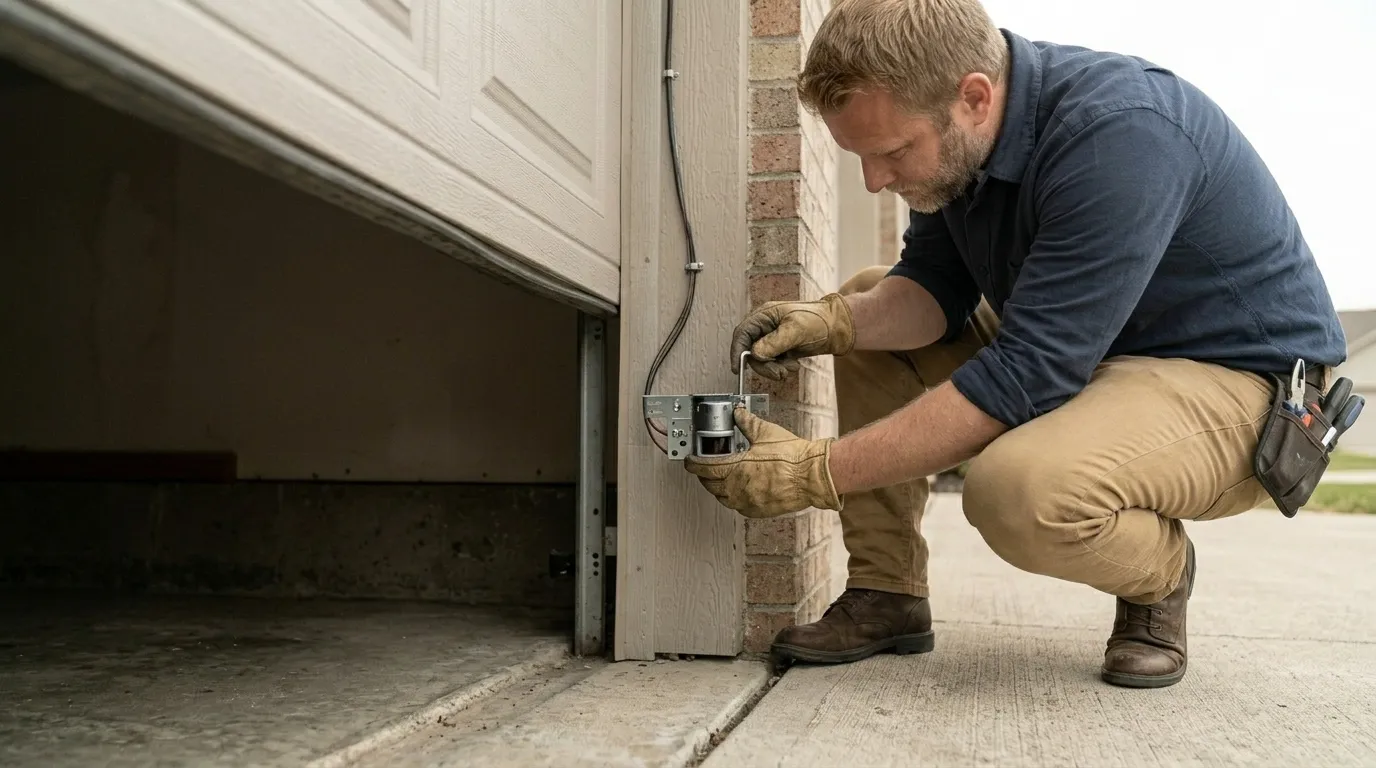
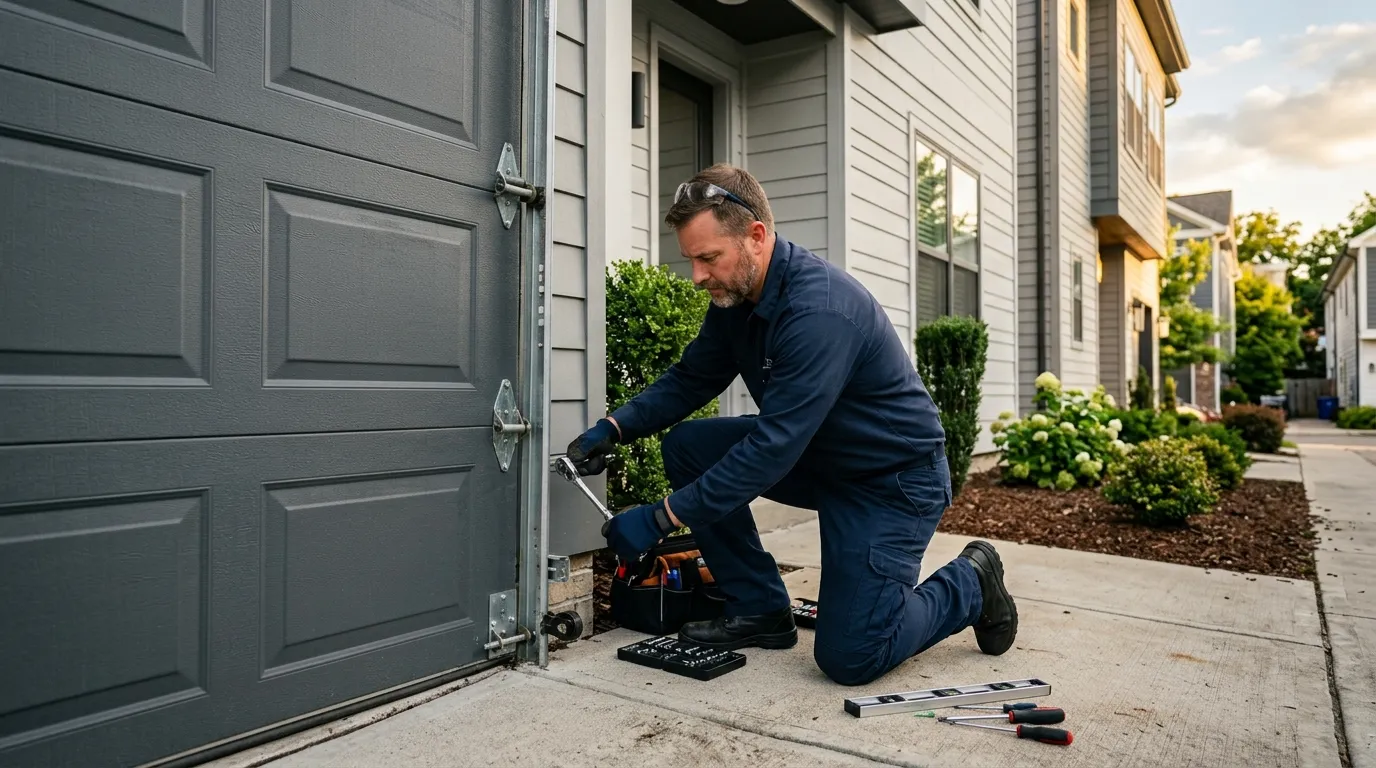
Next check the track brackets where they bolt to the framing. A bent bracket, even a few degrees off, is enough to let the door climb out of the channel on the way up. Run your hand along the vertical track for a kink or a flat spot - a single dent from a bumped bumper or a car mirror is usually where it starts.

Last, check the cable drums at the top corners. If a cable has jumped its drum, the door will pull unevenly and force one side of the track harder than the other. We won't tell you to just re-set the cable yourself here - that's a spring-tension job, and it's the one thing on this list worth a call before you touch it.

Season by Season

Madison sits in a cold moderate climate band, and that shows up in how tracks fail depending on the time of year. In late fall, temperature swings between a warm afternoon and a hard overnight freeze make steel track contract just enough to loosen bracket bolts that were fine all summer. That's when we get calls for a door that suddenly rattles on the way up.

Mid-winter is ice season - condensation on a cold track freezes overnight, and a roller that's slightly worn will catch on that ice film instead of rolling through it, jumping the channel on the first opening of the day. If your door is worse on the coldest mornings, that's usually what's happening.

Spring brings the opposite problem. As the ground under the slab settles back after winter heave, the track bracket alignment shifts again, sometimes just enough to undo whatever adjustment held through winter. Summer is the quiet season for track issues here - it's the stretch to actually get a bent section replaced instead of just bent back, before the swings start again in the fall.

What Is Going On

A track doesn't go off on its own - it's almost always one part failing and dragging the rest with it. On the housing stock common across this area, built mostly in the 1980s and 90s across the 28 areas we cover, the track that shipped with the door was light-gauge steel meant to last the life of a builder-grade opener, not 30-plus years of freeze-thaw cycling. That gauge bends where a heavier modern track would just flex and hold.

Once a section is bent, even slightly, the rollers riding through it start to wear unevenly. A worn roller has more play, more play means more sideways force on the track wall, and that force eventually pushes the track brackets loose from the framing. It's a slow chain, not a sudden break - which is why most of these jobs start as "it makes a noise" months before they become "it came off the track."

We'll be straight with you here: if the track is bent in more than one section, or the brackets have pulled loose from the wood, realigning it rarely holds for long. At that point new track is the cheaper fix over the next few years, even though a quick bend-back looks like the cheaper option today.

How Local Conditions Play In

The cold moderate climate here means the freeze-thaw cycle isn't a once-a-winter event - it's a near-weekly swing from November through March, and every cycle works the same joints and brackets a little looser. That's the difference between a door that needs a track adjustment once a decade and one that needs it every year or two.

Combine that with the age of the housing stock - most of it from 1962 to 2001, a lot of it single-car doors on original hardware - and you get garages where the track was never sized for this many freeze-thaw cycles in the first place. A door built for a milder climate might ride out the same 35 years without ever slipping a roller. Around here, it doesn't get that pass.

If you're in one of the areas closer to Middleton or Monona with similar-age construction, the pattern holds the same way - it's the building era and the climate doing the work, not the specific street. That's also why a track fix that holds on a newer door across town might not hold on an older one a few miles away with the same original hardware.

How it works

From “it’s stuck” to “it’s fixed”

Tell us what’s wrong - Madison garage door service

Tell us what’s wrong

Describe the symptom - won’t open, loud bang, opener runs but the door won’t move.

On-site diagnosis - Madison garage door service

On-site diagnosis

A technician tests the door under power and by hand and finds what actually failed.

Clear, up-front plan - Madison garage door service

Clear, up-front plan

You get the fix that’s needed and what drives the cost - before any work starts.

Repaired & tested - Madison garage door service

Repaired & tested

The repair is done, the door is set true and tested, and the work area left clean.

Serving Madison, WI - tell us what your door’s doing and we’ll take it from there.

How we work

What to expect

Diagnosis firstEvery visit starts by finding what actually failed - not a pre-written parts list.
The right part for the doorSprings and openers matched to the door’s weight and age, so the fix holds up.
Straight answersWhen a repair makes more sense than a replacement - or the reverse - you hear it plainly.
Clean, careful workTension released safely, hardware set true, the door tested under power before we leave.
Questions

Frequently asked

Straight answers about garage door repair in Madison. Still unsure? Ask us directly.

Why does my garage door only jump the track in winter?

Cold mornings are when condensation on the track freezes into a thin ice film. A roller that's already a little worn can't roll through that film smoothly and catches instead, which is often enough to pop it out of the channel. If it's only happening on the coldest days, ice is the likely cause, not a structural problem.

Is a bent track something I can fix myself?

You can sometimes bend a light dent back with a rubber mallet if it's a single small spot, but if more than one section is bent or the bracket has pulled away from the framing, bending it back rarely holds for long given the freeze-thaw cycles here. At that point replacing the section is the more durable fix.

My house was built in the 80s - is that why the track keeps failing?

It can be. A lot of the housing in this area dates to the 1980s and 90s, and the track that came standard with builder-grade doors from that era is lighter gauge than what's used today. After decades of seasonal temperature swings, that original track is more prone to bending and bracket loosening than newer heavier track.

How do I know if it's the roller or the track that's the real problem?

Look at where the gap is. If a roller sits crooked with space on one side of the channel, the roller's worn. If the whole channel looks bowed or the bracket is pulled from the wall, the track itself has moved. Often it's both, since a worn roller puts sideways force on the track over time.

Ready to get your garage door sorted?

Tell us what it’s doing and where you are in Madison - we’ll take it from there.

Request a QuoteCall