Garage Door Repair for Madison's 1980s and 90s Housing Stock
Madison homes built between 1962 and 1986 are hitting spring and opener failure age right as our winters put extra load on the hardware. Same-area repair, no guesswork.
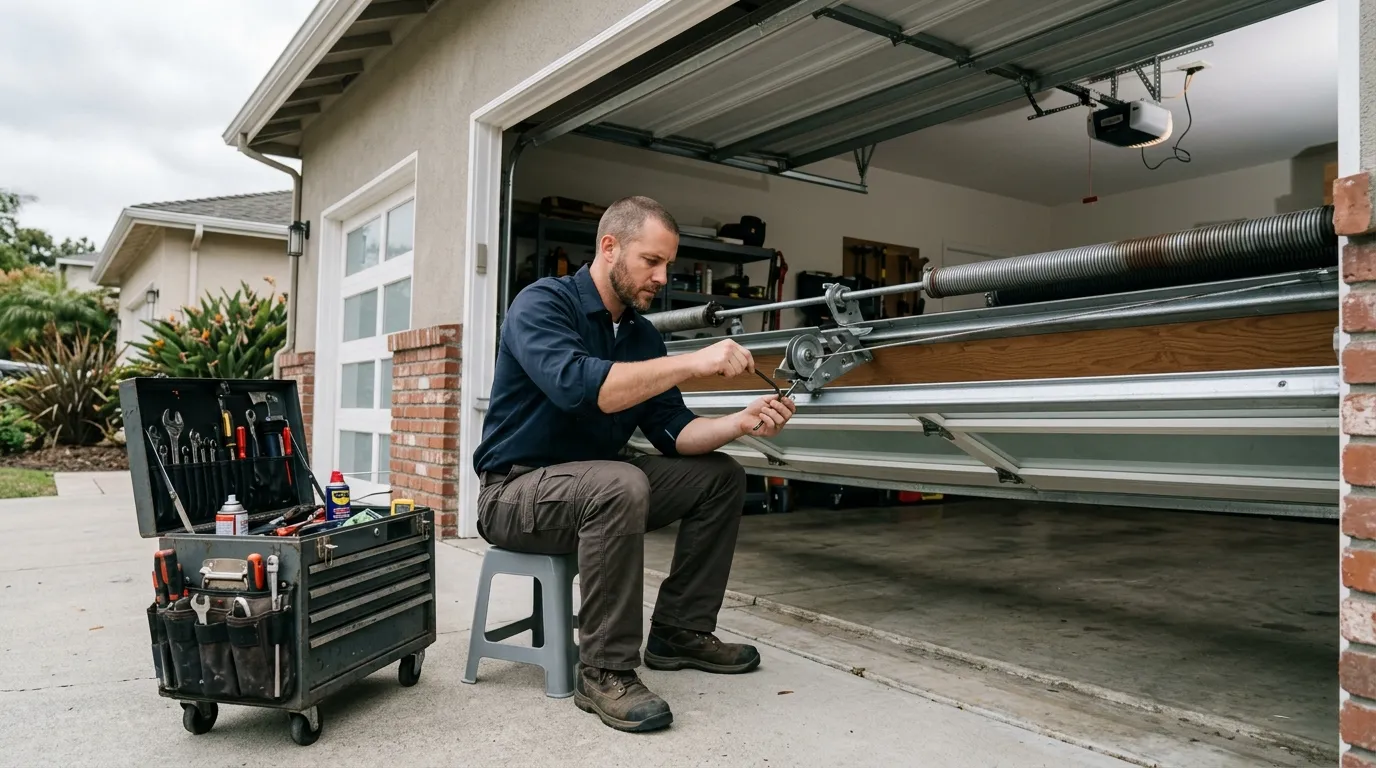
Most of the houses we get called to were built somewhere between 1962 and 2001, with the bulk of that stock going up in the 1980s and 90s. That matters because a torsion spring is rated for a set number of cycles, usually somewhere around 10,000, and a door installed in 1986 has had close to forty years to burn through that rating. If your house falls in that build window, the spring on it is either original or a first replacement, and either way it's due.
Add Madison's cold climate band to that math. Steel contracts when it's cold, and a spring under tension that's already fatigued doesn't handle a 15-degree morning the way it handled a 60-degree one. We see failures cluster in the first hard cold snap of the season for exactly this reason - it's not new stress on the hardware, it's old stress meeting cold metal. Openers from the same era have the same problem: gears, drive belts, and capacitors don't last indefinitely, and a garage that sits below freezing all winter ages that plastic faster than a heated space would.
What Can Go Wrong
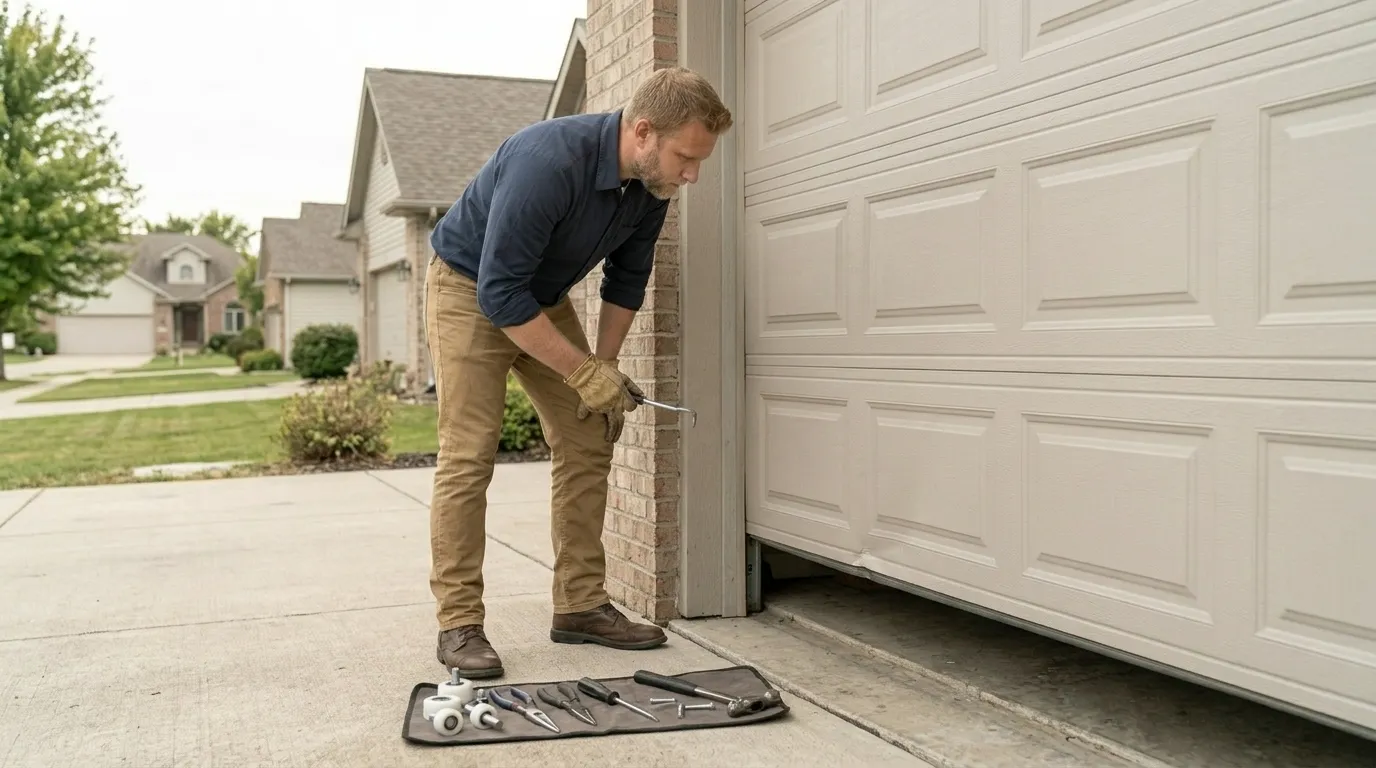
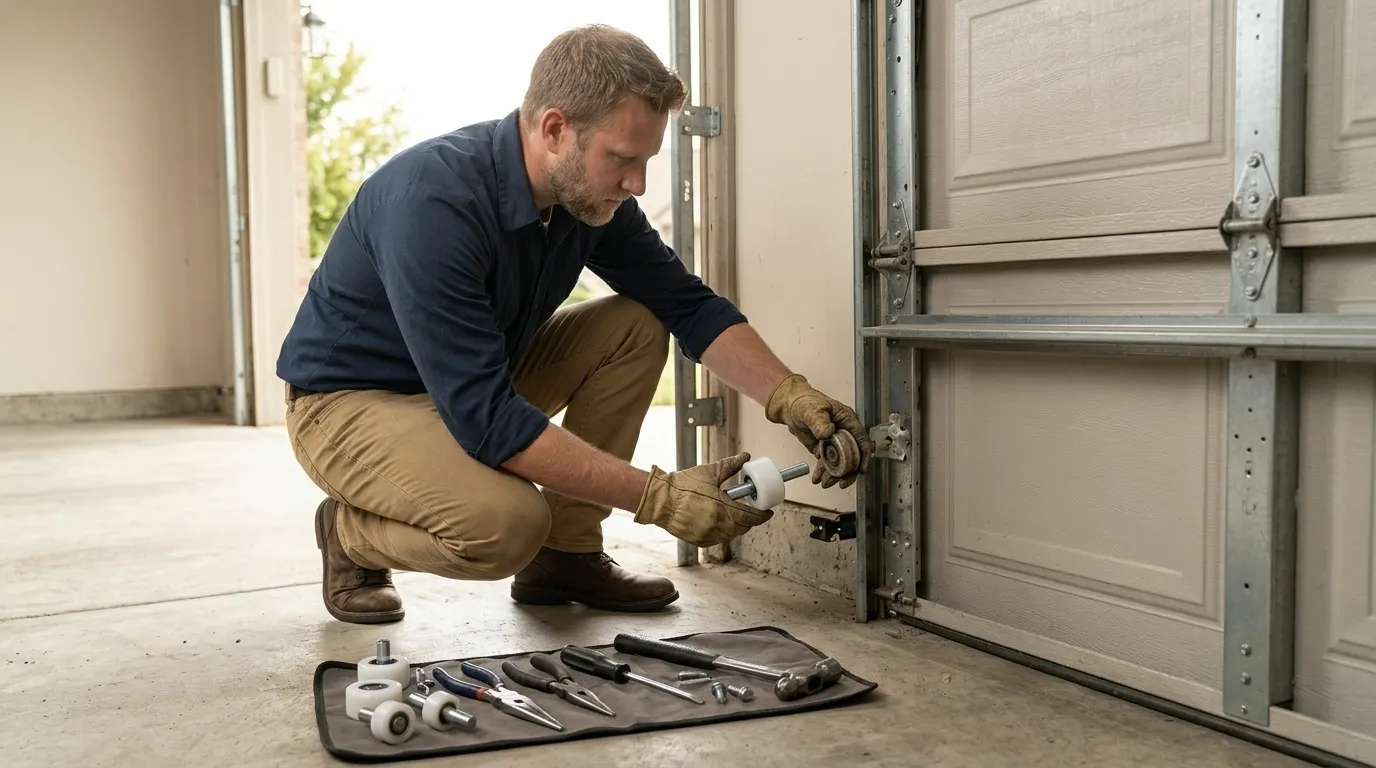
The most common call we get is a broken torsion spring - the door won't lift, or it lifts a few inches and stops, because the opener is trying to do a job the spring used to do. On original 1980s-90s installs we also see worn cable drums, cracked nylon rollers, and center bearing plates that have finally given out after decades of use.
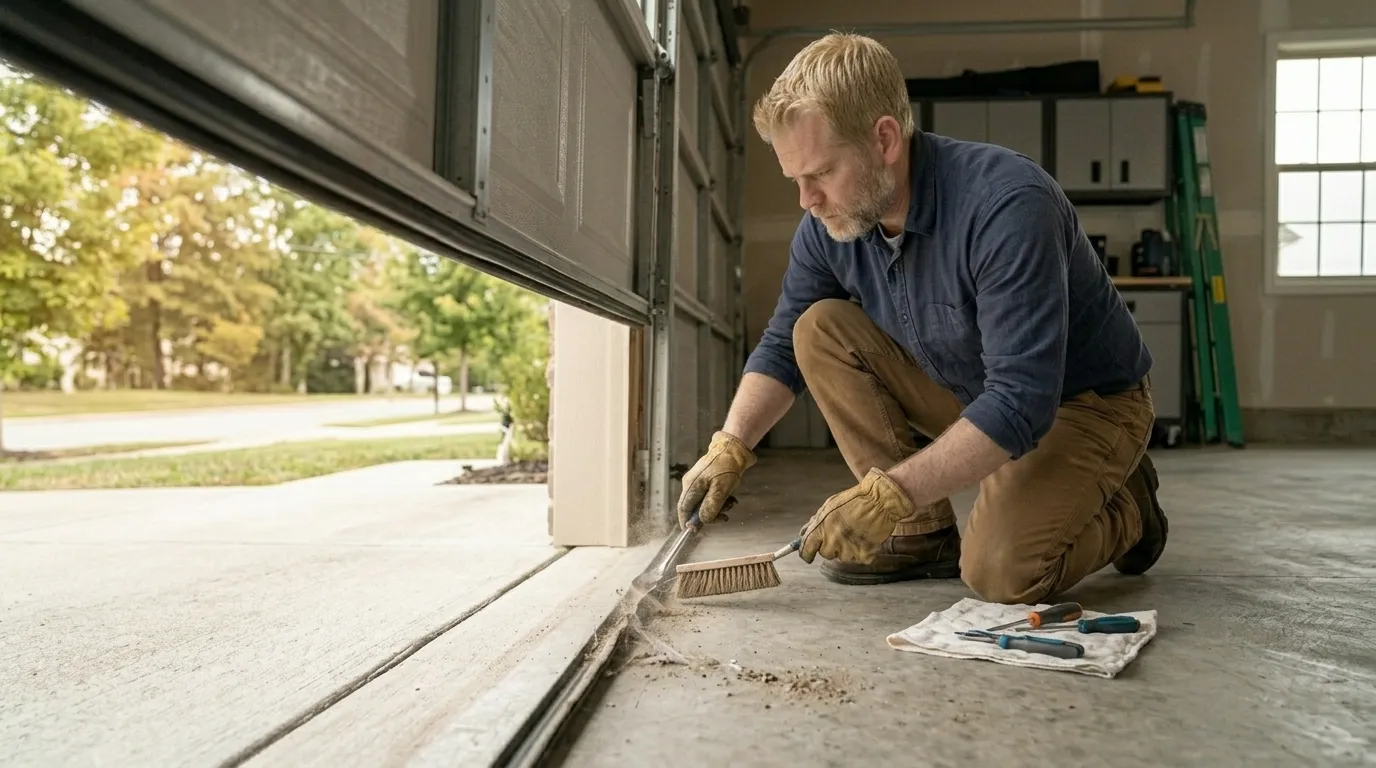
Cold makes lubricant thicken and hinges bind, so a track that was slightly out of alignment in July can bind hard enough to strip a gear in January. On older openers specifically, we see logic boards fail from age and drive gears strip out from the extra torque needed to move a door that's fighting a stiff, cold track. None of this means every old door is a ticking bomb - plenty of well-maintained systems from that era still run fine. But if you haven't had the springs or rollers looked at since the house was built, the odds catch up eventually.
How It Shows Up
A dead spring usually looks like this: you hit the opener, the light comes on, the motor runs, and the door doesn't move or moves an inch and stops. Sometimes there's a loud bang from the garage a day or two before - that's the spring letting go on its own, not during a lift.
A failing opener from the 1980s-90s stock tends to show up differently - it runs longer than it used to, reverses partway through a cycle, or the remote works some days and not others. Rollers going bad sound like a grinding or squealing that gets worse as the door moves, especially first thing on a cold morning before anything's had a chance to warm up. If your door is noticeably harder to open by hand than it used to be, that's tension loss, and it's worth a look before it fails at 6am on your way to work.
How We Fix It
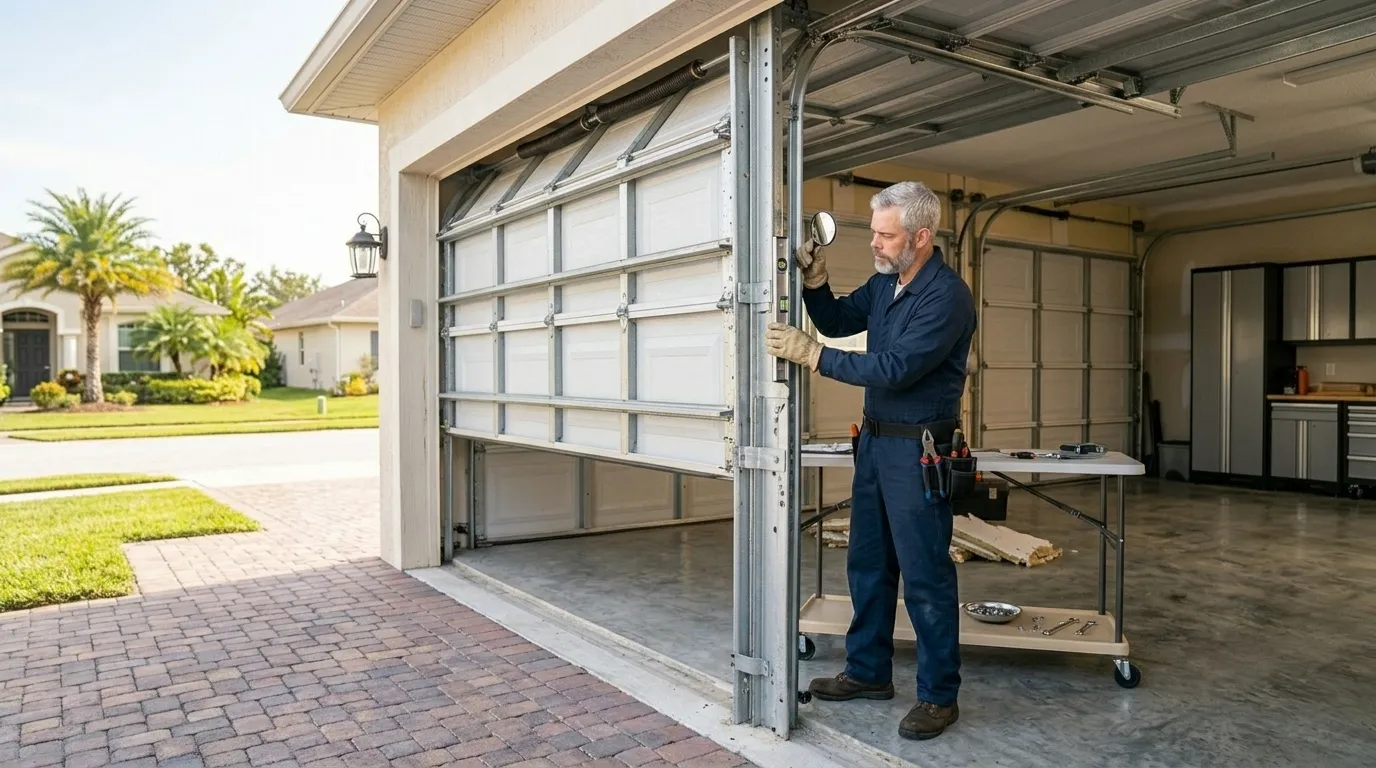
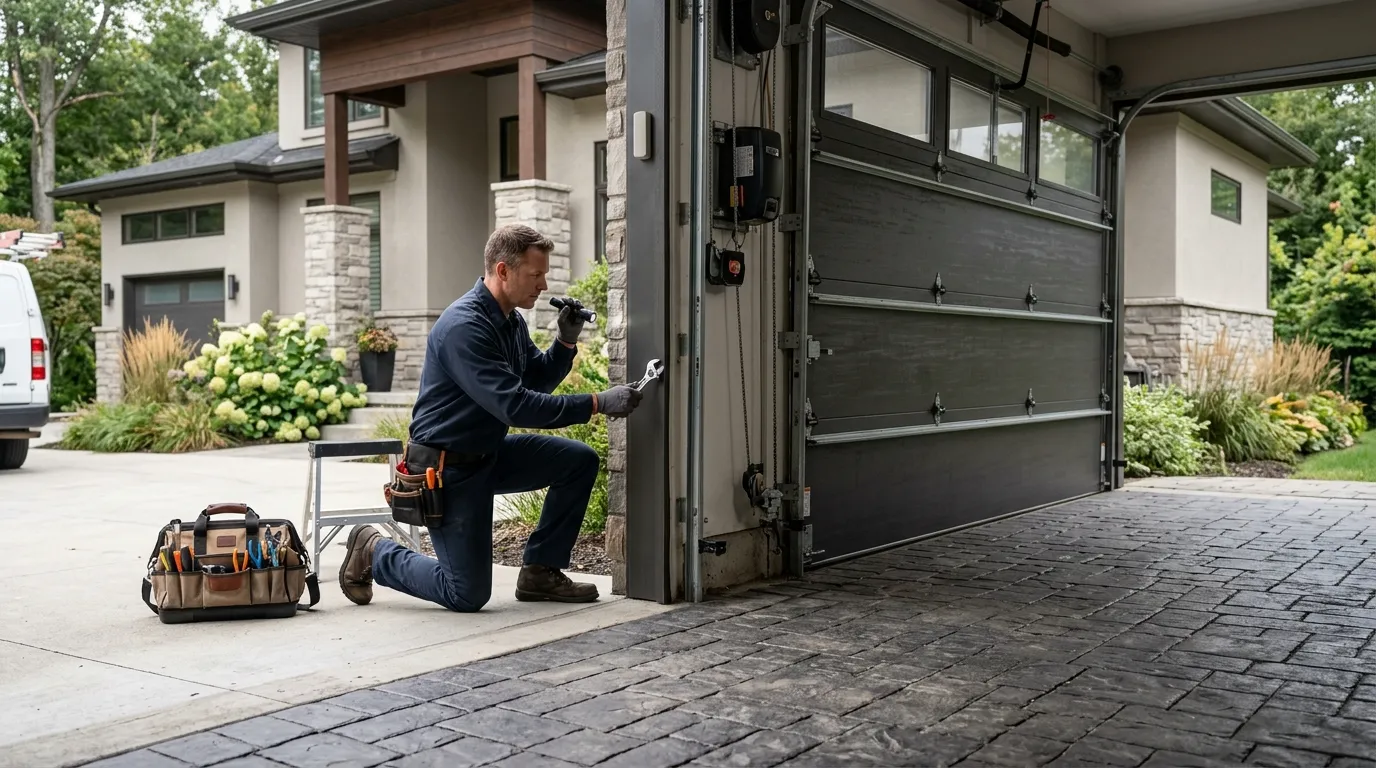
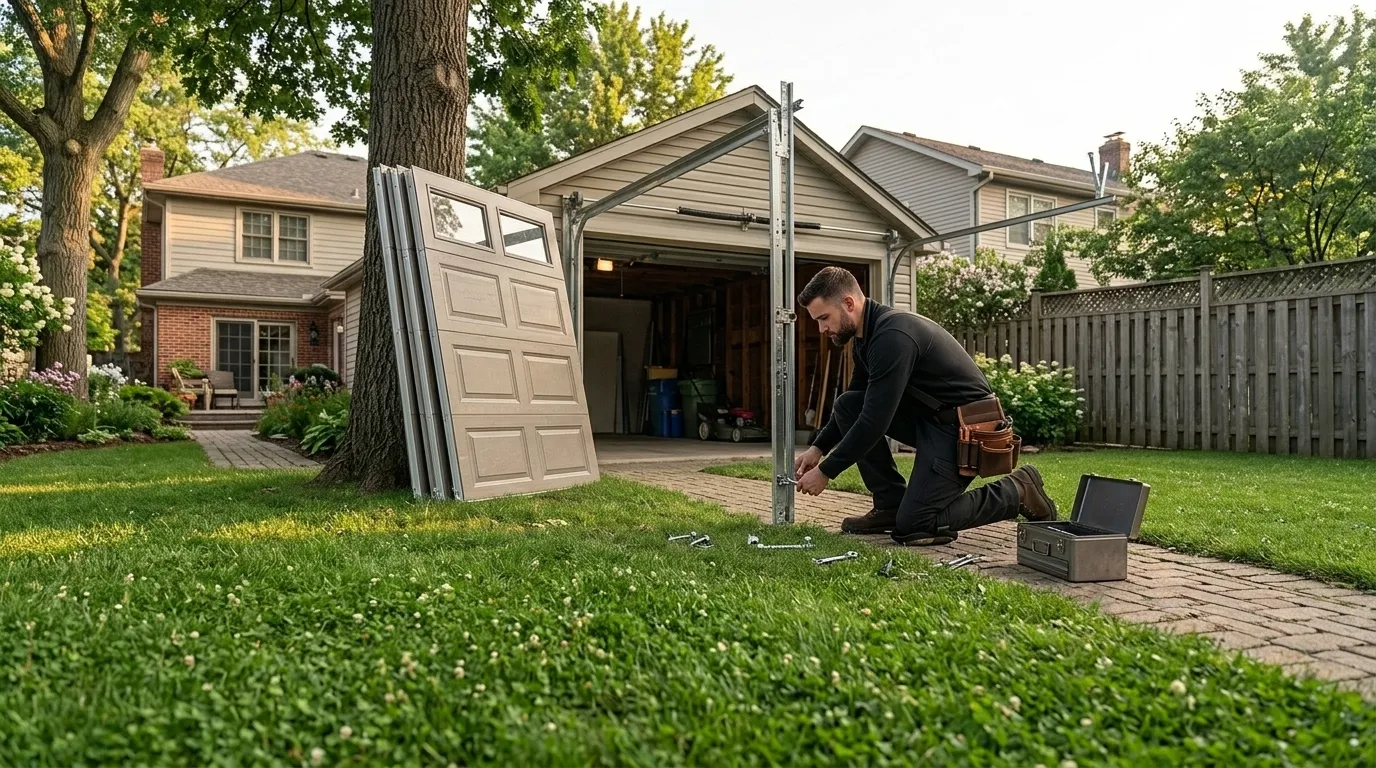
For a broken torsion spring, we match the wire size and wind to what your door and opener actually need to lift - guessing at spring size is how you end up back here in six months. On original hardware from the 1980s-90s window, we'll also check the cable drums and center bearing while we're in there, since replacing a spring without checking the parts around it is a half job.
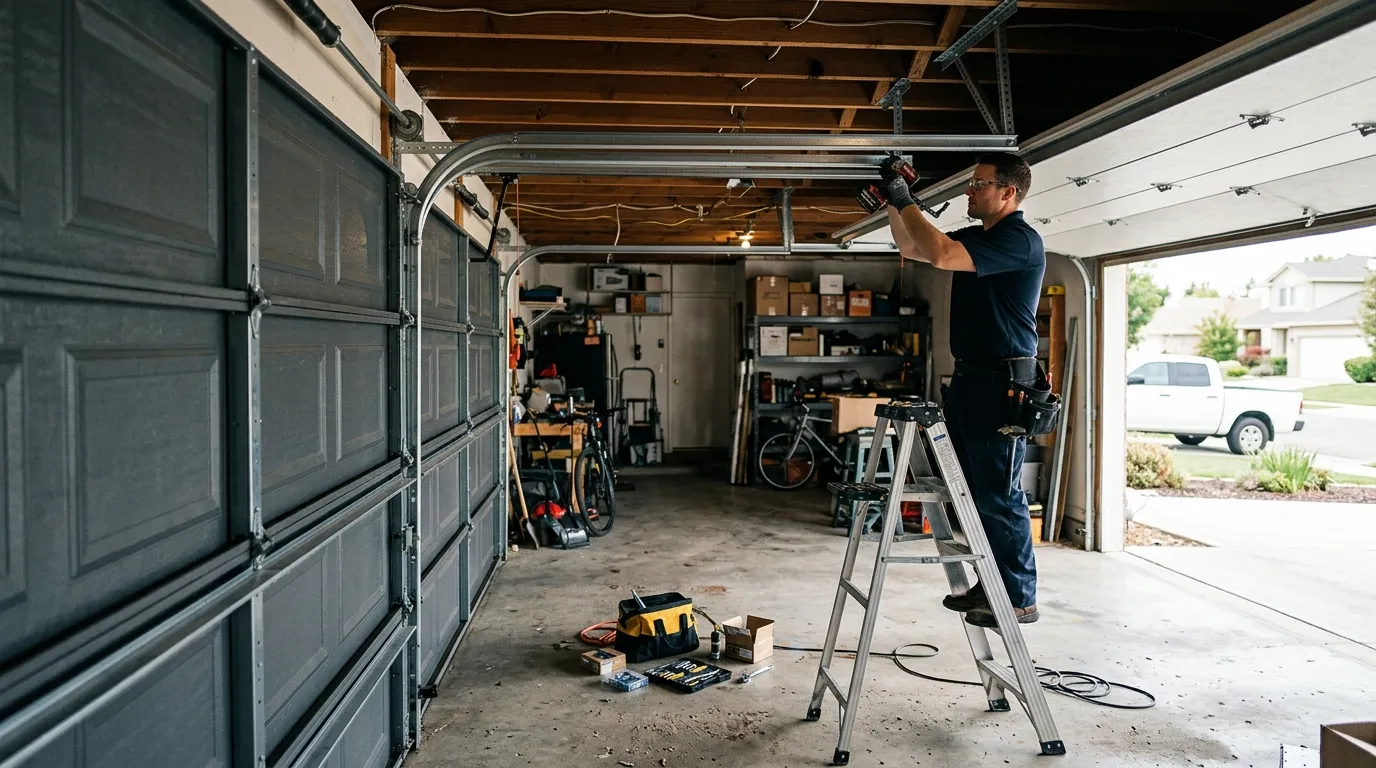
Opener issues get diagnosed before we recommend a fix. A stripped gear or a bad capacitor is a repair; a board that's failing intermittently on a unit that old is usually a replacement, and we'll tell you which one you're looking at rather than run parts at it. One honest limit here: if the opener is discontinued and we can't get the specific logic board, replacement is the only path, and we'd rather tell you that up front than order a part that won't ship for weeks.
How it works
From “it’s stuck” to “it’s fixed”
01
Tell us what’s wrong
Describe the symptom - won’t open, loud bang, opener runs but the door won’t move.
02
On-site diagnosis
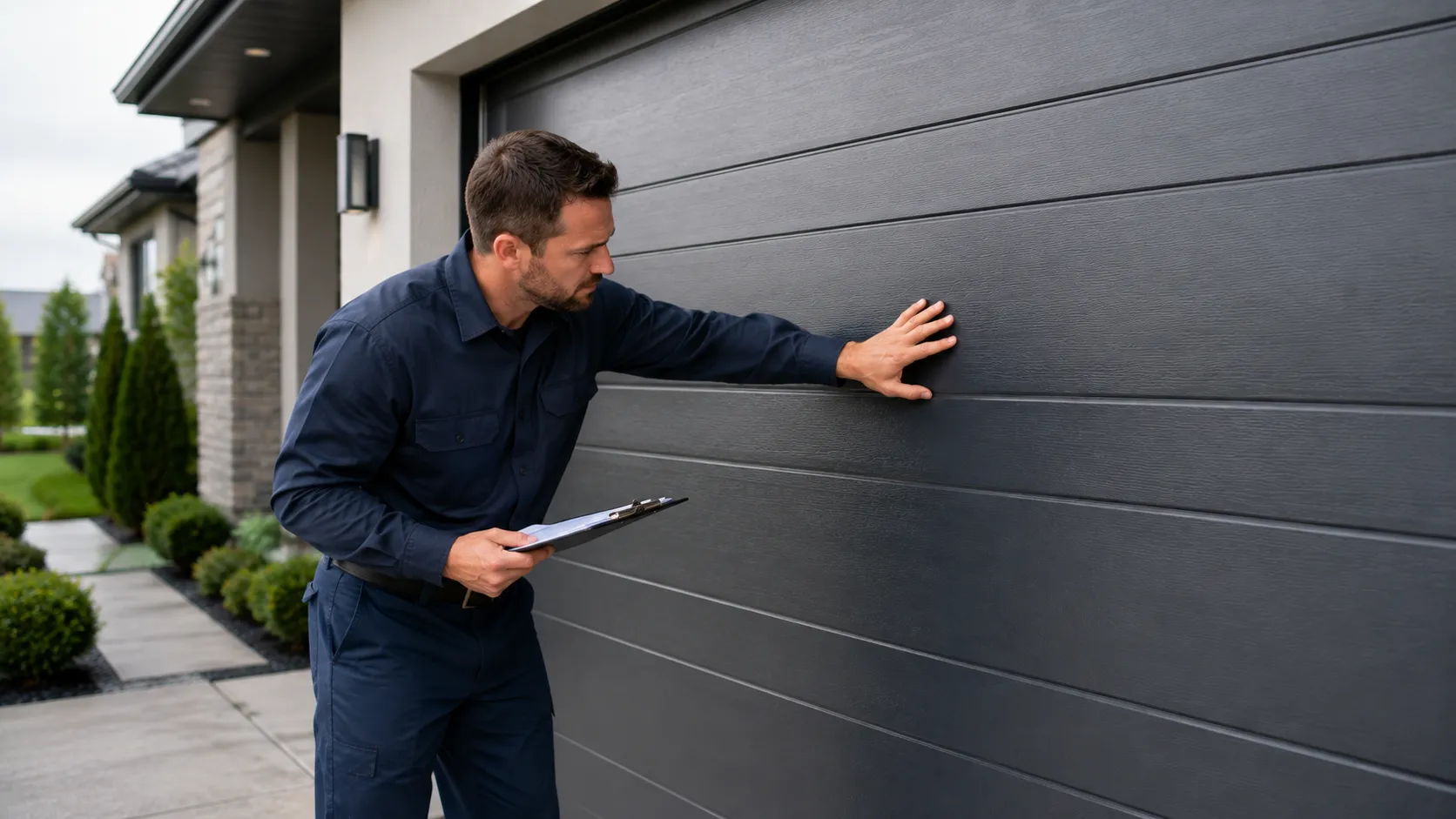
A technician tests the door under power and by hand and finds what actually failed.
03
Clear, up-front plan
You get the fix that’s needed and what drives the cost - before any work starts.
04
Repaired & tested
The repair is done, the door is set true and tested, and the work area left clean.
Serving Madison, WI - tell us what your door’s doing and we’ll take it from there.
Torsion springs are rated for a set number of open-close cycles, and most fail once they hit that limit rather than from cold alone. But cold steel is more brittle under tension, so a spring that's already near the end of its life is far more likely to snap on a freezing morning than a mild one. If your house was built in the 1980s or 90s, the spring may be original.
Is my garage door opener too old to repair?
It depends on what's failed. A stripped gear, worn drive belt, or bad capacitor is usually a straightforward repair. A logic board failing intermittently on a unit from the 1980s-90s era is often past the point where parts are worth chasing, and replacement ends up cheaper and more reliable.
How much does garage door spring replacement cost?
We don't quote spring jobs without seeing the door - wire size, door weight, and whether one or both springs need replacing all change the price. We'll give you a number before we start any work, not after.
Do you work outside Madison?
We cover the surrounding area including Middleton, Monona, Waunakee, Fitchburg, and Verona, among other nearby communities within roughly a 20-mile radius of Madison.
Ready to get your garage door sorted?
Tell us what it’s doing and where you are in Madison - we’ll take it from there.