What Actually Happens During a Madison Garage Door Service Call
Madison homes built between 1962 and 2001 face specific torsion spring and opener wear from Wisconsin's cold winters - here's what a service call really checks.
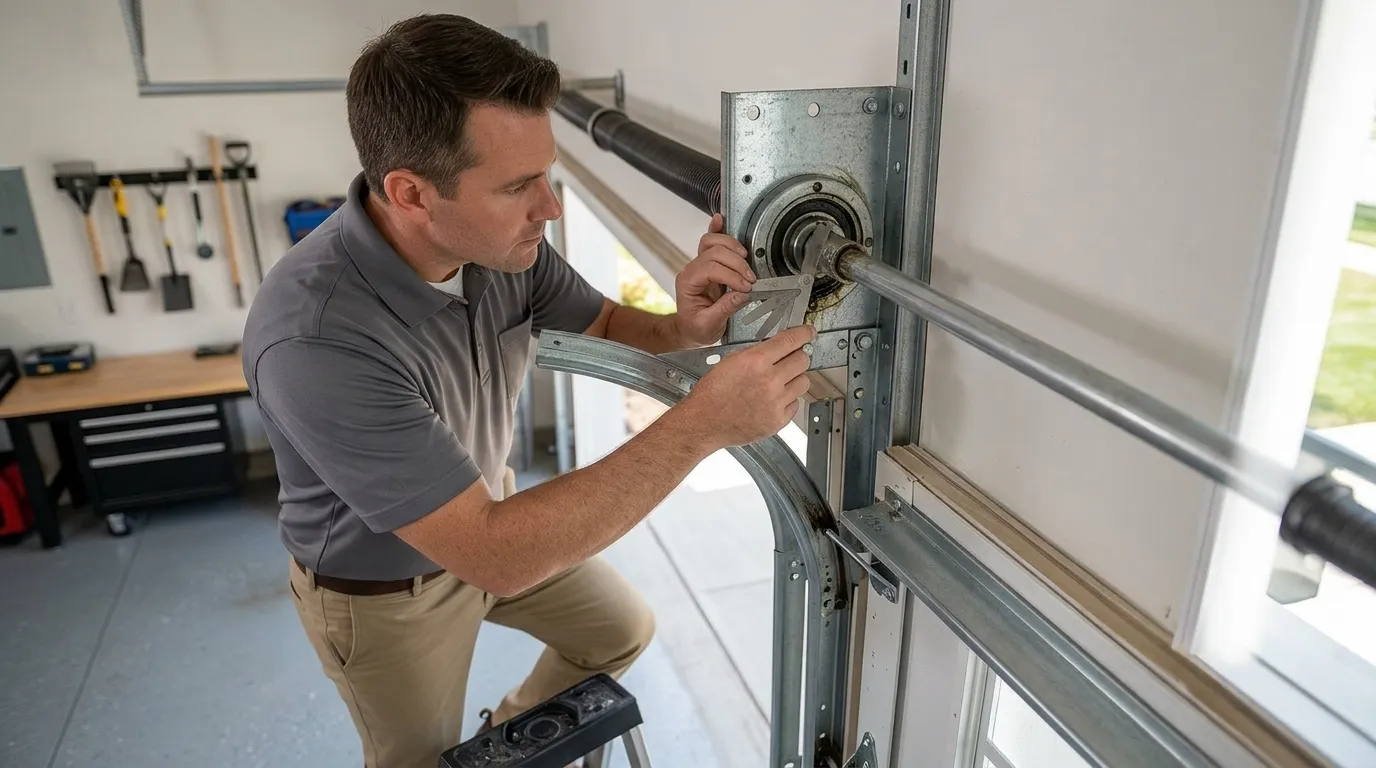
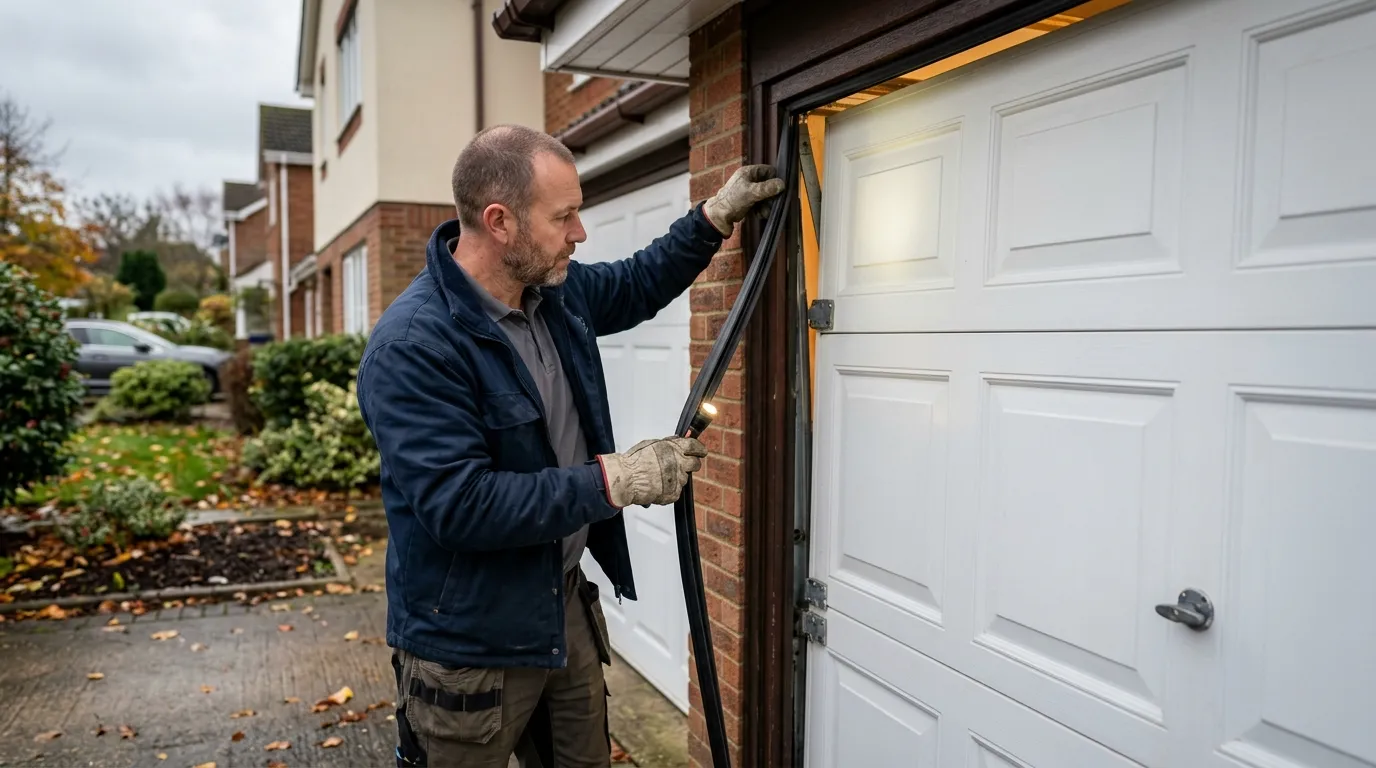
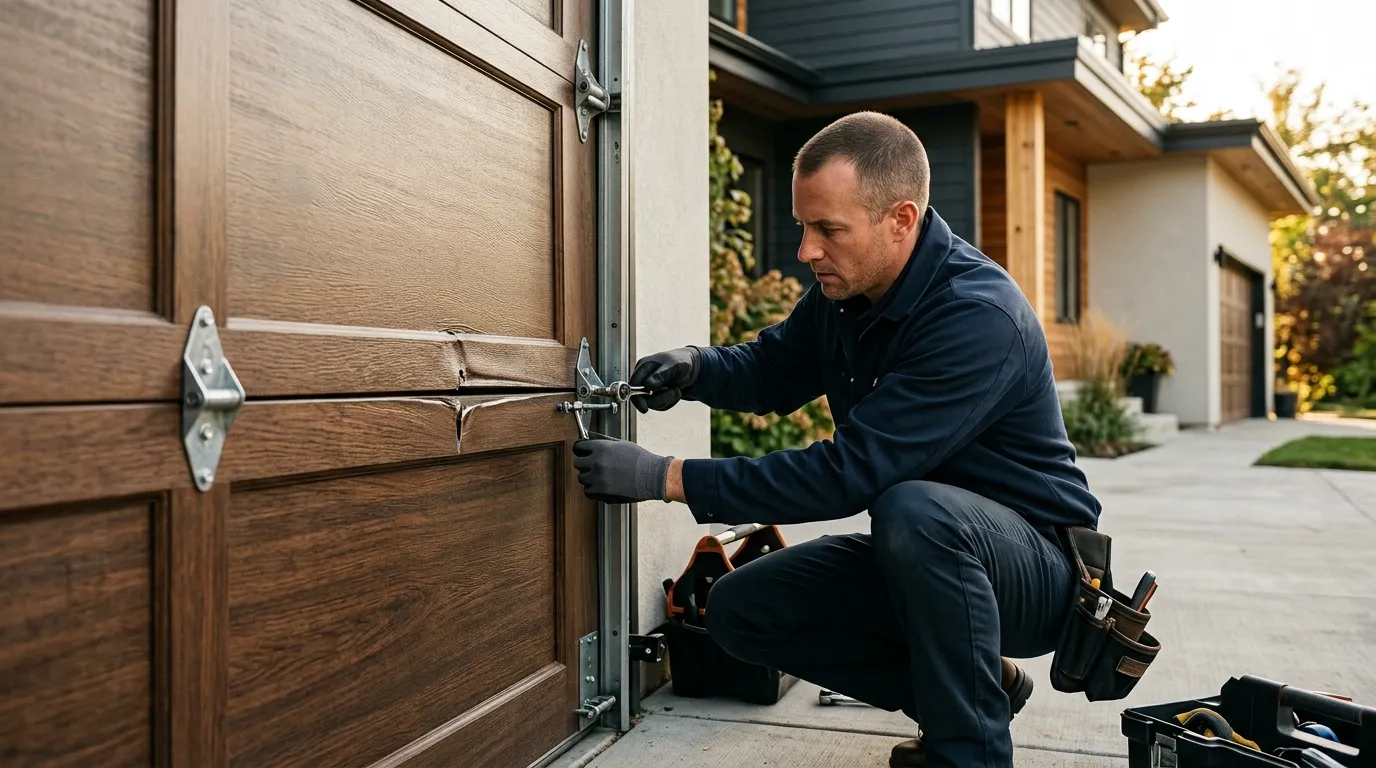
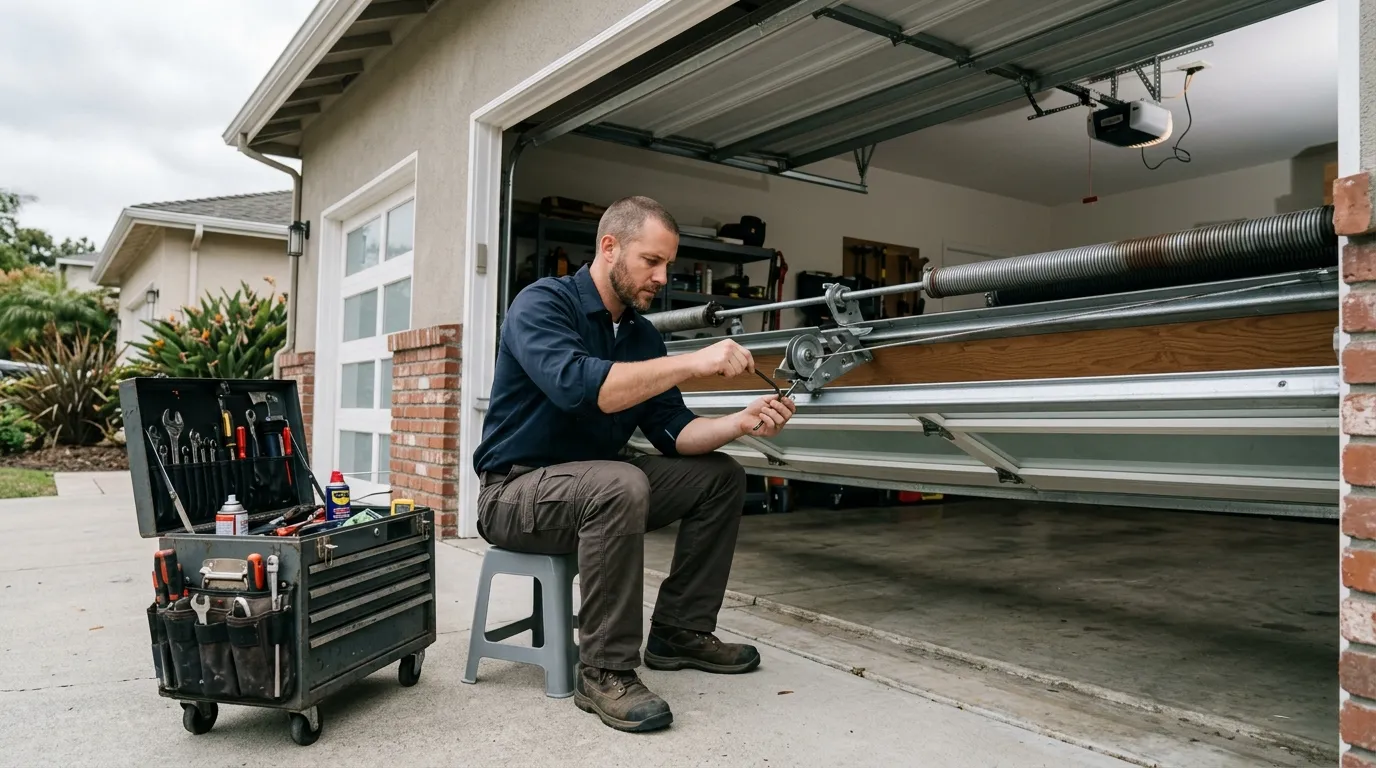
Most houses across the Madison service area went up between 1962 and 2001, with the bulk of that stock dating to the 1980s and 90s. That matters because a service call on a door that age isn't the same as one on a 2020 build. We start at the spring - torsion springs from that era were often sized to the door weight at install, and if anyone's swapped a steel door for a heavier insulated one since, the spring is now undersized and wearing fast. We check cable fraying at the drum, roller wear in the track (steel rollers were standard back then, and they're loud when the bearing goes), and the opener's force settings, since a lot of these houses still run openers from a previous remodel that were never adjusted after a spring change. We also check the bottom seal and the slab underneath it - with houses this age, slabs have settled a little, and it's common to find a seal that's been trimmed once already and needs a different fix, not another trim. None of this is dramatic work. It's mostly torque, alignment, and catching the part that's about to fail before it does.
Season by Season
This area sits in a cold moderate climate band, and that shows up on the service board in a predictable rhythm. Late fall calls are usually openers - cold makes lubricant in an old chain drive stiffen up, and a door that was already borderline starts binding right when nights drop below freezing. Deep winter is spring season: steel contracts as it gets cold, and a torsion spring with a hairline crack that held fine in October snaps in January. Come spring thaw, the calls shift to tracks and rollers, because frost heave under a slab edge nudges the track alignment just enough that a door starts rubbing on one side. Summer is the quiet season for hardware and the busy season for openers again, as heat expands metal the other direction and a marginal sensor alignment finally gives up. None of this means every house needs a fall tune-up - a door that's balanced, has a spring rated for its actual weight, and isn't running on original 1980s hardware usually gets through a Wisconsin winter without a call at all.
What Is Going On
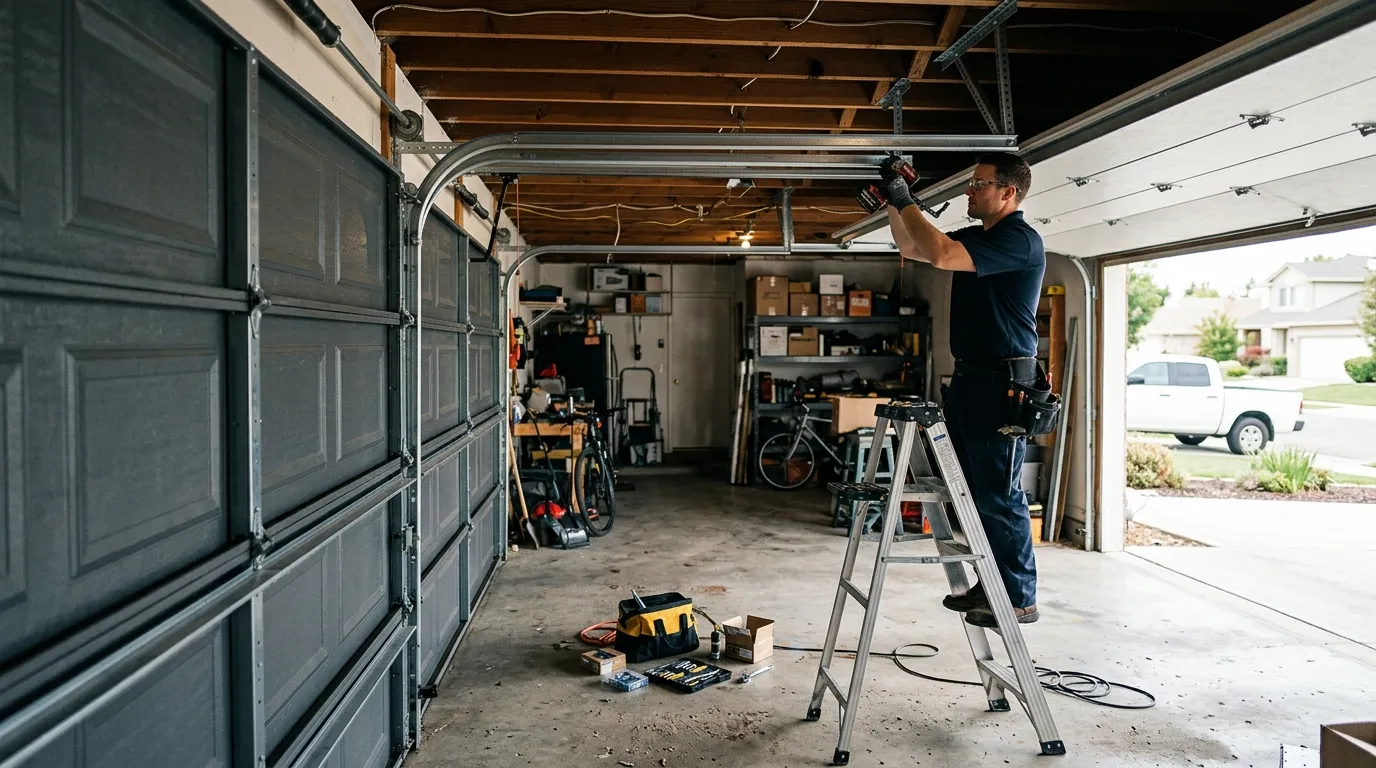
When we get called out, the first job is figuring out what's actually failing versus what's just old. Across the 28 named areas we cover, the housing stock is fairly consistent - mostly 1980s and 90s construction - so a lot of what looks like a new problem is really original hardware finally reaching the end of its cycle. A torsion spring is rated for a number of cycles, not years, and a door installed in 1987 that's opened four times a day has used up its springs a long time ago even if nobody's touched them. We test balance by disconnecting the opener and lifting by hand - a door that should weigh next to nothing at half-open but instead fights you is telling you the spring, not the opener, is the problem. We also check whether the opener has been replaced more recently than the springs, which happens a lot in these houses, because homeowners upgrade the opener for the remote and Wi-Fi features and never touch the springs underneath it. Being straight about which one is actually broken is most of the job before any tool comes out.
How Local Conditions Play In
We run calls out from Madison to Middleton and Monona a few miles out, up to Waunakee and Fitchburg, and as far as Sauk City and Arlington near the edge of the service radius. The housing pattern doesn't change much across that stretch - it's the same 1962-2001 building wave with the same torsion hardware questions, whether the address is four miles out or twenty. With a median household income around $98,943 across the area and 37,541 owner-occupied houses in the mix, most of what we see on a call is a homeowner choosing between a proper spring replacement and a full door swap, not stretching a patch job further than it should go. One honest limit here: if a door is original to a house built in the 1960s or early 70s and the track or hardware is no longer a stocked size, we may need to order the part rather than fix it same-visit, and in a few cases replacement genuinely makes more sense than sourcing obsolete hardware. We'll tell you which situation you're in before we start charging for parts.
How it works
From “it’s stuck” to “it’s fixed”
01
Tell us what’s wrong
Describe the symptom - won’t open, loud bang, opener runs but the door won’t move.
02
On-site diagnosis
A technician tests the door under power and by hand and finds what actually failed.
03
Clear, up-front plan
You get the fix that’s needed and what drives the cost - before any work starts.
04
Repaired & tested
The repair is done, the door is set true and tested, and the work area left clean.
Serving Madison, WI - tell us what your door’s doing and we’ll take it from there.
Disconnect the opener using the release cord and lift the door by hand halfway up. If it feels heavy or drops on its own, that's a spring problem, not an opener problem. Openers aren't built to lift dead weight - they assist a properly balanced door. A door that only misbehaves with the opener connected usually points to opener settings instead.
My house is from the 1980s - is the hardware original?
Often, yes, at least partially. A lot of houses in this area still have original torsion springs even after an opener upgrade, since the two get replaced on different schedules. We check the spring wind and cable condition on every call regardless of what year the opener was installed.
Why does my door act up more in January than July?
Cold moderate winters here mean steel hardware contracts each cold snap, and a spring or cable that was already near the end of its life often fails during that contraction rather than gradually. It's less about the door
Ready to get your garage door sorted?
Tell us what it’s doing and where you are in Madison - we’ll take it from there.