Season by Season
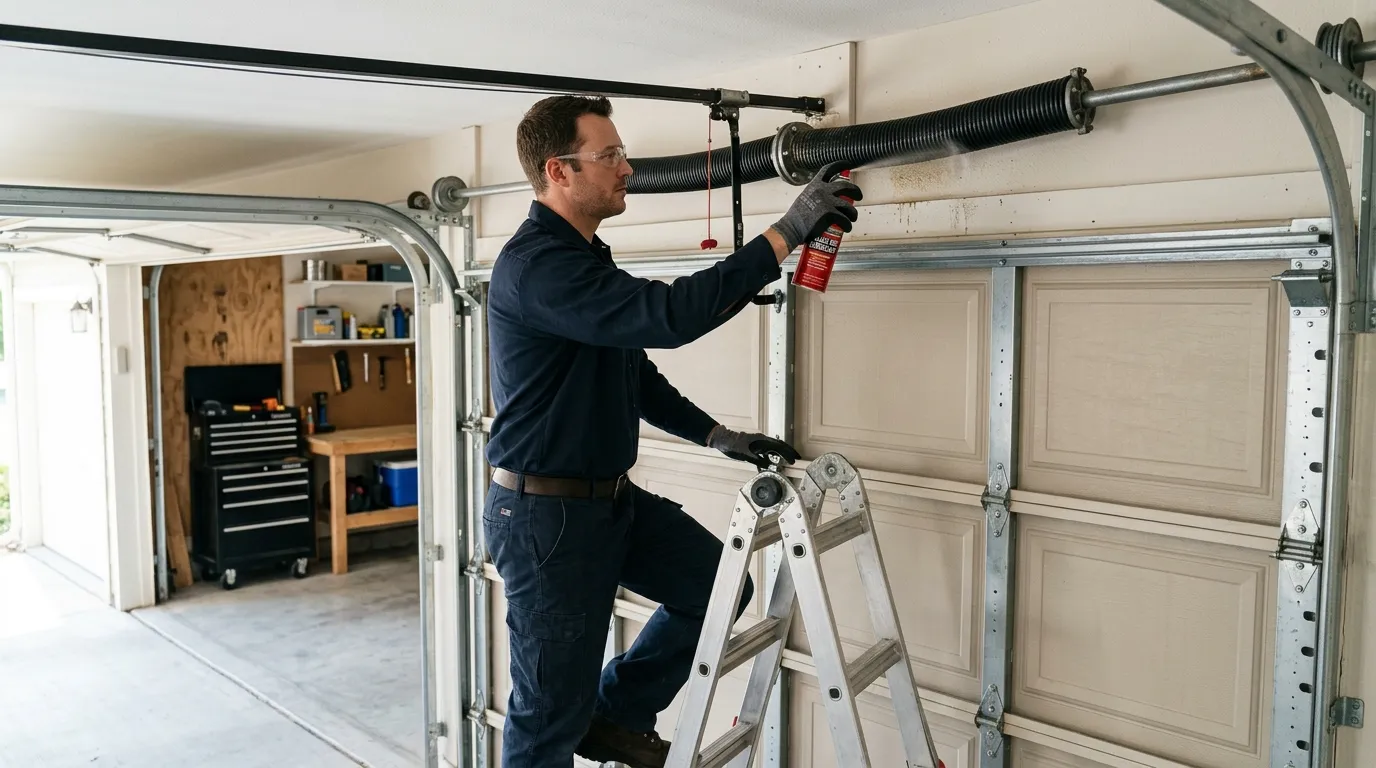
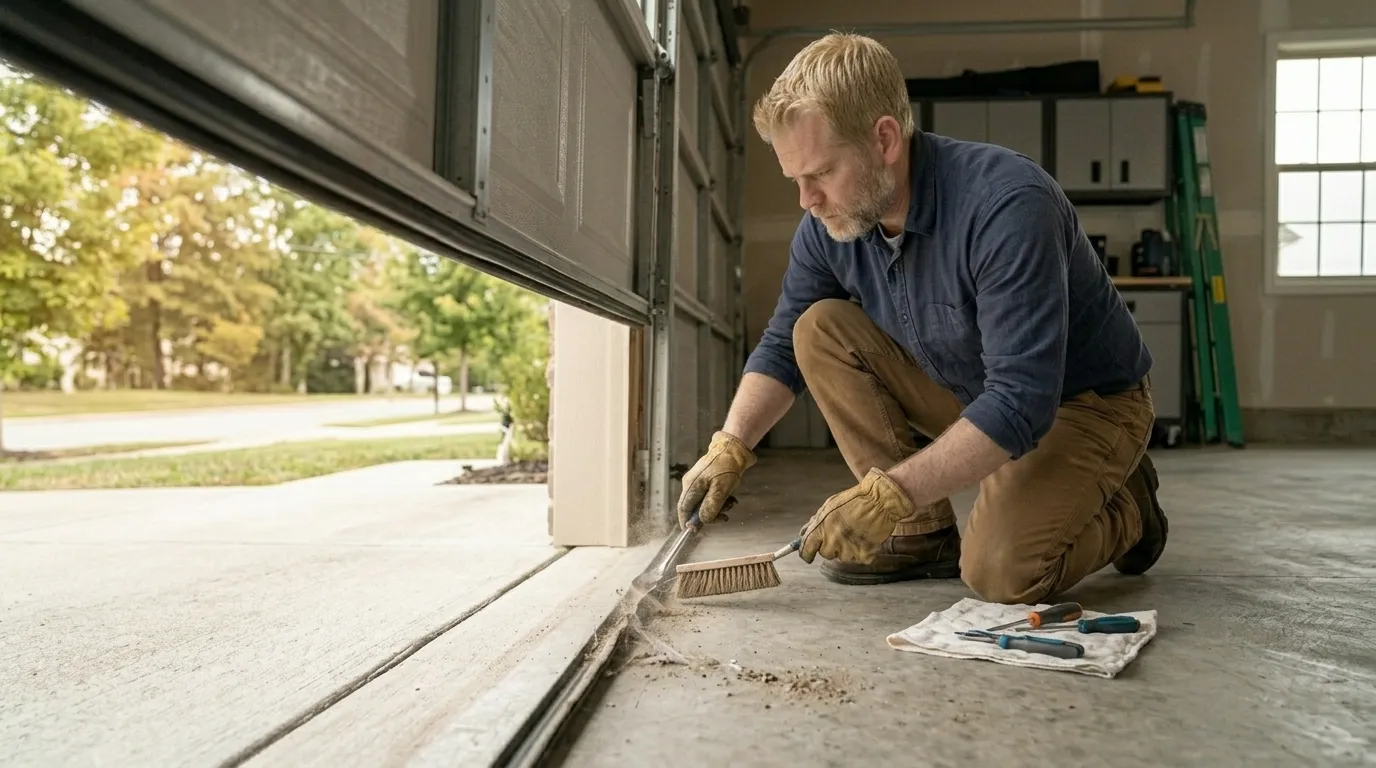
Madison sits in a cold, moderate climate band, and that shows up on garage doors as a seasonal pattern rather than a single failure point. Fall is when we'd tell you to get ahead of it - tighten hardware, lubricate hinges and rollers, before the first hard freeze locks up anything that's already marginal.
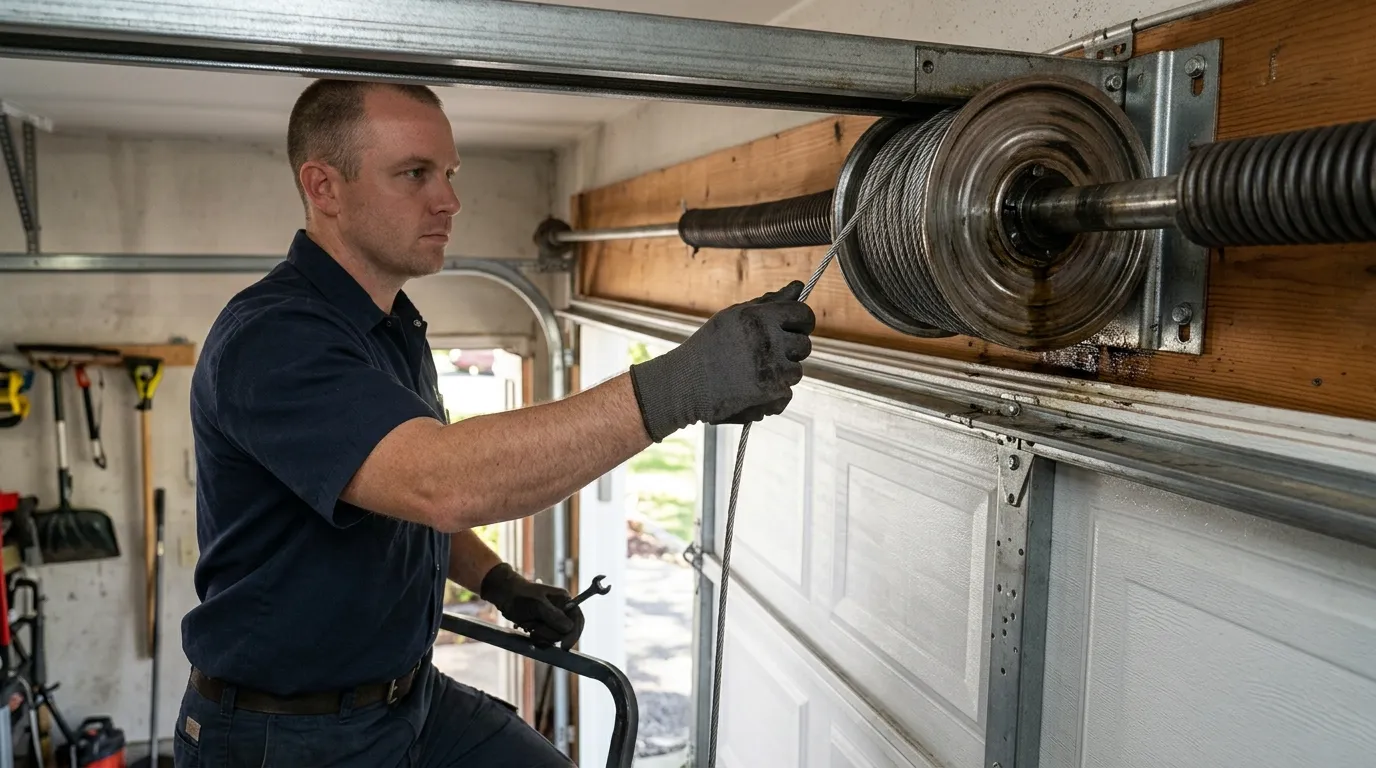
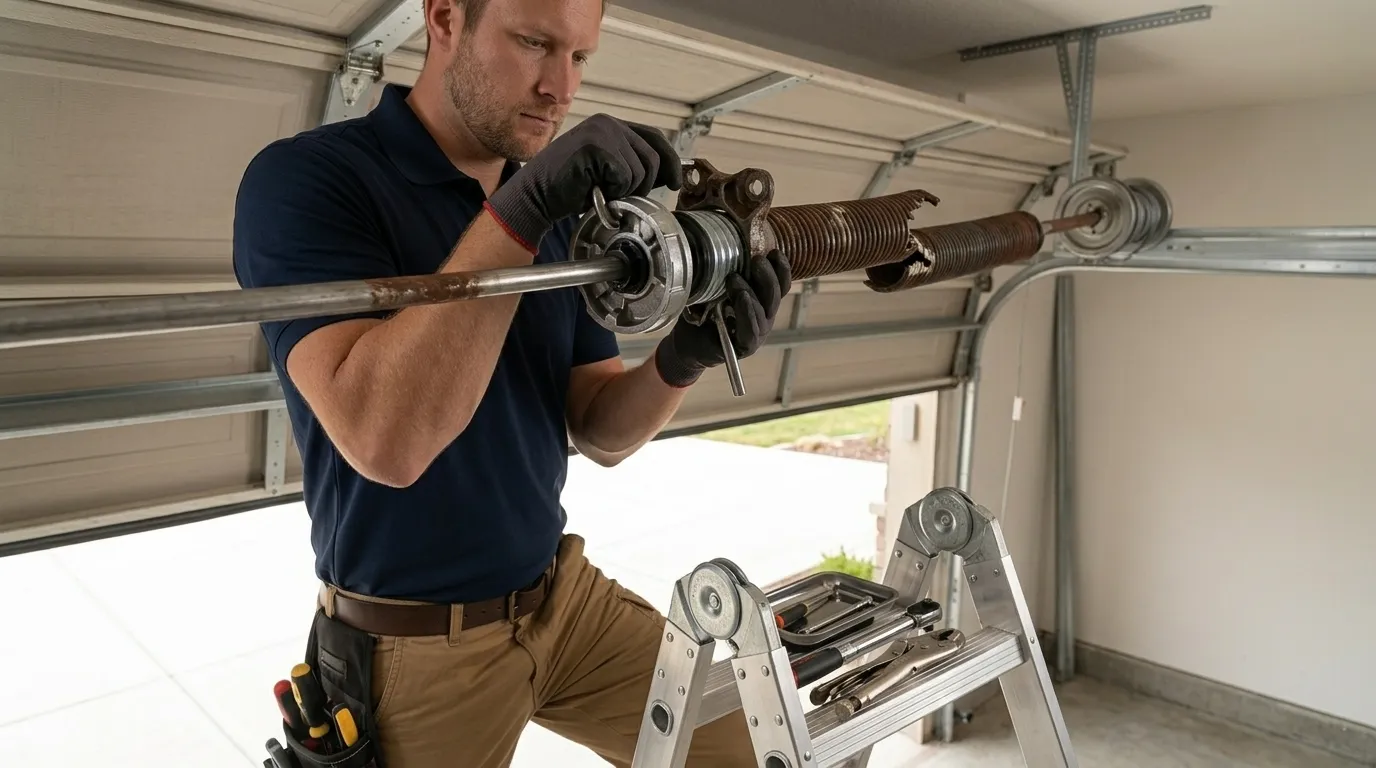
Winter is when steel contracts and grease stiffens, so a spring that was barely holding on in October is the one that snaps on a January morning when the door's heaviest and coldest. Torsion springs lose tension gradually with every cycle, and cold makes brittle metal show its weakness first.
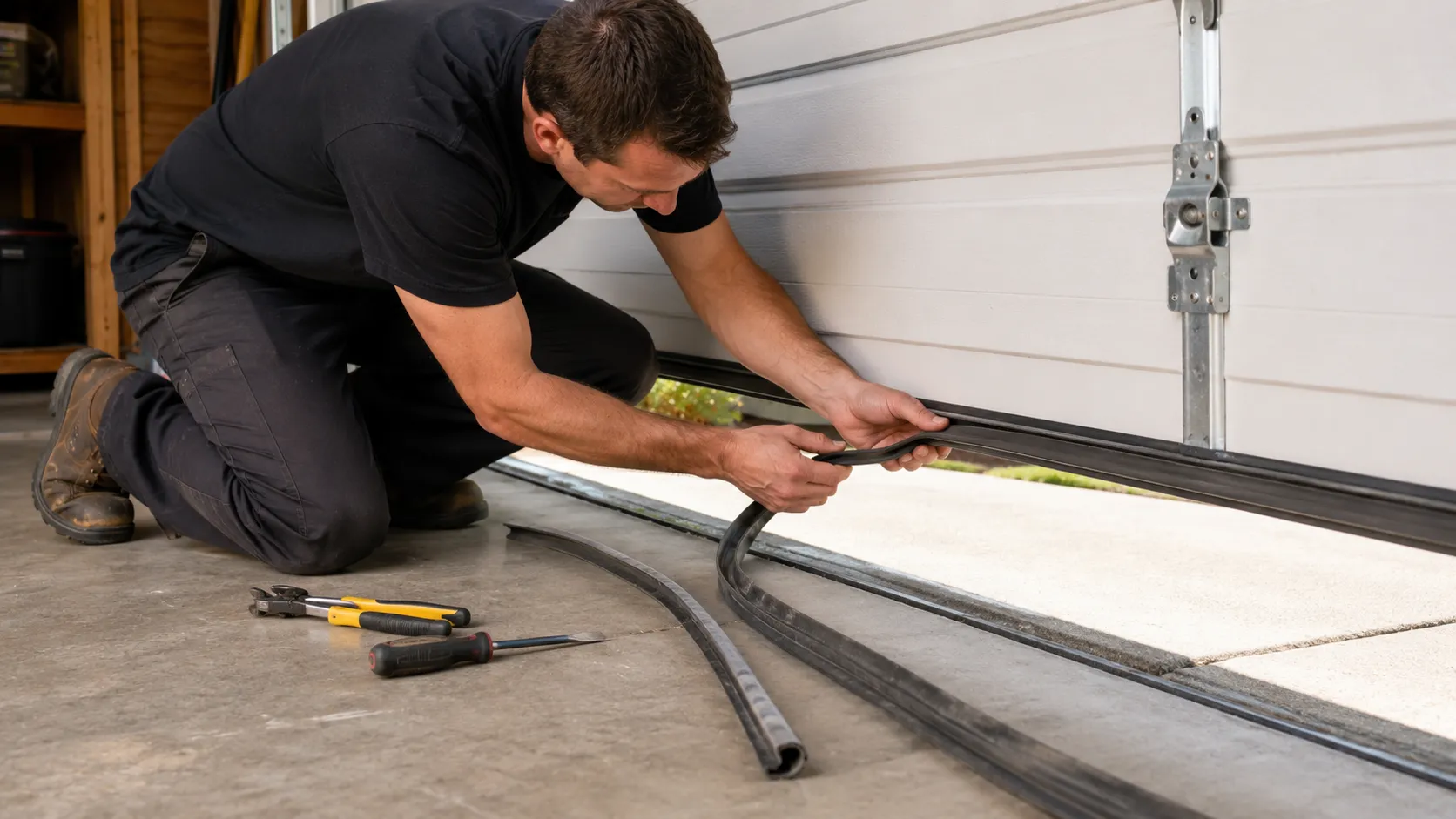
Spring brings the opposite problem - moisture. Thaw cycles push water into any gap in weatherstripping or panel seams, and a door with 30-plus years of settling in its frame doesn't seal the way it did new. Summer is the easy season mechanically, but it's also when we see the most opener failures, since the heat finishes off capacitors and gear sets that spent the winter working harder than usual. None of this is dramatic - it's wear, compounding on a schedule the climate sets.
What Is Going On
The honest answer is that a lot of Madison's garage doors are simply old enough now to be at the point where individual parts fail rather than the whole unit. With most of the region's housing dating to 1962-2001, and heavy concentrations of 1980s and 90s stock across the 28 named areas we cover, we're looking at doors and openers that were installed under a very different set of manufacturing standards than what's sold today.
A broken torsion spring on a door that age is almost always worth fixing - springs are a wear item regardless of the door's age, and replacing one doesn't touch the panels or opener. Where it stops making sense is when the door itself has multiple issues at once: a warped panel, a worn opener, and rusted track all showing up in the same service call. At that point you're paying to patch a door that's going to need the next repair within a year or two anyway.
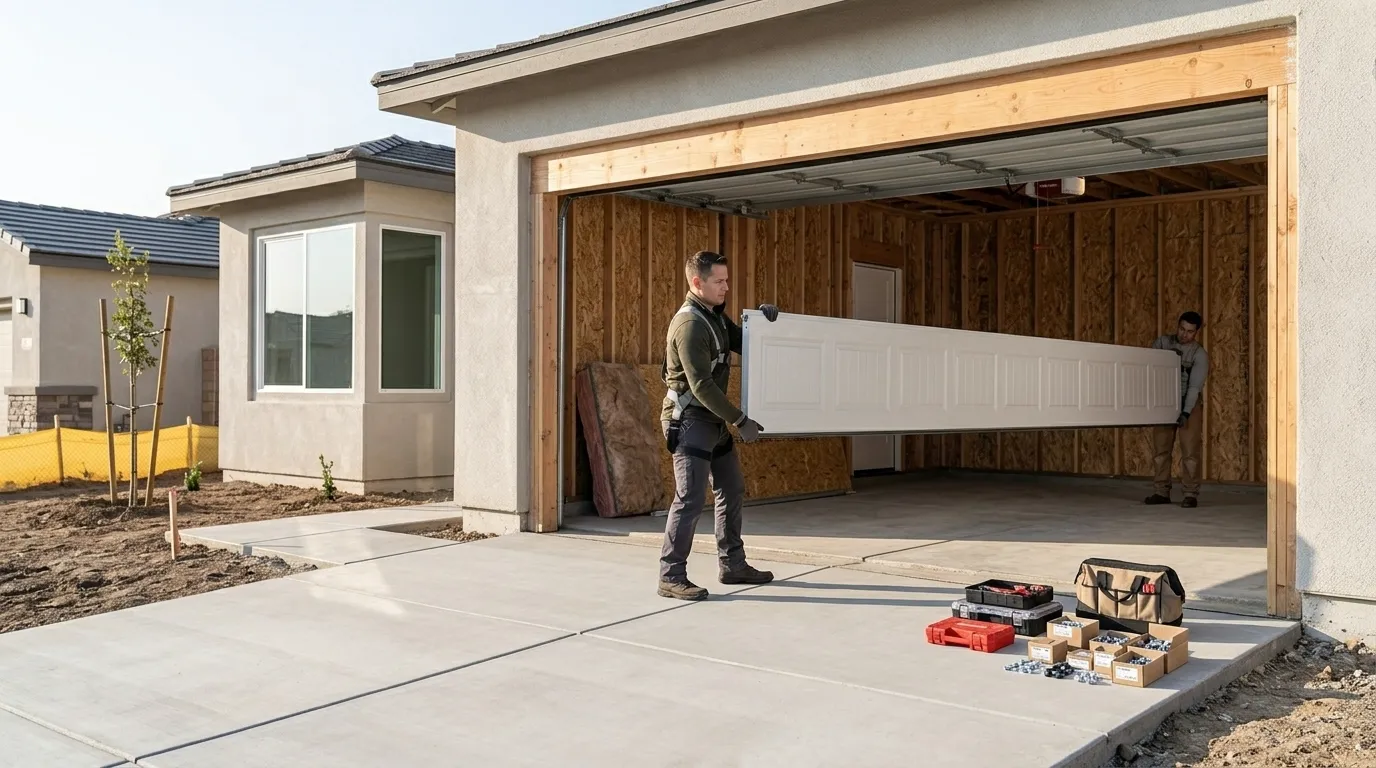
We won't tell you a 35-year-old door needs replacing just because of its age - plenty of well-built doors from that era are structurally sound and just need spring, roller, or cable work. The limitation is that we can't always tell you which one you've got without looking at it in person; steel gauge and hardware quality varied a lot across that build era.