Madison's housing dates mostly to 1962-2001, and cold-band winters stress those original torsion springs. Here's what to check before one lets go on you.
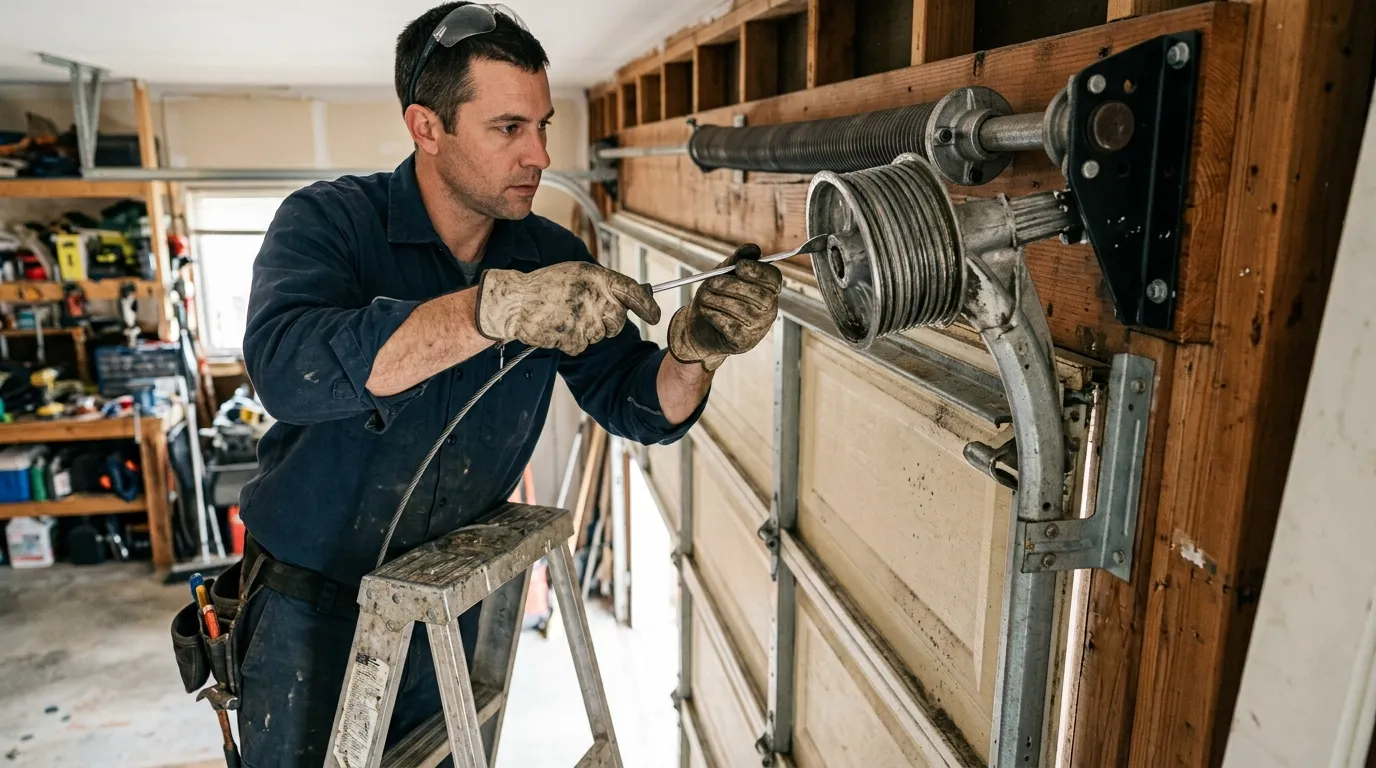
Most of the doors we get called on sit in houses built somewhere between 1962 and 2001, with the bulk of that stock dating to the 1980s and 90s. That matters because a torsion spring has a rated cycle life, and a spring installed when a house was built in, say, 1986 is well past due by now regardless of how it looks. Start by looking at the spring itself - the coil above the door, not the cables on the sides. A gap in the coil, even a small one, means it's done or close to it. Next, check the balance: disconnect the opener (pull the red cord) and lift the door by hand halfway. If it doesn't hold that position on its own, the spring is losing tension, and cold weather is what usually finishes the job. Also check the bottom bracket and rollers for rust pitting, which shows up more on doors that have gone one or two decades without the hardware being swapped. We don't recommend touching the spring itself - that's the one repair where a homeowner call beats a homeowner fix, every time.
Season by Season
In a cold-moderate climate band like ours, steel contracts as temperatures drop, and a spring that's already fatigued loses tension faster in January than it would in July under identical use. That's the pattern across the service area's 37,541 owner-occupied houses - calls climb through the coldest stretch of winter, not because people use their doors more, but because the metal is less forgiving. Spring and fall are when we see less dramatic failures: a roller binding, a cable fraying, an opener struggling to lift a door that's slowly lost its balance over the summer. Summer humidity swings can swell wood trim on older jambs, which is more of an issue on the pre-1970s end of our housing stock than the newer end. If your house falls in that 1986 median build year, plan on a spring inspection every couple of winters rather than waiting for the snap - by the time you hear it, the door is already stuck at whatever height it happened to be.
What Is Going On
A torsion spring stores energy by twisting, and every cycle - every open, every close - uses up a fraction of its rated life. Houses in this area built in the 80s and 90s are now 30-plus years out from installation, which is past the point most springs were engineered to reach even under ideal conditions. Cold makes it worse: the steel gets less elastic, so a spring near the end of its life is more likely to fail on the coldest morning of the year than on a mild one. This isn't unique to any one style of door - it's a function of age plus temperature, and it shows up across the 28 named areas we work in with similar frequency, because the housing ages went up in roughly the same building wave. When a spring does let go, the door usually drops fast and unevenly, since the two cables are still under different amounts of tension for a second. That's the moment it becomes a call, not a project.
How Local Conditions Play In
With median household income here around $98,943 and roughly 87,219 households in the service area, a lot of homeowners are choosing between a repair now and a full opener or door replacement later - and the honest answer depends on the age of the unit, not just the symptom. A spring failure on a door installed in the 1986 median-build-year range is often a sign the rest of the hardware - rollers, cables, bottom brackets - is close behind, so a spring-only fix might just mean another call in a year or two. We won't tell you to replace a door that's fine except for one part, but we also won't pretend a 35-year-old track and a brand-new spring are a long-term match. The cold band we sit in means winter is the stress test every system eventually fails, one way or another. If your house is on the older end of that 1962-2001 range, the smart move is asking us to look at the whole assembly, not just the part that broke.
How it works
From “it’s stuck” to “it’s fixed”
01
Tell us what’s wrong
Describe the symptom - won’t open, loud bang, opener runs but the door won’t move.
02
On-site diagnosis
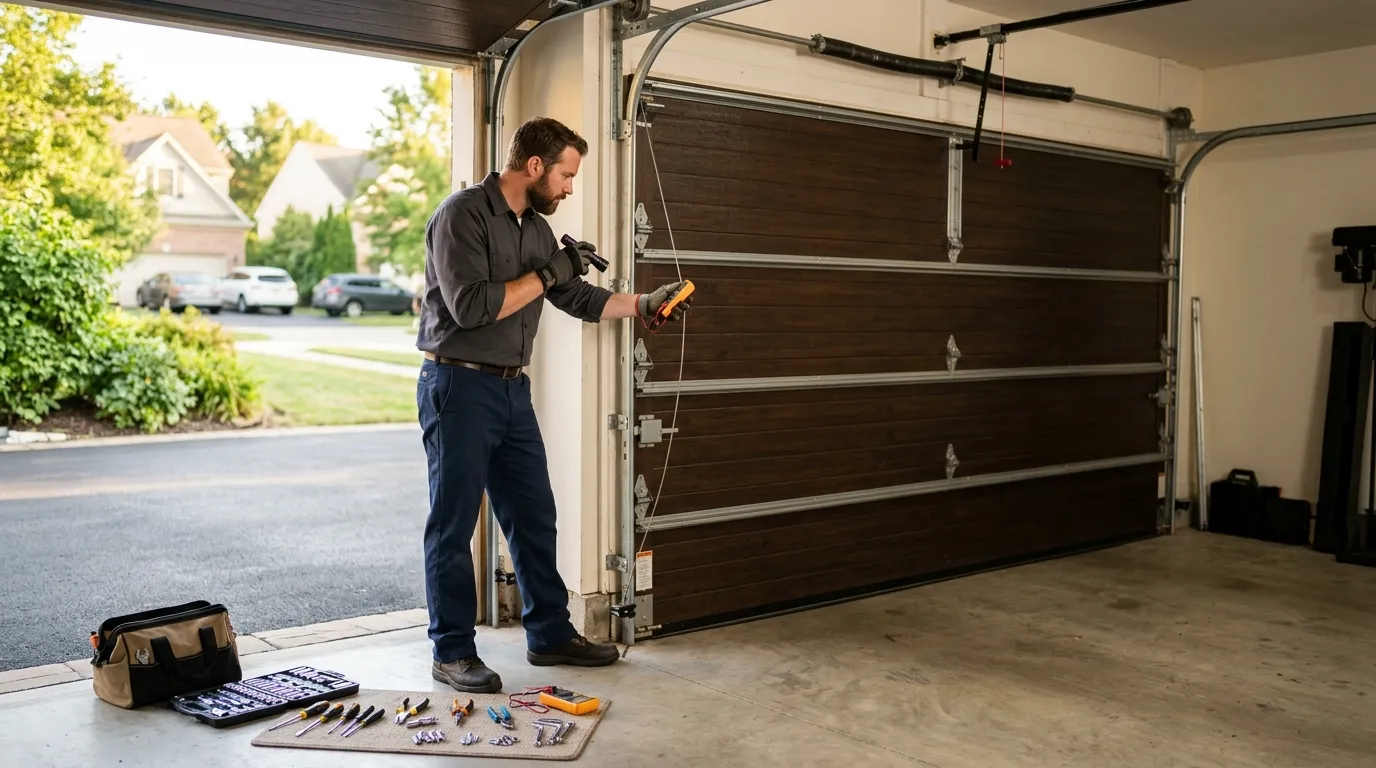
A technician tests the door under power and by hand and finds what actually failed.
03
Clear, up-front plan
You get the fix that’s needed and what drives the cost - before any work starts.
04
Repaired & tested
The repair is done, the door is set true and tested, and the work area left clean.
Serving Madison, WI - tell us what your door’s doing and we’ll take it from there.
Cold steel is less elastic, so a spring that's already near the end of its cycle life is more likely to snap under the temperature swings we get in this cold-moderate climate band than it would in a milder season. Age plus cold is the real combination - not cold on its own.
My house was built in the 80s - is the spring original?
It's possible. A lot of the housing stock in this area dates to the 1962-2001 window, with a median build year around 1986. If nobody's replaced the spring since the house went up, it's well past a typical cycle life and worth inspecting before it fails on its own schedule.
Can I replace a torsion spring myself?
We don't recommend it. It's the one part of the door under enough stored tension to cause a serious injury if it lets go while you're working on it. Everything else on this list - checking balance, looking at rollers, watching for rust - is safe to do yourself.
Ready to get your garage door sorted?
Tell us what it’s doing and where you are in Madison - we’ll take it from there.