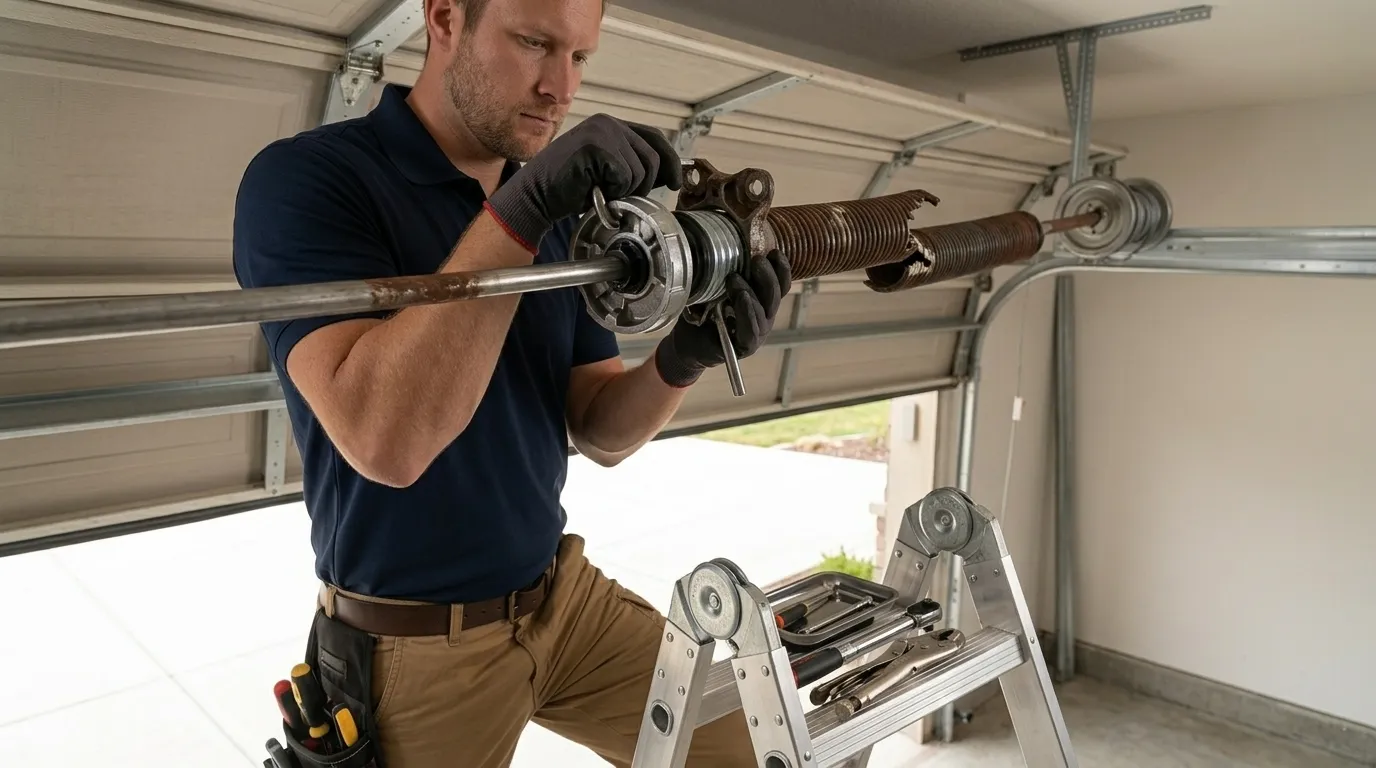
McFarland's housing stock centers on 1986, the same median as the wider service area, which puts most doors here squarely in the extension-spring-to-torsion-spring transition years. If your house went up in the mid-80s, you likely have a torsion spring setup on a steel sectional door, but the opener has probably been swapped at least once by a previous owner or a big-box installer, which means the safety sensors and the spring size don't always match what the door actually needs. We see a lot of doors here where the spring was replaced with a generic size instead of one matched to the door's weight, which shortens its life and makes the door harder to lift by hand during a power outage. That mismatch is the single most common call we get from this side of the lake, more than broken cables or bent track. It's a quiet problem until the day the spring lets go, usually on the coldest morning of the year.
What We Will Not Take On
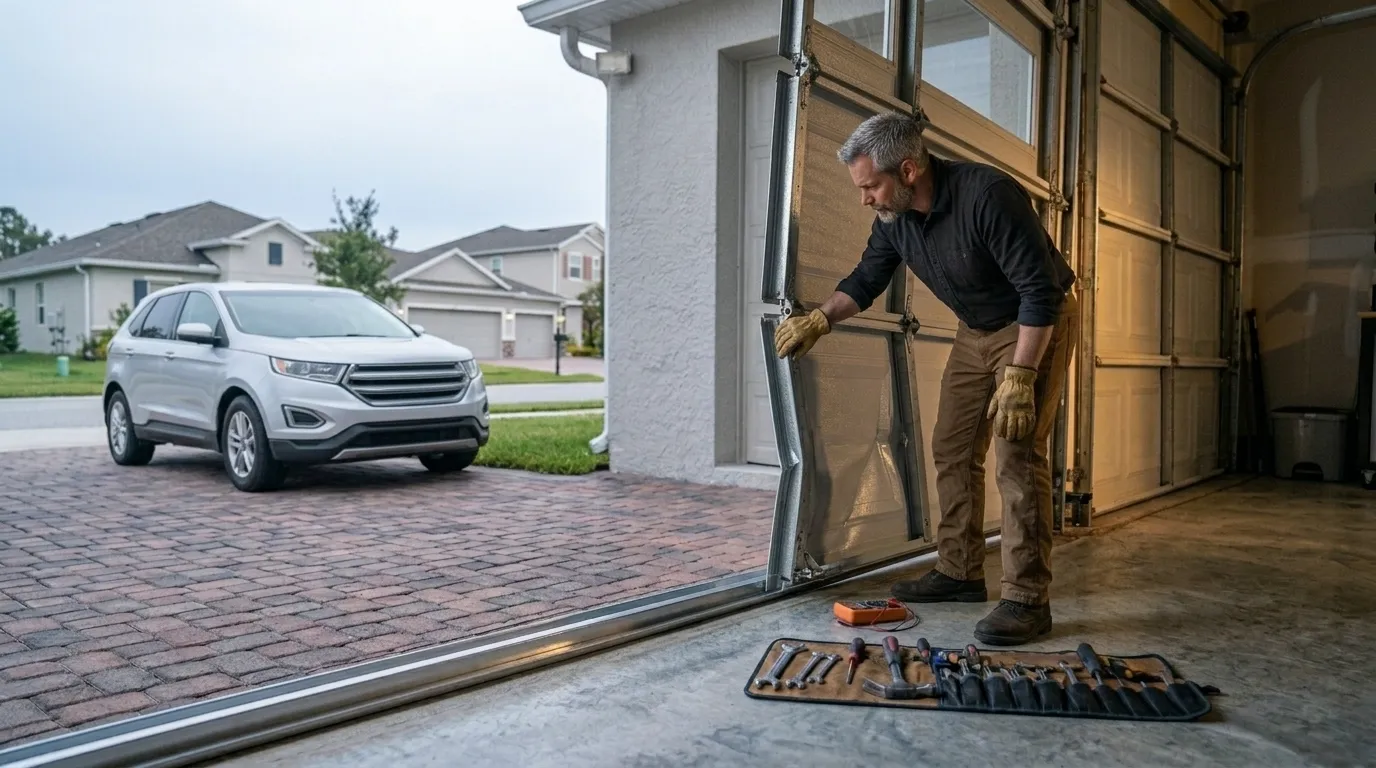
We don't stock every legacy part. If your door is an older wood panel model from before the neighborhood's main build wave, or a proprietary opener from a builder brand that stopped making parts years ago, we'll tell you straight that sourcing the exact part could mean a wait, and sometimes replacement is the more honest answer than a repair that won't hold. We also won't do a same-day quote sight unseen over the phone for anything beyond a spring or opener swap. Panel damage, track that's pulled away from the framing, or a door that's been forced with a bent opener arm needs a look in person before we say what it costs. That's not us stalling, it's us not guessing at your money.
When We Can Get There
We run out of Madison, about 9 miles from McFarland, so we're not sitting in a depot on Farwell or Broadway waiting for calls. We build the day's route around where the truck already is, which usually means McFarland jobs stack well with stops toward Monona and Cottage Grove on the same run. We won't promise a fixed response window here because we don't have a local base to promise it from - what we can tell you is the drive itself is short, and it's a route our trucks cover regularly given how the rest of the service area sits around Madison.
What Was Built Here
McFarland's homes cluster tightly around a 1986 median build year, which lines up with the broader area's 1962-2001 range but sits right in the middle of it rather than at either edge. With roughly 3,766 households in town and a median income near $93,810, this isn't a neighborhood of oversized custom doors - it's mostly standard 16-foot double and 8 or 9-foot single steel sectional doors on production-builder track, the kind installed by the thousand across Dane County in that era. The area sees the same cold-moderate winters as the rest of the region, which matters more here than the sunbelt because these 1980s doors often still have the original nylon rollers, and cold makes old nylon brittle. That combination - mid-80s hardware plus real winter - is the reason roller and cable failures cluster hard here from December through February.
How it works
From “it’s stuck” to “it’s fixed”
01
Tell us what’s wrong
Describe the symptom - won’t open, loud bang, opener runs but the door won’t move.
02
On-site diagnosis
A technician tests the door under power and by hand and finds what actually failed.
03
Clear, up-front plan
You get the fix that’s needed and what drives the cost - before any work starts.
04
Repaired & tested
The repair is done, the door is set true and tested, and the work area left clean.
Serving Madison, WI - tell us what your door’s doing and we’ll take it from there.
No. We run out of Madison, about 9 miles away, and cover McFarland along with the rest of the surrounding towns. There's no local depot here, just a regular route through the area.
Why does my 1980s door in McFarland need a different spring than my neighbor's newer one?
Doors built in that mid-80s wave often had extension springs originally, and many were later converted to torsion setups with generic springs that don't match the door's actual weight. That mismatch shortens spring life and is one of the most common repairs we see on this side of the lake.
Is it worth replacing an old wood panel door instead of repairing it?
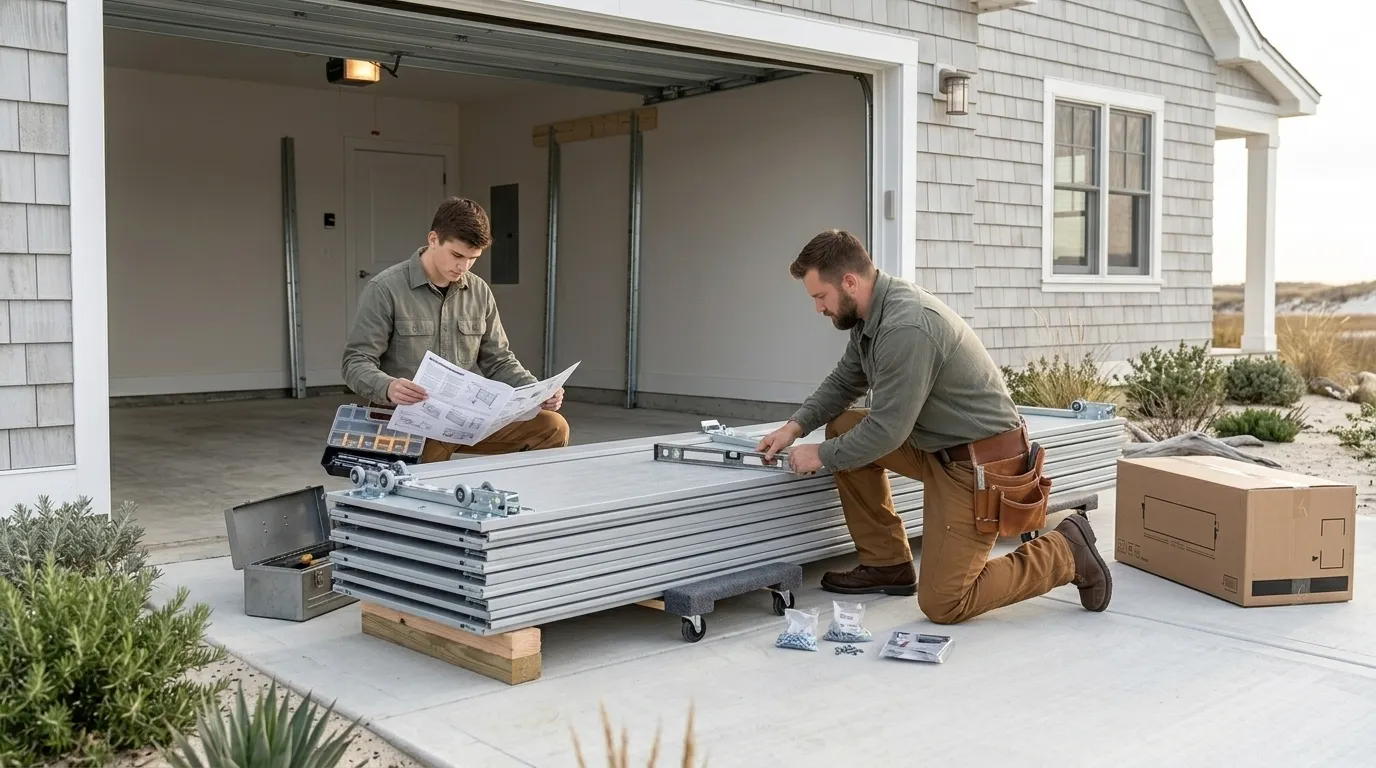
Often yes. If your door predates most of the neighborhood's mid-80s build wave, parts can be hard to source and a repair may not hold. We'll look at the door in person and tell you honestly whether repair or replacement makes more sense for the money.
Do winters here cause specific garage door problems?
Yes. The area sits in a cold-moderate climate band, and a lot of McFarland's doors still run original nylon rollers from the 1980s. Cold makes that nylon brittle, which is why roller and cable failures spike here in the winter months.
Ready to get your garage door sorted?
Tell us what it’s doing and where you are in Madison - we’ll take it from there.