Monona homes cluster around a 1962 median build year, older than the wider service area. We travel from Madison to work on the hardware that era actually used.
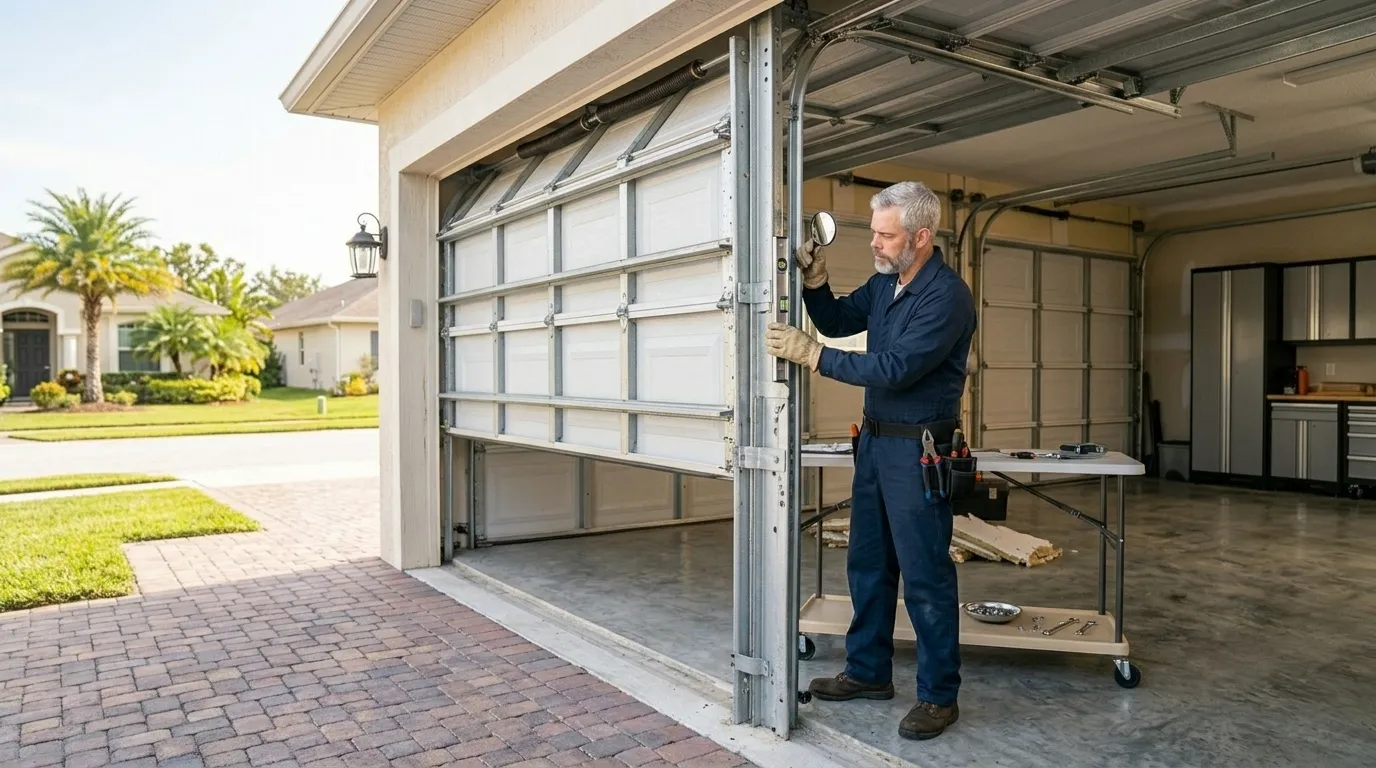
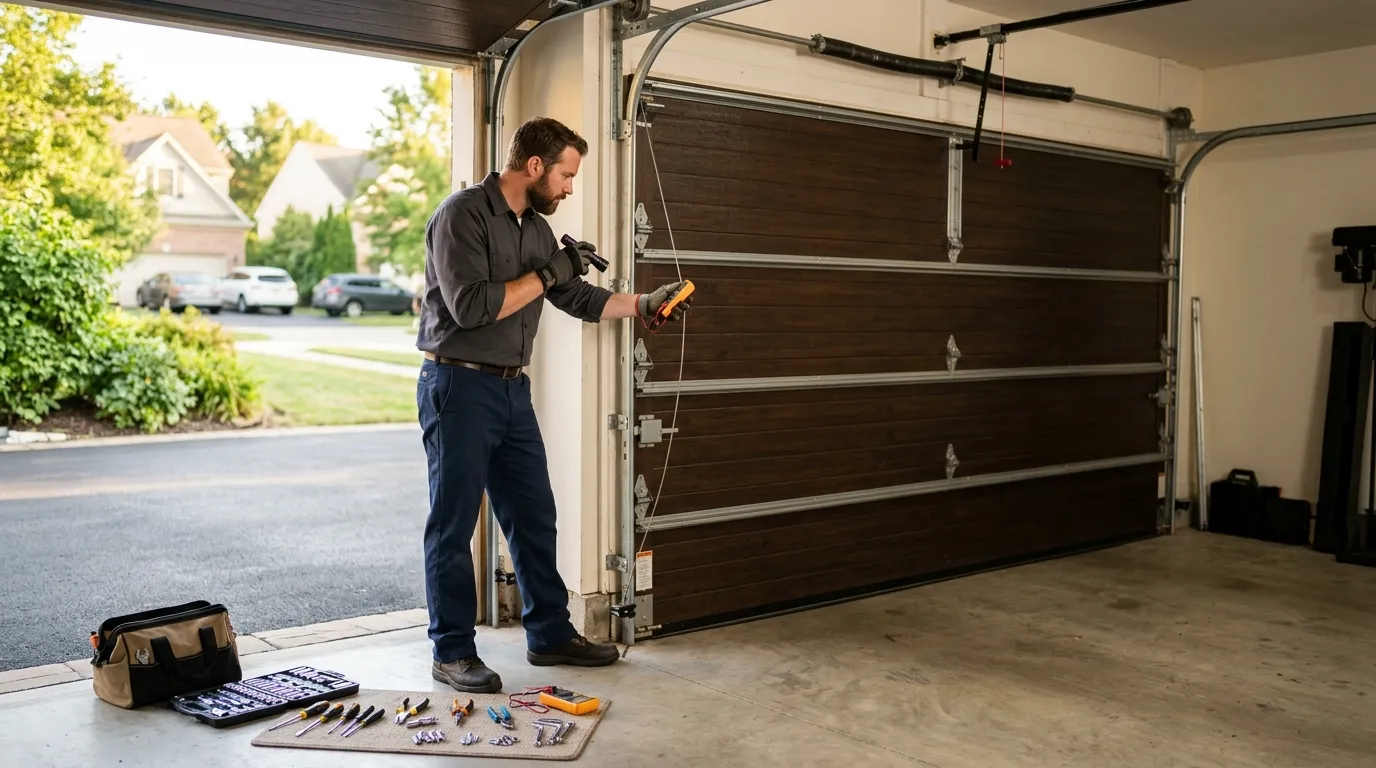
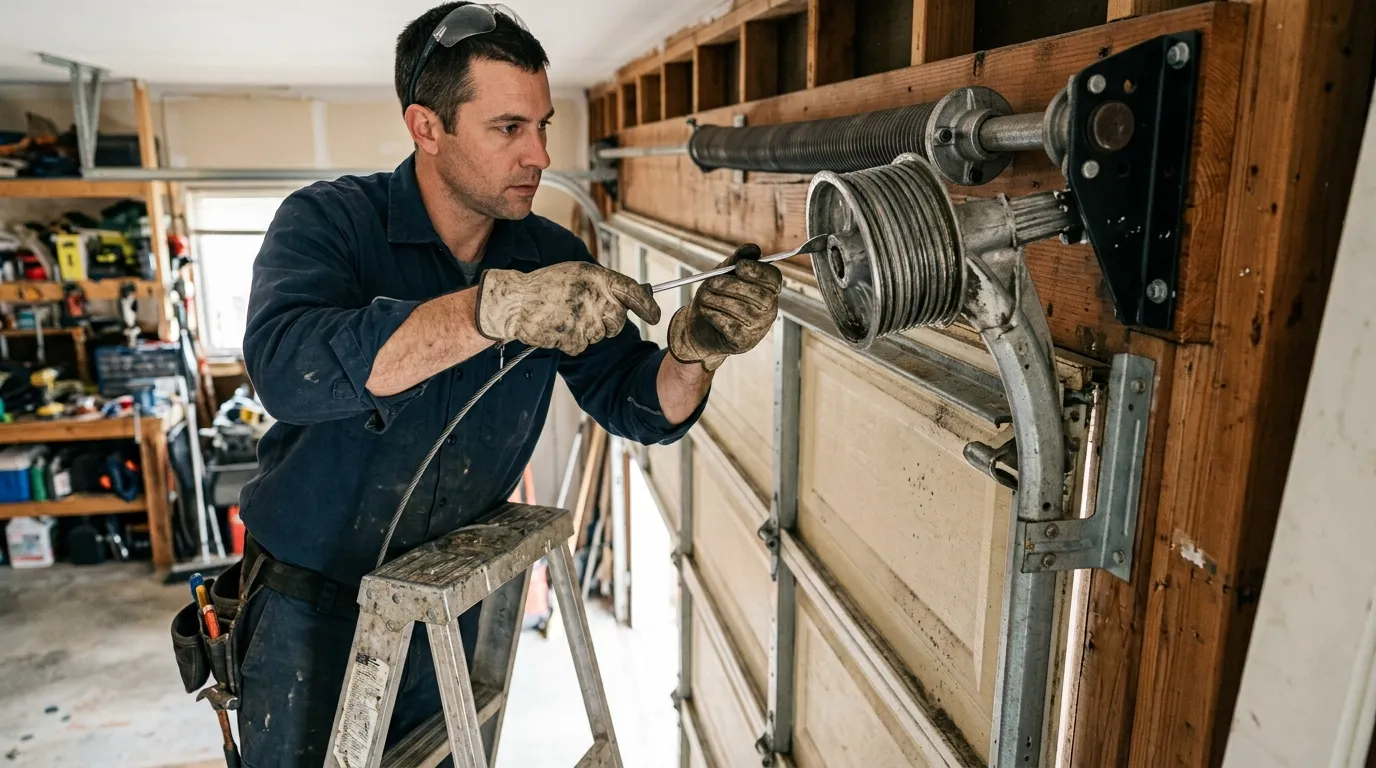
Monona's median year built sits at 1962, noticeably earlier than the 1986 median across the wider Madison-area service territory. That gap matters more than it sounds. A door bought new in 1962 was almost never replaced with anything built after the 1980s upgrade wave that hit newer subdivisions - a lot of these garages still run on the original steel sectional door with an extension-spring setup mounted along the horizontal track, not the torsion bar you'd expect to find on a house built twenty years later.
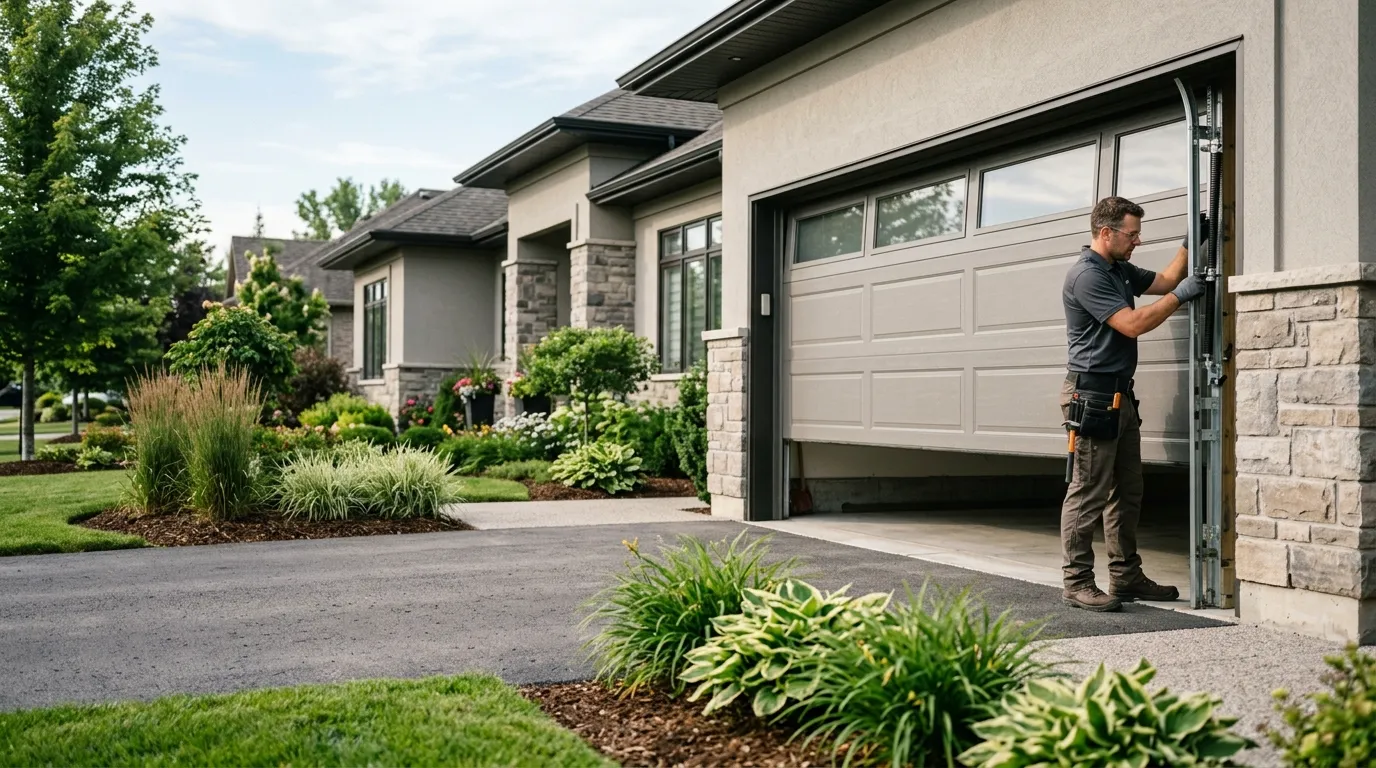
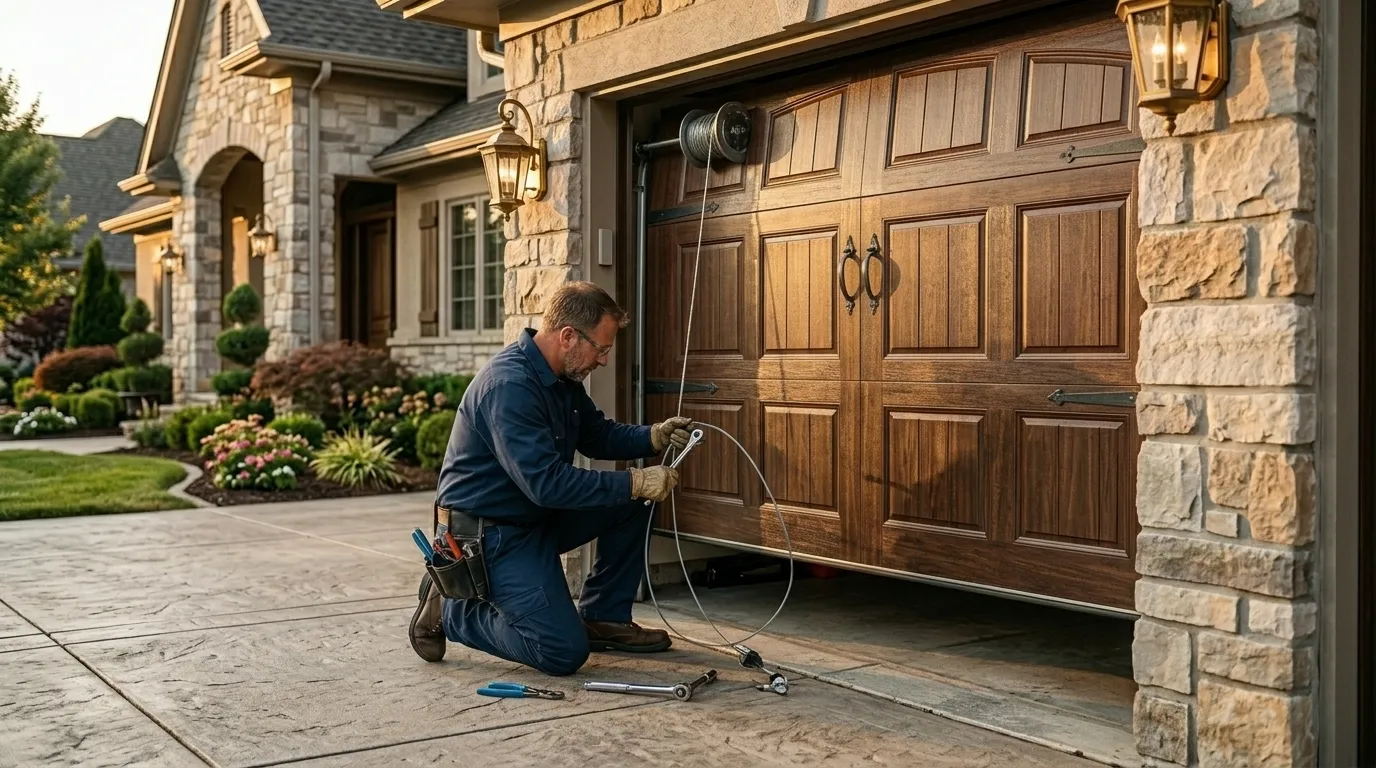
Extension springs age differently than torsion springs. They stretch, they fatigue at the end coils first, and on a house this old they've usually been replaced once or twice already by whoever owned the place before. When we get a call from this side of town, we're not guessing at what's behind the panel - we expect side-mounted hardware, we expect the safety cables (if they were ever added) to be original, and we expect a rail system that predates the rollers most suppliers stock today. The job on a 1962 door is a different job than the job on a 2001 door, even if the symptom on the phone sounds the same.
What We Will Not Take On
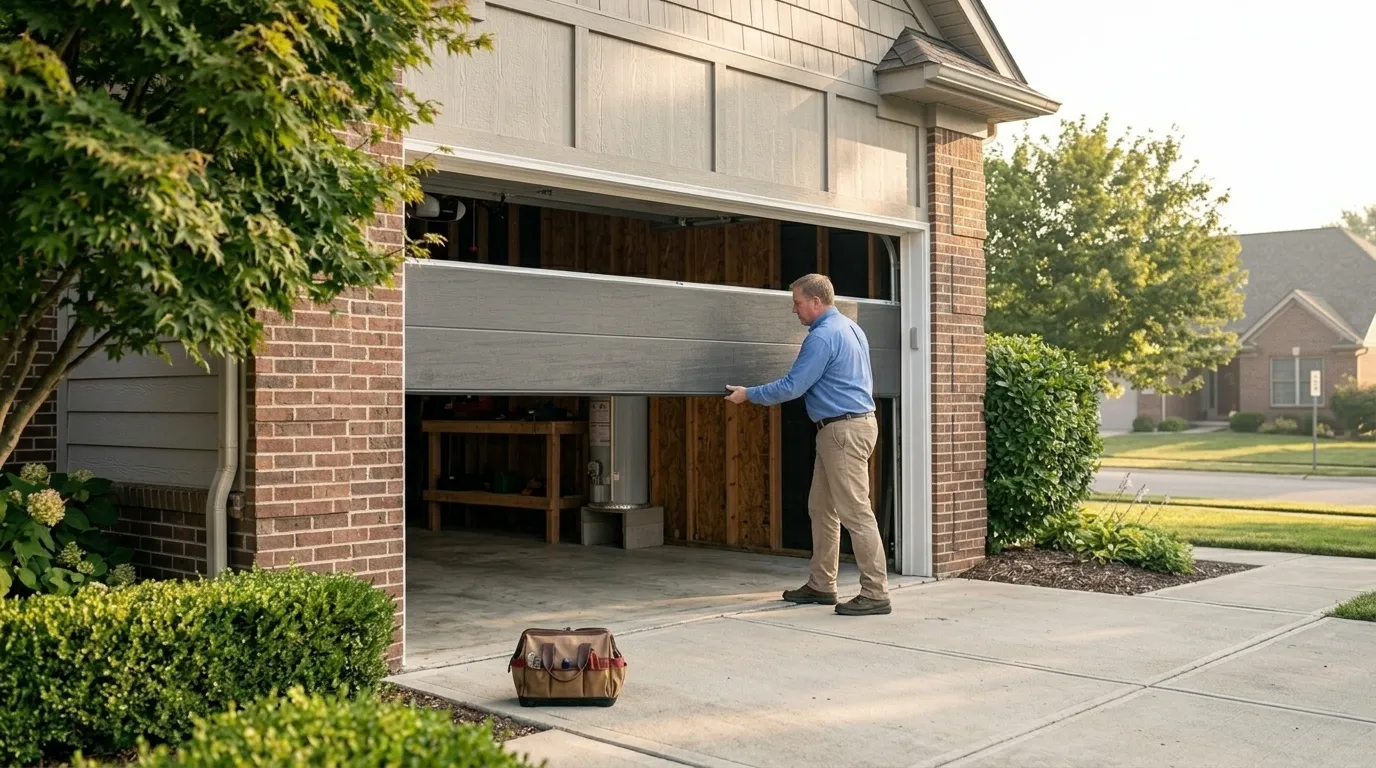
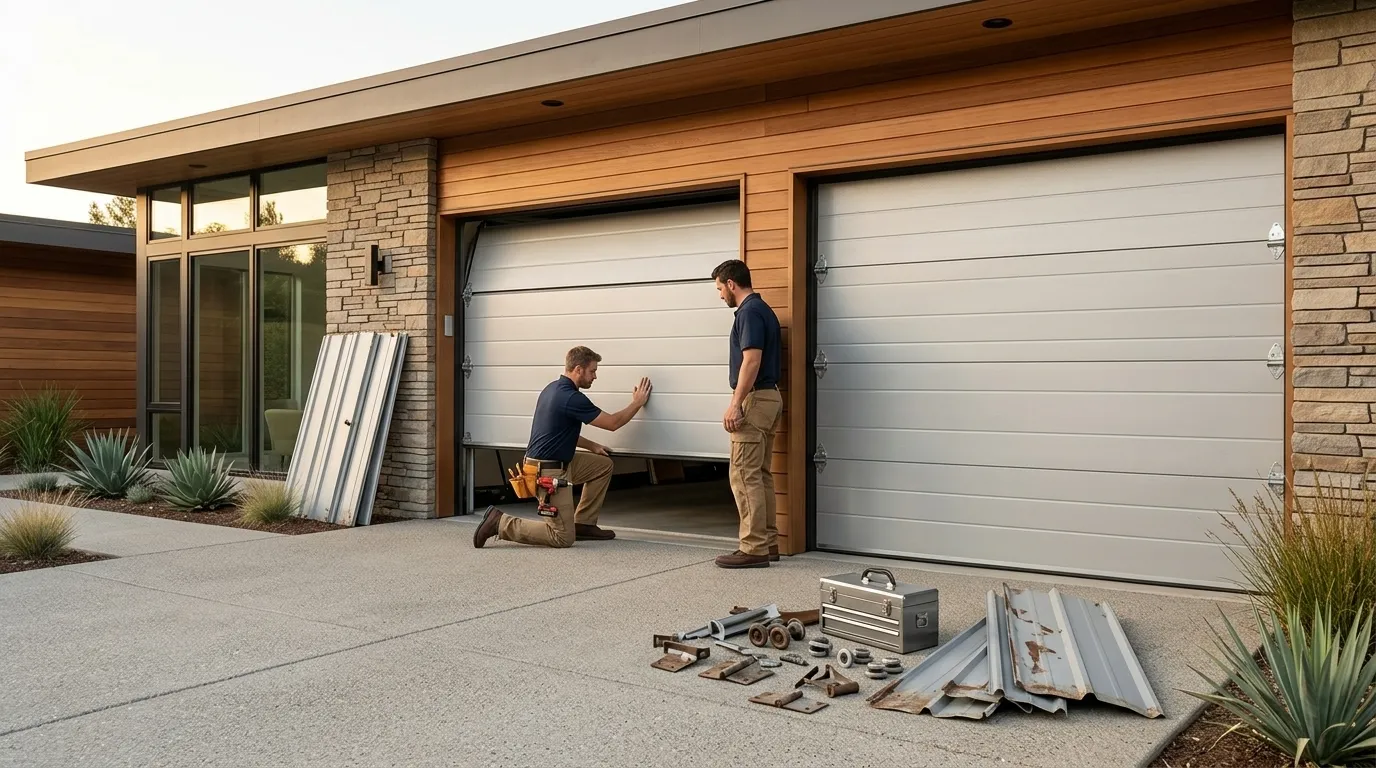
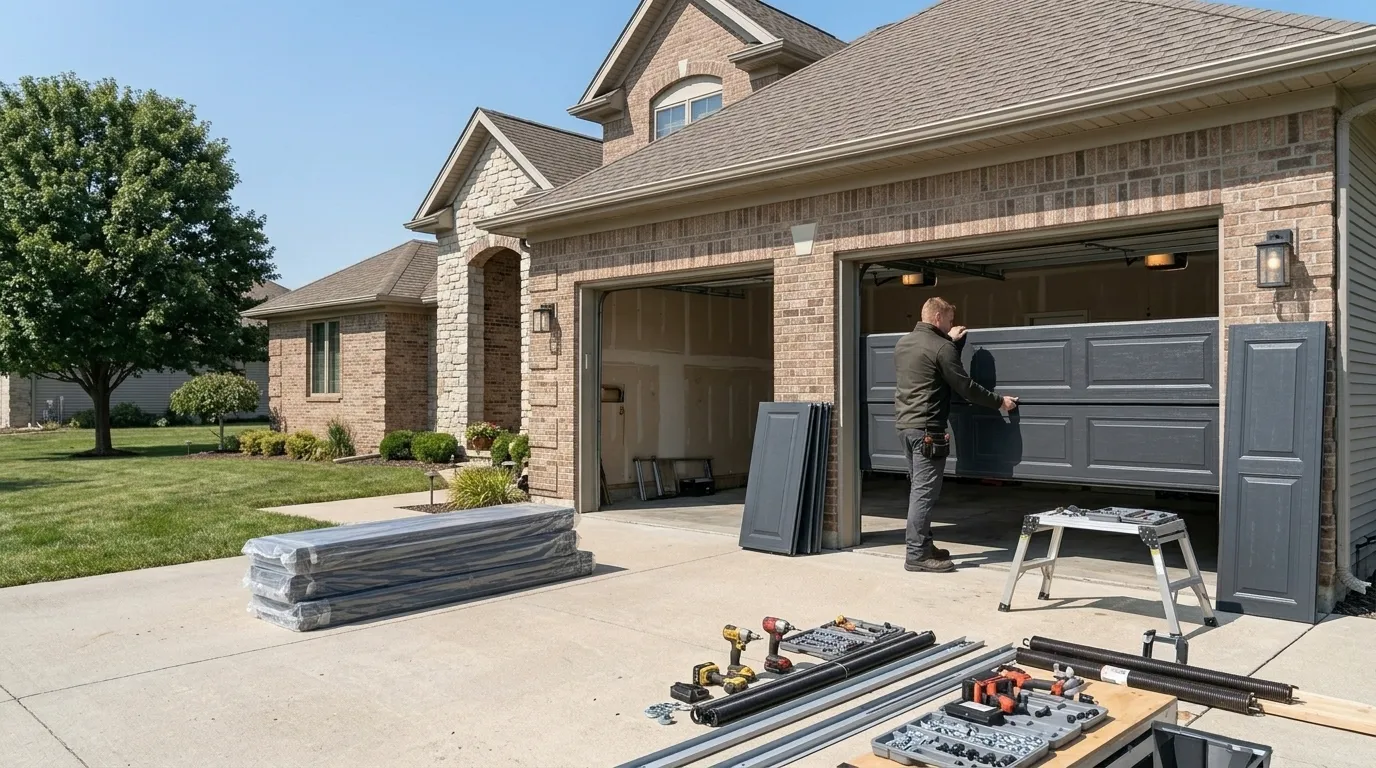
We don't try to source exact-match replacement panels for doors from this era when the manufacturer's gone and the finish is discontinued - matching one aluminum or steel panel to a sixty-year-old set is a losing bet, and we'll tell you that instead of taking the job and hoping. In that case the honest answer is usually a full door swap, not a patch.
We also won't quote opener work sight unseen on a house we haven't opened the garage of. Older openers in this bracket sometimes run on wiring or mounting brackets that don't match anything current, and a phone estimate on that kind of job is a guess dressed up as a number. We'd rather look first.
This is a coverage stop, not a home base - we come from Madison, about 5 miles out, so same-day availability depends on the day's route rather than a standing local crew.
When We Can Get There
Monona sits close in, about 5 miles from our Madison base, which keeps it on the shorter end of our regular route compared with stops further out like Stoughton or Mount Horeb. We don't promise a fixed arrival window here because we're not stationed in town - we schedule Monona jobs into the day's run from Madison, same as we do for the other nearby communities in this service area.
What that means in practice: if you call early, you've got a better shot at a same-day slot than someone calling at the end of the day. We're upfront that we can't hold a truck idle waiting on Monona calls specifically. What we can tell you is that the distance itself isn't the obstacle - 5 miles is a short leg for us - the constraint is whatever else is already on the board that day.
What Was Built Here
With roughly 4,175 households in Monona and a median household income of $87,784, this is a smaller, tighter market than the roughly 87,219 households spread across the full service area, and it reads that way in the housing stock too. The 1962 median build year puts a large share of these garages ahead of the broader area's 1986 median, meaning original hardware turns up here more often than it does in the newer pockets we cover.
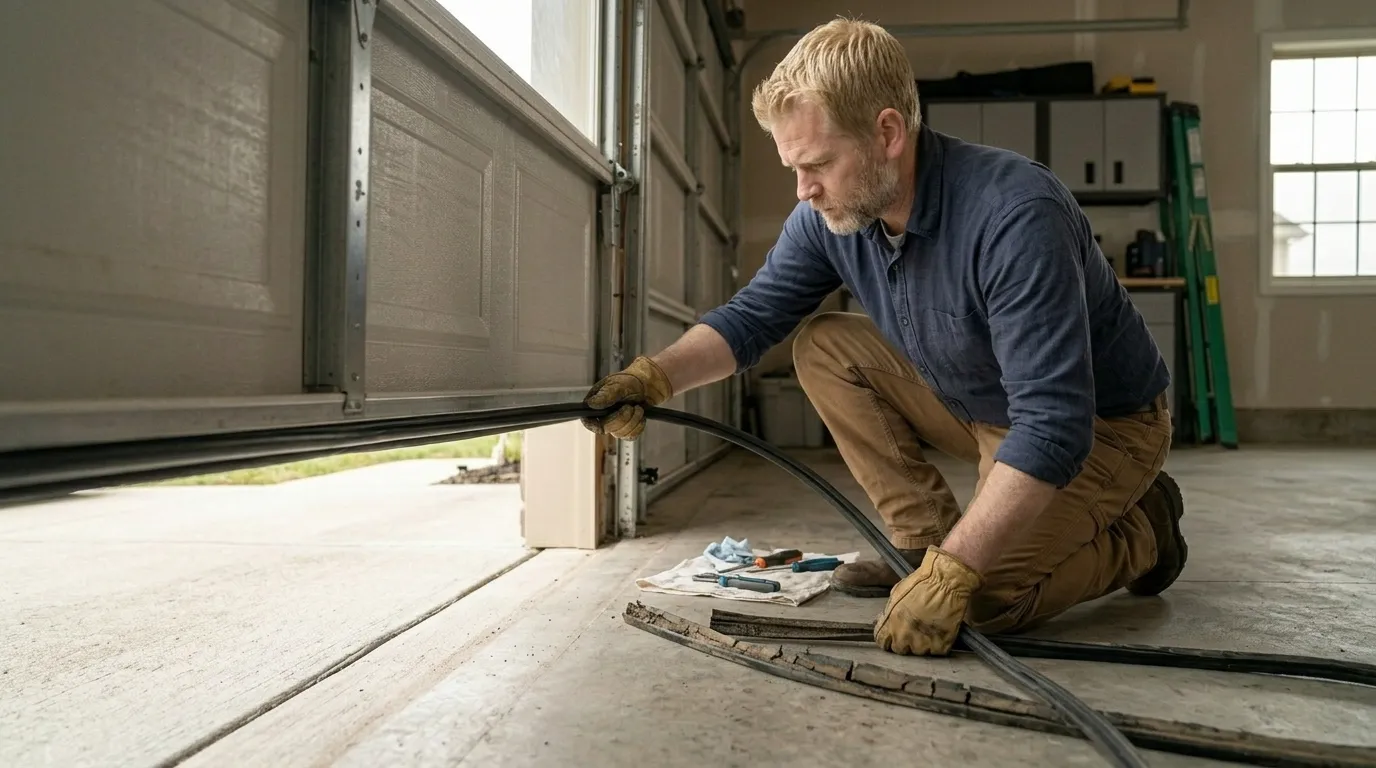
The climate band across this whole region is classified cold-moderate, which over sixty winters means more freeze-thaw cycling on steel tracks and more brittle nylon rollers than you'd see in a milder climate. On a door this age, that cycling has usually already taken its toll on whatever wasn't stainless or sealed. We don't inflate that into a sales pitch - plenty of these doors are still working fine - but when something does fail on a house from this era, it's rarely a one-part fix. The track, the rollers, and the spring tend to have aged together.
How it works
From “it’s stuck” to “it’s fixed”
01
Tell us what’s wrong
Describe the symptom - won’t open, loud bang, opener runs but the door won’t move.
02
On-site diagnosis
A technician tests the door under power and by hand and finds what actually failed.
03
Clear, up-front plan
You get the fix that’s needed and what drives the cost - before any work starts.
04
Repaired & tested
The repair is done, the door is set true and tested, and the work area left clean.
Serving Madison, WI - tell us what your door’s doing and we’ll take it from there.
No - we run out of Madison, about 5 miles away, and route Monona calls into the day's schedule. There's no standing crew or depot in town, so availability depends on what else is already booked that day.
Why does my Monona garage door use different parts than my sister's house in a newer subdivision?
Monona's median build year is 1962, well ahead of the 1986 median across the wider area. Houses from that era typically got extension-spring, side-mounted hardware rather than the torsion-bar setups common in homes built after the 1980s.
Can you match the panel on my original door?
Usually not exactly. Panels from 1960s-era doors are often discontinued, and hunting for a close match rarely holds up next to the original finish. In most cases replacing the full door section is the more honest fix.
Does winter weather affect these older doors more?
This region sits in a cold-moderate climate band, and decades of freeze-thaw cycling are harder on original steel tracks and older rollers than on newer hardware. It doesn't mean the door will fail, but when something does go, it's often more than one part.
Ready to get your garage door sorted?
Tell us what it’s doing and where you are in Madison - we’ll take it from there.